The first ten minutes after the glass cracks
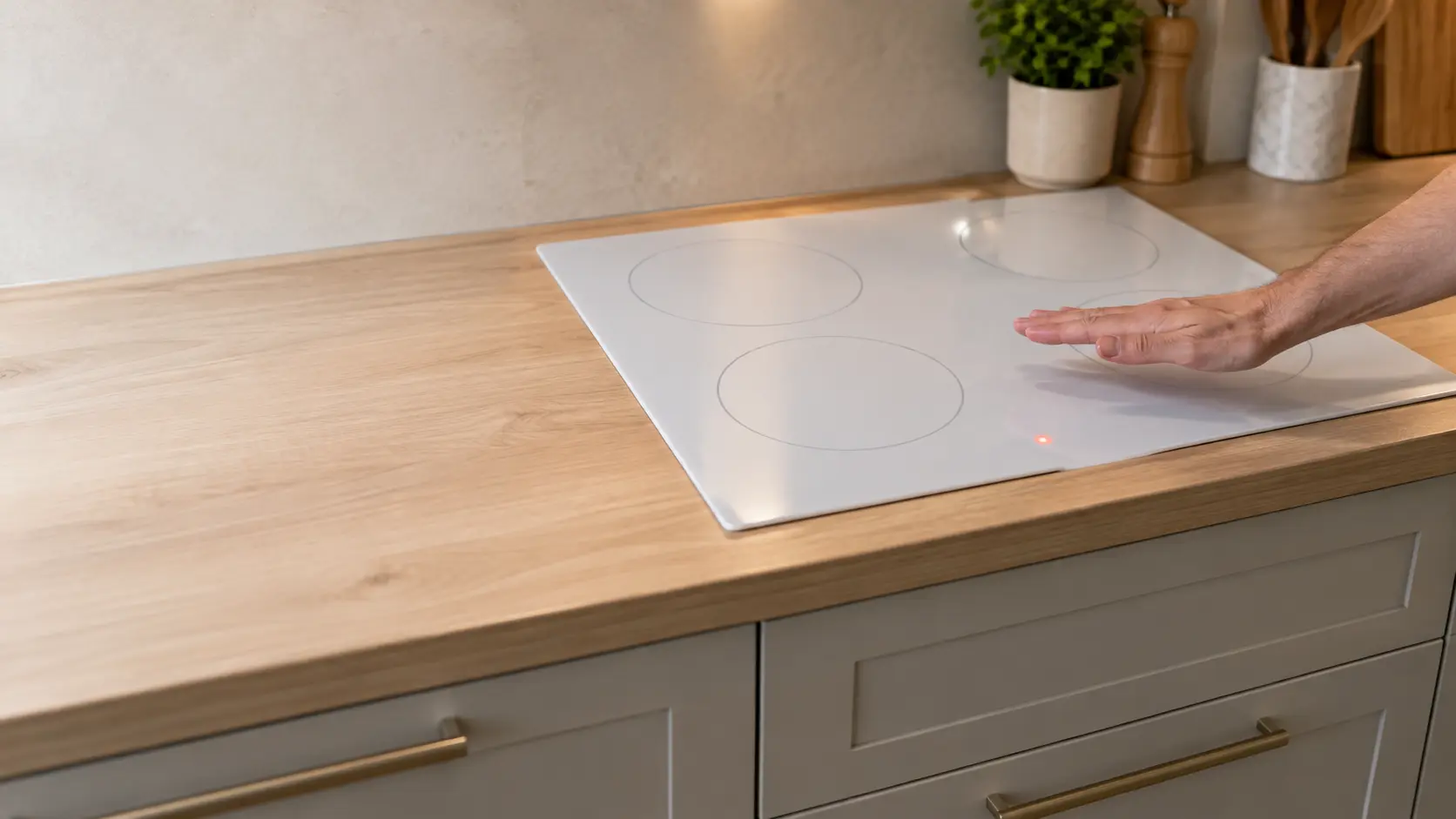
Most cracks announce themselves with a sharp tick or a bang, often when something heavy lands on the top or a pan is set down hard. Whatever you were cooking, turn that zone or burner off with its own control and move the pan to a trivet on the counter, lifting it rather than sliding it across the damaged glass. Then keep hands off the top until it has cooled; a cracked surface holds heat just as a sound one does.
GE puts the rule plainly in the manual for one of its early induction cooktops: do not operate the cooktop if the glass is broken, and call for service immediately. Its troubleshooting page lists a cracked glass top with a two-step answer: turn off the circuit breaker, then call for service. That answer applies to the zones that look fine as well, because they all sit under the same sheet of glass.
Radiant and induction tops: the breaker
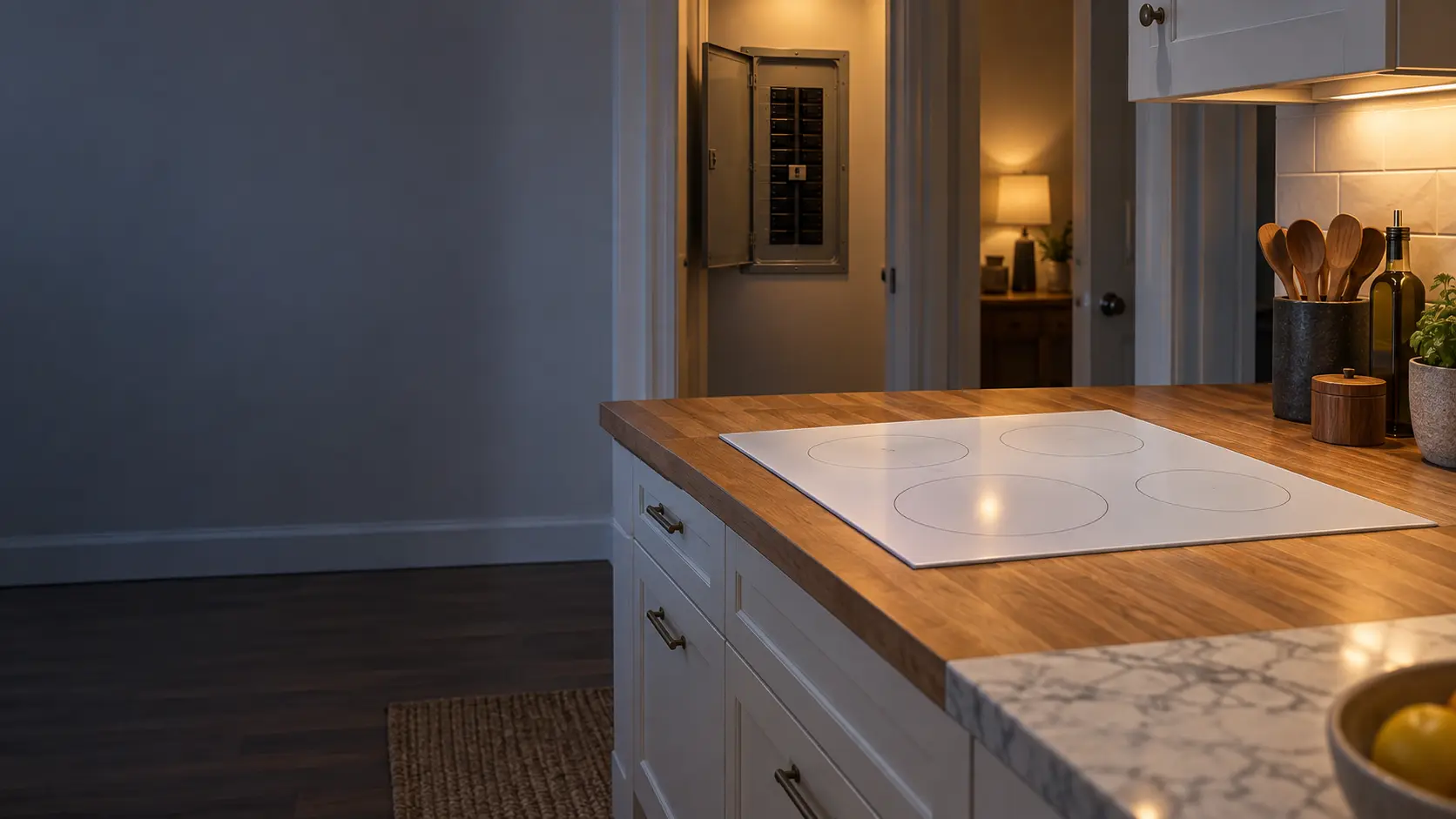
Glass tops heated by ribbons or coils are hard-wired through conduit to the house circuit; nothing under the counter unplugs, and the only true off switch is in the electrical panel. Look for a two-pole breaker labeled cooktop or kitchen in the panel. If the panel is unlabeled, switching off the wrong breaker costs nothing but a moment; guessing and then wiping the top does.
Gas burners on a glass top
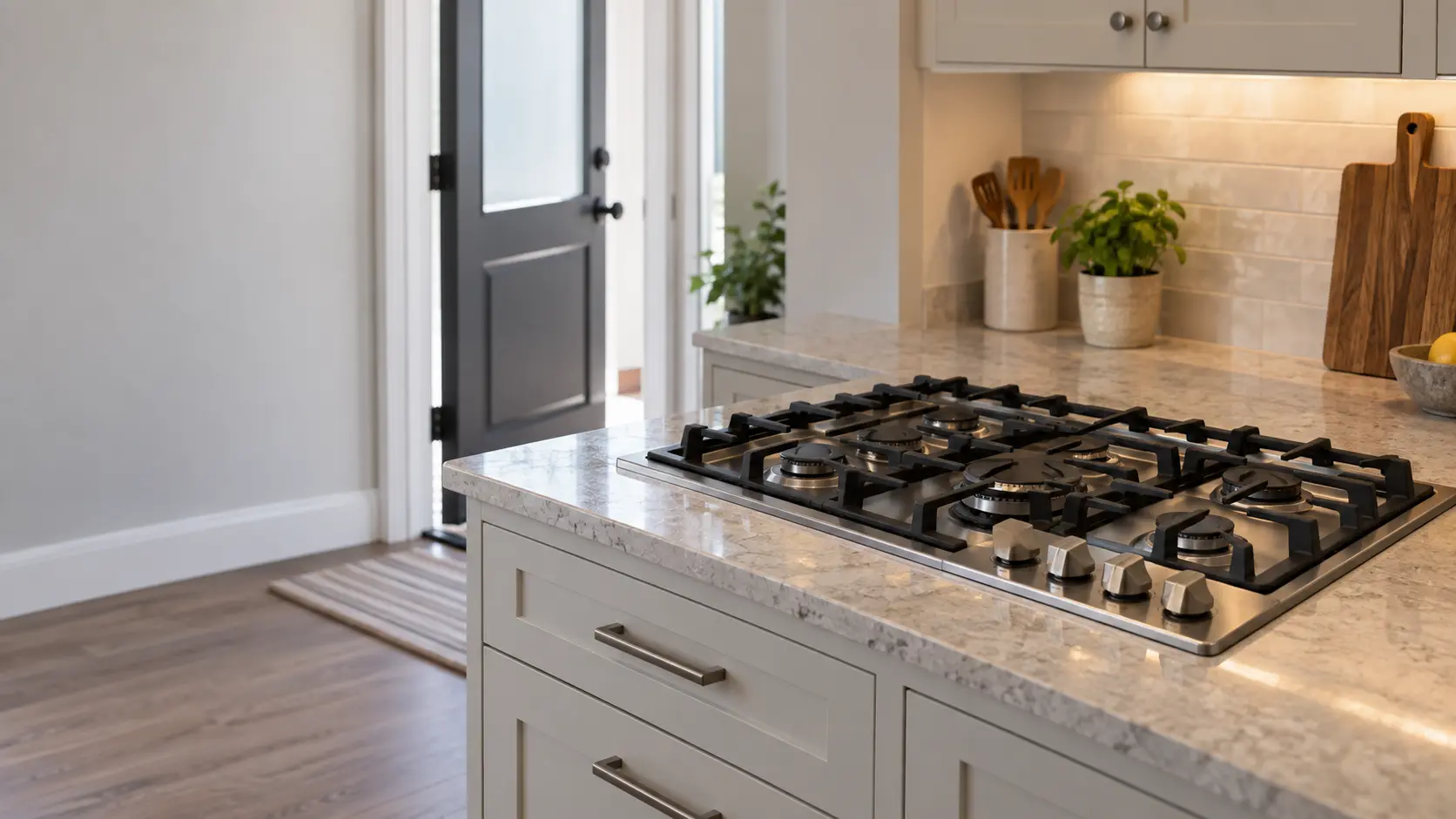
Some gas cooktops set their burners into a sheet of glass instead of steel. The burners use gas, but the igniters, the spark module and any downdraft blower run on house current, usually through a plug in the cabinet underneath. With every knob off, unplugging the cord removes that power. Should you notice a gas odor, the cord no longer matters; the gas-smell guide applies, and it starts with leaving.
Source: GE Appliances — Induction Cooktop Use and Care Guide and Installation Instructions (49-8269) — Do not operate the cooktop if the glass is broken and call for service; for a cracked glass top turn off the circuit breaker and call for service; do not allow anyone to climb or stand on the cooktop; do not install the cooktop if the glass-ceramic surface is broken or the trim damaged; rating plate on the bottom of the chassis
Why a crack turns into a shock risk
Under the glass of a radiant cooktop sit coiled heating ribbons, their terminals and the limiters that switch them. Under an induction top there are copper coils, power boards and a cooling fan drawing air through the cabinet. GE's manual for a Monogram gas-on-glass cooktop spells out the danger: cleaning solutions and spillovers could penetrate the broken cooktop and create a risk of electric shock, and it says not to cook on or clean a top in that state.
Liquid is the whole problem. A boil-over, a wipe with a damp sponge or a spray of glass cleaner follows the crack downward by capillary action and lands on parts built to stay dry. The sensible response is dull but effective: leave the top dry, leave it alone and keep the power off until the glass is replaced.
A hairline crack that looks harmless
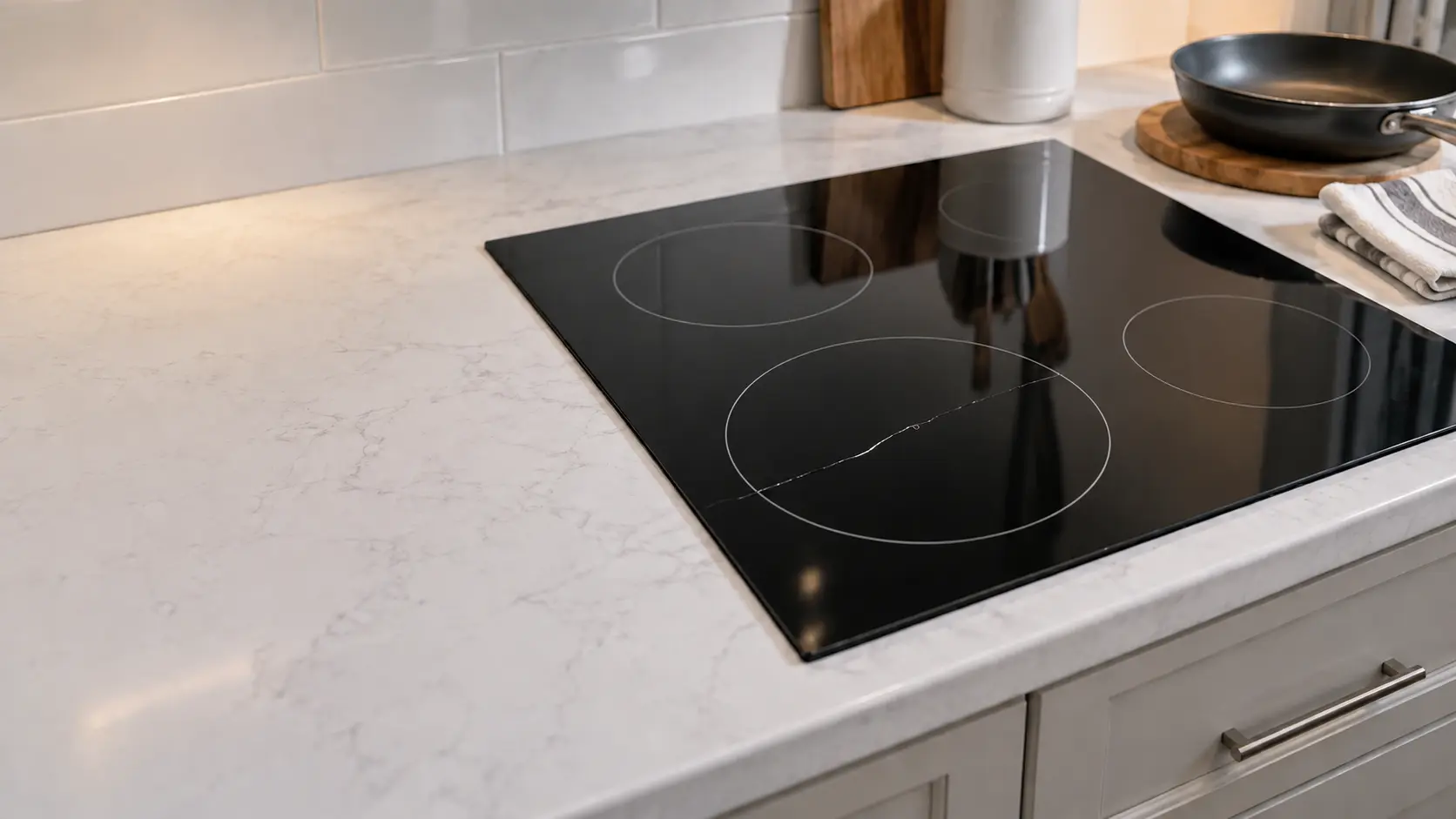
A crack you can barely catch with a fingernail is still a crack. Glass that has started to split tends to keep going as it heats and cools, and a hairline line across a zone can open under the next pan. Treat it exactly as you would a wide one, and resist the idea of using only the zones on the other side.
Source: GE Appliances — Monogram 36-inch downdraft gas cooktop ZGU660/ZGU661, Use and Care and Installation Guide (49-8715) — Do not operate or clean a broken or cracked cooktop; cleaning solutions and spillovers could penetrate the broken cooktop and create a risk of electric shock; the gas cooktop has a 120-volt grounded plug cord and electric igniters

Crack, chip or only a mark?
Not everything that shows up as a line on dark glass is a break. Before you switch the power off for a week, look at the top under a flashlight held low and to one side, and run a fingernail gently across the line once the glass is cold.
- A silvery or gray line that rubs off with cooktop cleaner is usually metal left by an aluminum or copper pan base, not damage.
- A white or rainbow-colored ring where a pot sat is residue or mineral film, and it sits on top of the glass.
- A fine scratch catches a fingernail slightly but does not pass through the glass or change as the top warms.
- A chip along the edge where the glass meets the frame or the counter is damage; it weakens the edge even if nothing has spread yet.
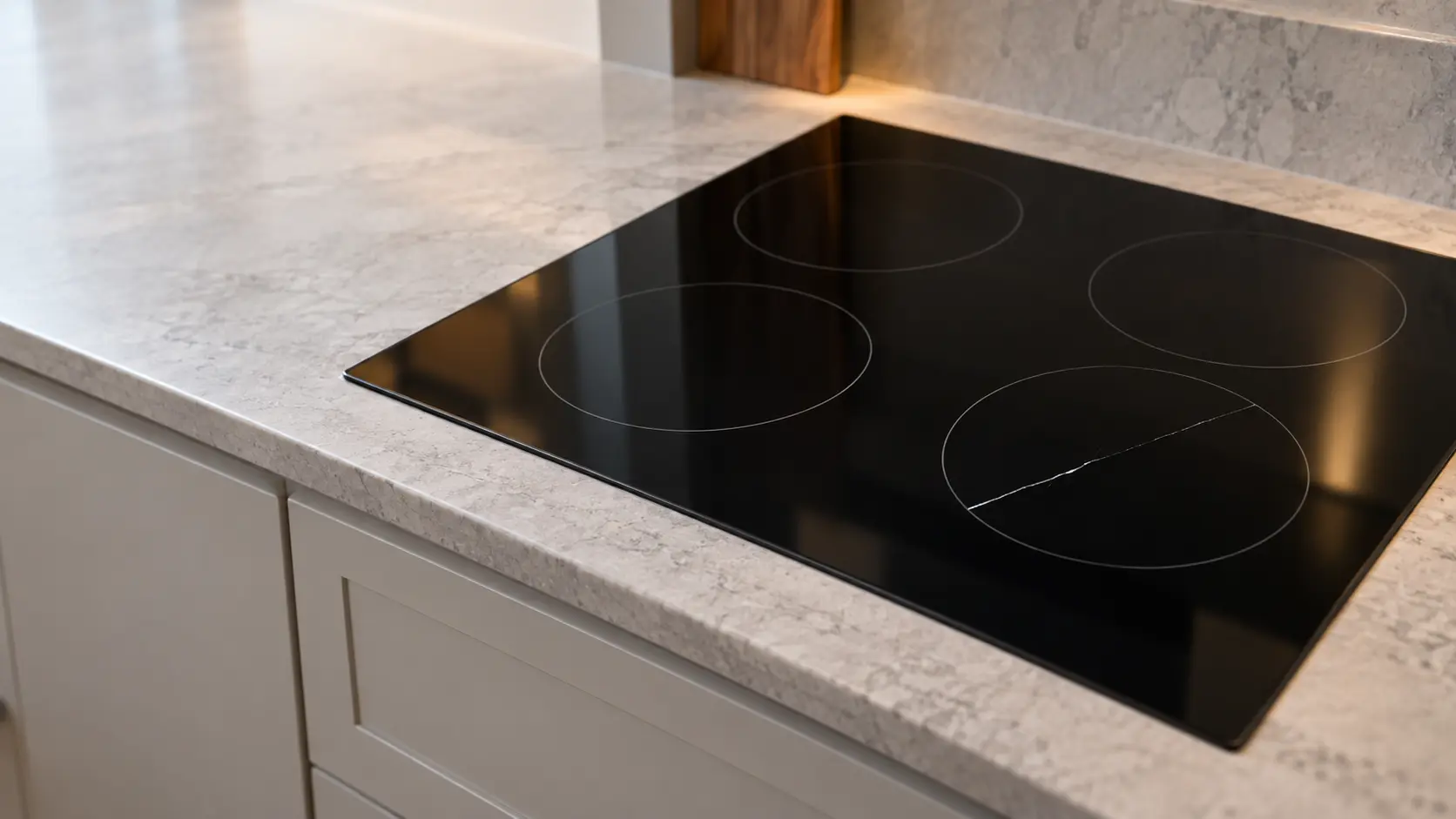
- A crack runs through the glass, often from a point of impact, sometimes branching like a star; it catches the nail and may show a step between the two sides.
- Several cracks radiating from one spot mean the glass has failed; do not press on it to see whether it moves.
How cooktop glass usually gets broken
Glass-ceramic tops tolerate heat very well and sharp blows much less well, so most breaks trace back to a moment of impact rather than to cooking. A cooktop set into a counter also has its own risks that a freestanding appliance does not: it sits at the height where things are put down, and in an island it is often the only clear flat surface in reach.
- A heavy pot, cast-iron pan or jar dropped from above the top.
- Someone standing, kneeling or climbing on the cooktop to reach an upper cabinet, which GE's manual warns against.
- Hard objects set down on the glass when the top was being used as counter space.
- A pan boiled dry and left heating on a zone.
- Stress at the edge from a cutout that is out of square, or a top that rocks on an uneven counter.
When the crack starts at the edge
A crack that begins at the rim rather than in the middle of a zone often points to how the cooktop sits in the counter. If the opening is tight, the countertop has settled or the top rests on a high spot, the glass carries a load it was never meant to. Mention this when you book: a new top dropped into the same opening can crack the same way.
Source: GE Appliances — Induction Cooktop Use and Care Guide and Installation Instructions (49-8269) — Do not operate the cooktop if the glass is broken and call for service; for a cracked glass top turn off the circuit breaker and call for service; do not allow anyone to climb or stand on the cooktop; do not install the cooktop if the glass-ceramic surface is broken or the trim damaged; rating plate on the bottom of the chassis
What replacing the glass involves
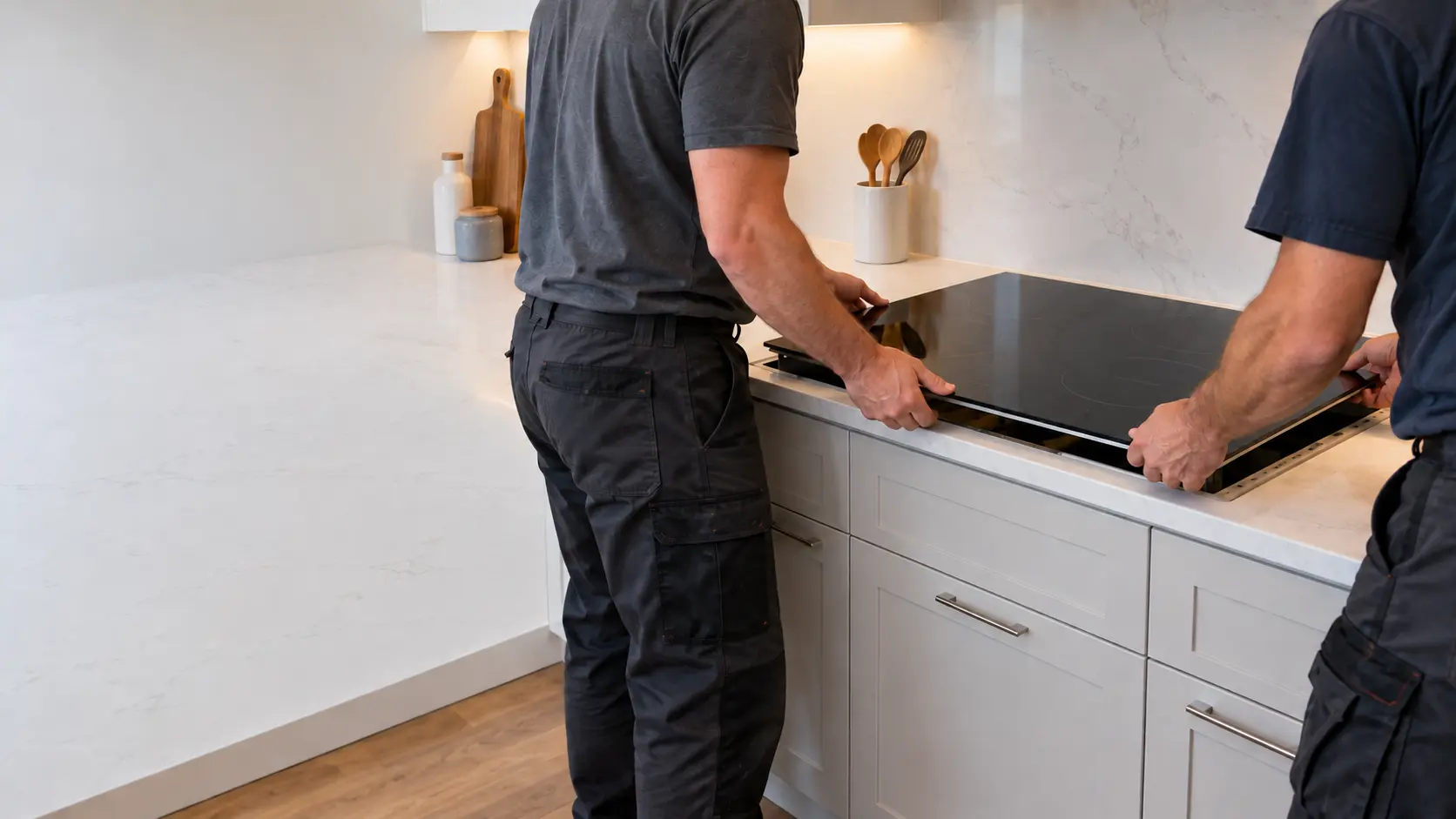
On most cooktops the glass comes as an assembly with its frame or trim, and fitting it means disconnecting power, lifting the cooktop up out of the counter cutout and working on the chassis. GE's installation instructions tell the installer not to put a cooktop in the counter at all if its glass-ceramic surface is broken or its mounting trim is damaged, which is a fair summary of why nobody patches the old glass.
Whether replacing the glass makes sense depends on the age of the cooktop and on whether the part is still made. A glass top replacement is one of the more significant cooktop repairs, and for an older model, or one with other problems waiting, replacing the whole cooktop can be the better use of the money. A technician can tell you which side of that line yours falls on once the model number is known and the part has been checked.
Find the model number before you call
Replacement glass is ordered by the full model number, not by the name on the knobs. GE notes that the rating plate on its induction cooktop is on the bottom of the chassis; on many cooktops a copy of the label is also reachable from the cabinet below or printed in the manual. A photograph of the label saves a second trip.
Source: GE Appliances — Induction Cooktop Use and Care Guide and Installation Instructions (49-8269) — Do not operate the cooktop if the glass is broken and call for service; for a cracked glass top turn off the circuit breaker and call for service; do not allow anyone to climb or stand on the cooktop; do not install the cooktop if the glass-ceramic surface is broken or the trim damaged; rating plate on the bottom of the chassis