


Cooktop
Gas Smell
A rotten-egg or sulfur odor rises from the cooktop, from the seam where it meets the counter, or from the cabinet doors underneath, whether a burner is lit or not.
Mon–Sat, 8am–8pm
- Gas, fire, broken glass or live current
- 5 questions that narrow it
- 5 causes, cheapest first
Book a visit
Three short steps, about a minute.
or call (844) 252-4077
Loading appointment form…
The appointment form couldn’t load. Please try again.
Smell gas? Get everyone out first. No gas: switch the breaker off
A gas odor that stays is an emergency. Leave the house, avoid anything that might spark on the way out, and phone the gas utility or 911 once outside. Never search for the leak, turn a fitting or relight a burner yourself; repair work on the cooktop starts only after the utility has declared the home safe.
What it
usually means.
Natural gas and propane carry an added odorant precisely so that a leak announces itself early. On a built-in cooktop the gas does not come through a wall behind the appliance; it rises through the cabinet below, through a shutoff, a flexible connector and a pressure regulator fixed under the burner box, then along a manifold to one valve per knob. Any of those joints can seep, and the odor often gathers inside the closed cabinet before anyone notices it up at the counter. A puff that vanishes the instant a burner catches is ordinary. An odor that lingers, grows, or greets you in a kitchen with every burner dark is a leak until the gas utility says otherwise, and the cooktop is looked at only after they have cleared the home.
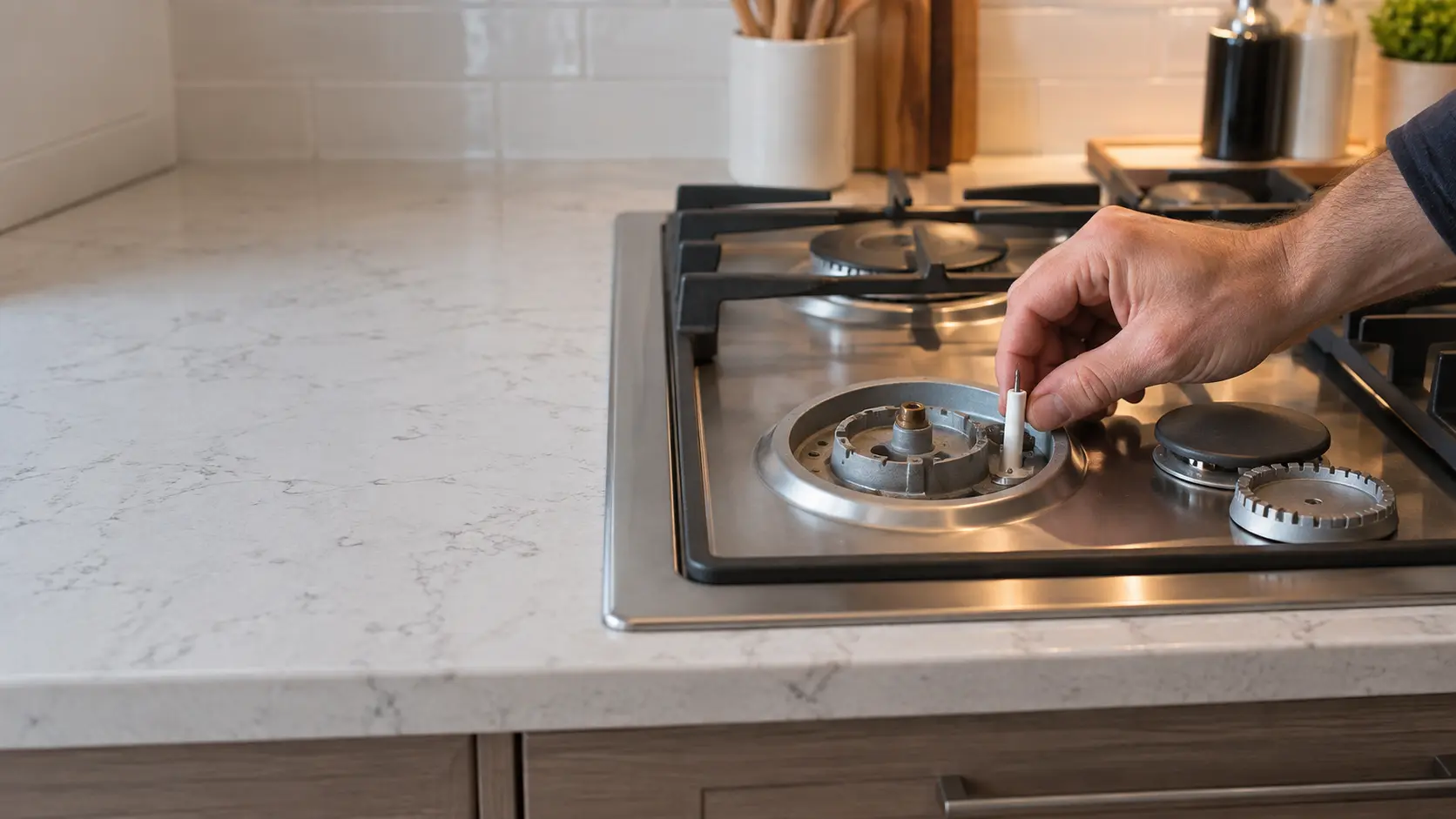 The 5 causes, cheapest first
Answer these first
Does the odor fade the moment the flame takes hold, or does it hang in the kitchen afterward?
Is it stronger when the cabinet doors beneath the cooktop are opened than up at the burners themselves?
Are all the knobs at their off stop, including a front-mounted rangetop knob that a hip can brush in passing?
Was the cooktop recently installed, swapped, or lifted out of the counter for a countertop job?
Does the home run on natural gas from the street or on propane from a tank?
Check these
before you book.
Cooktop gas smell: 5 checks, and none of them costs anything.
If the odor is strong or keeps returning, get every person and pet out of the house now, without pausing to open windows.
Leave light switches, the cooktop knobs and your phone alone until you are outdoors, because a switch or an igniter can throw a spark.
From outside and well away from the house, phone your gas utility's emergency line or 911.
Also worth checking
- Do not open the cabinet under the cooktop to hunt for the leak or to turn the shutoff; isolating and testing the line is the utility's job.
- When you book the repair, tell us what the utility found and whether they left a red tag on the cooktop.
The causes,
cheapest first.
5 things cooktop gas smell turns out to be, from food or cleaner burning off the grates to seeping joint at the regulator or connector under the counter.
The cost guide-
01 no repair
Food or cleaner burning off the grates
A spill charring on a burner, degreaser left on cast-iron grates or the first firing of a new cooktop can smell sharp or oily. None of that smells of sulfur, and it dies down once the residue has cooked off; if you are unsure which smell it is, act as though it is gas.
-
02 low
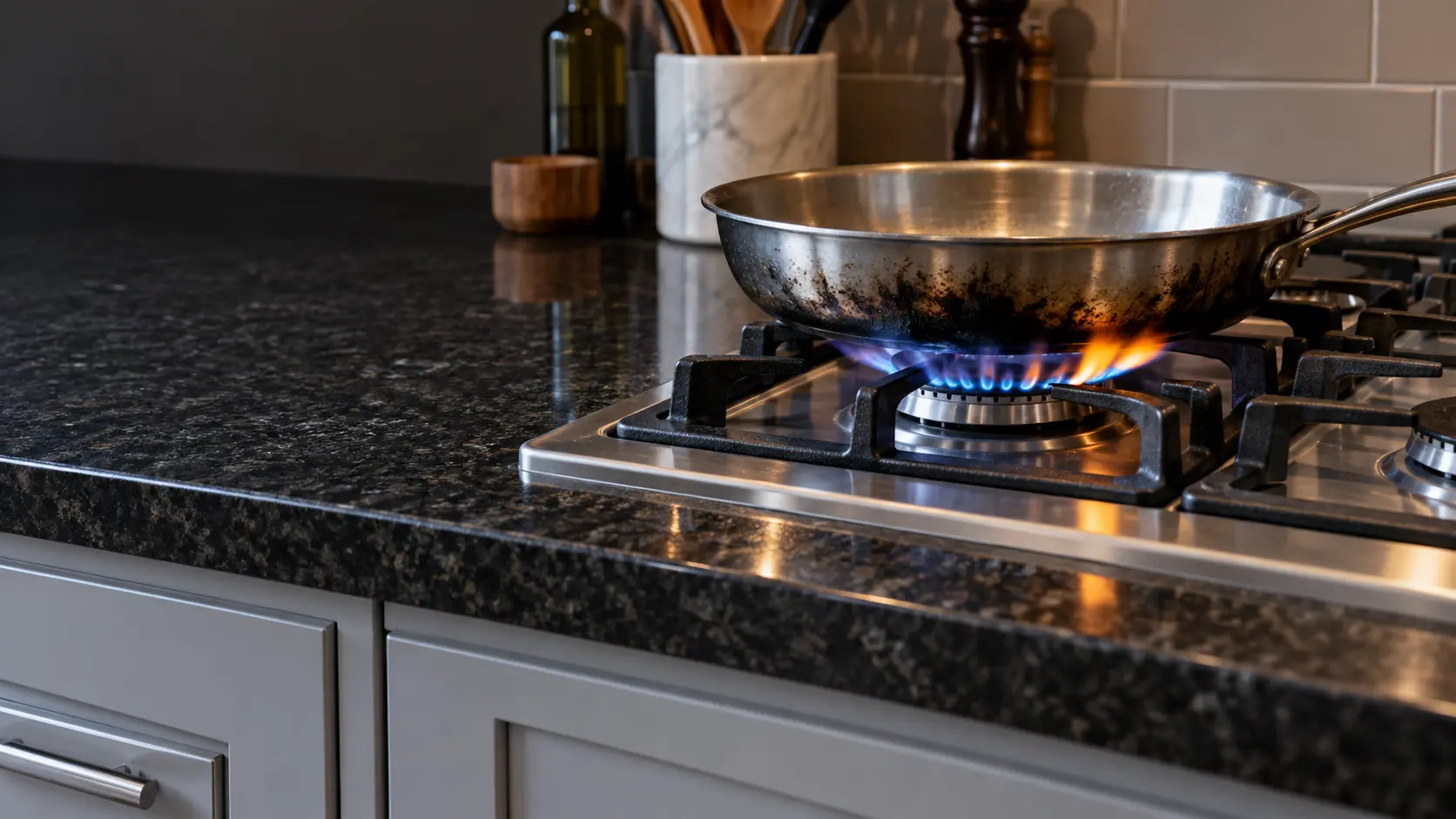
Flame snuffed out while the knob stayed on
A boil-over, a cap knocked askew or air pulled across the top by a downdraft vent can snuff a low flame, and on a model without reignition the gas keeps coming until the knob is turned off.
-
03 moderate
Knob valve that no longer seals
Each burner has its own valve on the manifold behind its knob. A worn valve, or a knob that stops a hair short of off, lets a thin stream of unlit gas pass.
-
04 moderate
Loose fitting left from a propane conversion
Moving a cooktop between natural gas and propane means new orifices and a regulator change. A step skipped or a fitting not fully tightened during that work can leak at a burner base or under the top.
-
05 varies
Seeping joint at the regulator or connector under the counter
The regulator and connector live in a cabinet where pots, trash bins and drawer boxes knock against them for years, and a countertop replacement that lifted the cooktop out can strain a fitting. Locating and isolating the leak comes first and belongs to the utility; the appliance side is put right only after they have cleared the home.
-
What it costs
Every repair on the site's cost scale, side by side
Open the cost guide
What else
it could be.
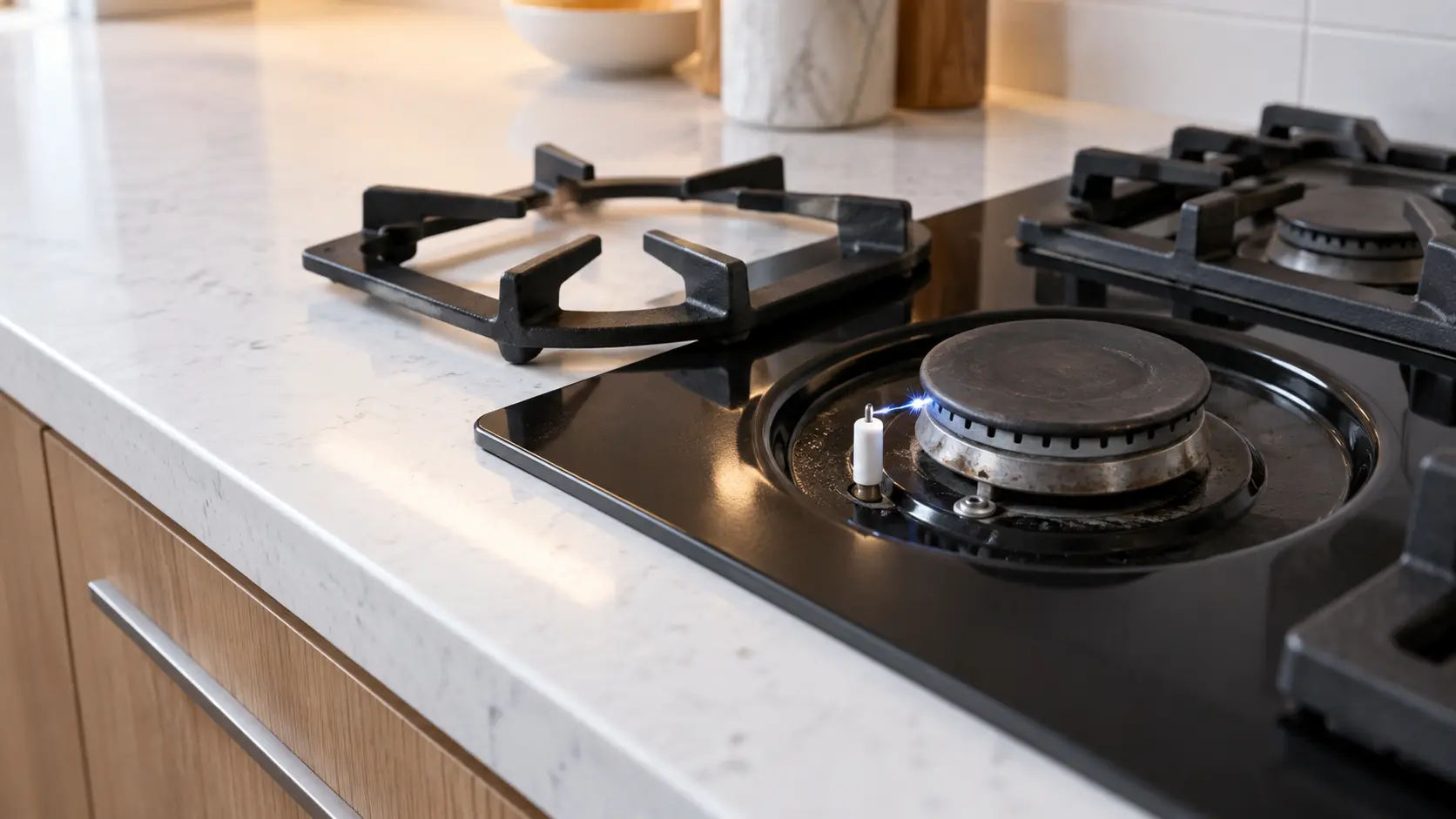
Most often confused with cooktop burner won't light, then cooktop flame yellow or uneven.
All problems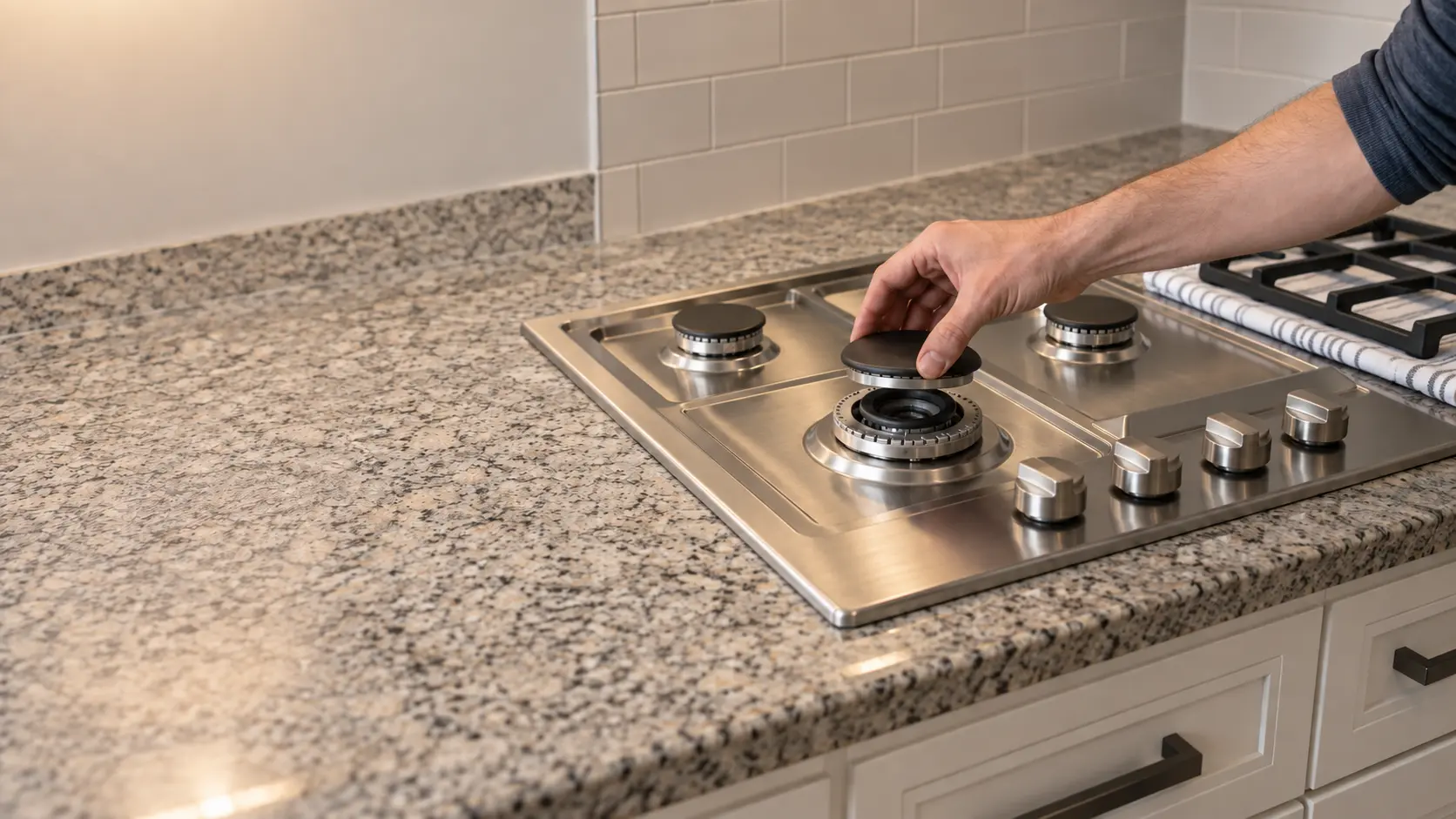

The makes
it happens on.
29 makes on this site; cooktop gas smell can show up on any of them. Each mark opens that make's own page.
All 29 brandsCooktop Gas Smell,
where we come out.
9 metros, each with its own page.
All service areasTampa BayFL · 31 areas
Miami / South FloridaFL · 47 areas
New York MetroNY · 75 areas
HoustonTX · 36 areas
ChicagoIL · 50 areas
Los AngelesCA · 95 areas
San DiegoCA · 31 areas

Questions about
cooktop gas smell.
Is a quick whiff of gas when a burner lights normal?
Why does the smell seem strongest inside the cabinet under the cooktop?
Propane sinks. Does that change what I should do?
Will my carbon monoxide alarm warn me about a gas leak?
Back to your everyday
Still seeing cooktop gas smell?
Book with what you checked above — 5 answers save the technician the first part of the visit.