
Gas
Cooktop Repair
A gas cooking surface dropped into a countertop cutout, with its gas line and power cord running down into the cabinet underneath.
Mon–Sat, 8am–8pm
- 4 things that fail on it
- 26 makes build it
- 6 problems it shows
Book a visit
Three short steps, about a minute.
or call (844) 252-4077
Loading appointment form…
The appointment form couldn’t load. Please try again.
Is yours
a gas?
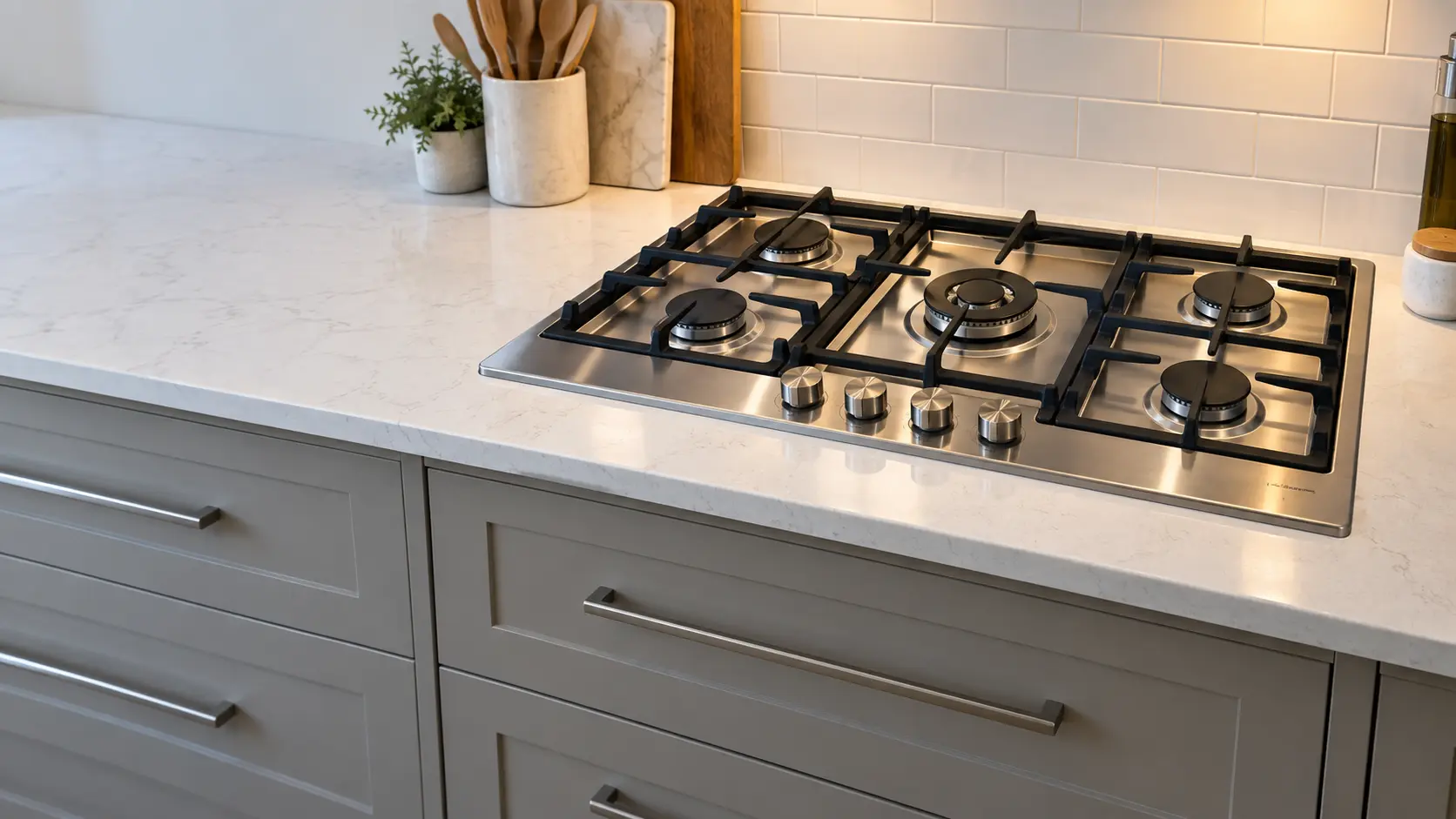
A gas cooktop is only the top of the cooking job: burners, grates, valves and a spark system in a shallow steel pan that hangs by its rim in a hole cut through the counter. Everything that feeds it arrives from the cabinet directly below, where a shutoff valve, a pressure regulator and a flexible connector meet the manifold, and a short cord plugs into an outlet for the spark module. Many gas cooktops sit above deep drawers or a separate built-in cooking appliance, and some share the counter with a downdraft vent that rises behind the burners. Because the body is only a few inches deep, most parts are reached by lifting the top out of the counter rather than by pulling anything forward, which is what makes gas cooktop repair a job of its own.
 What fails on a gas cooktop
How to tell
Grates and burner caps sit on a surface that is level with the countertop, with only cabinet doors or drawers beneath it.
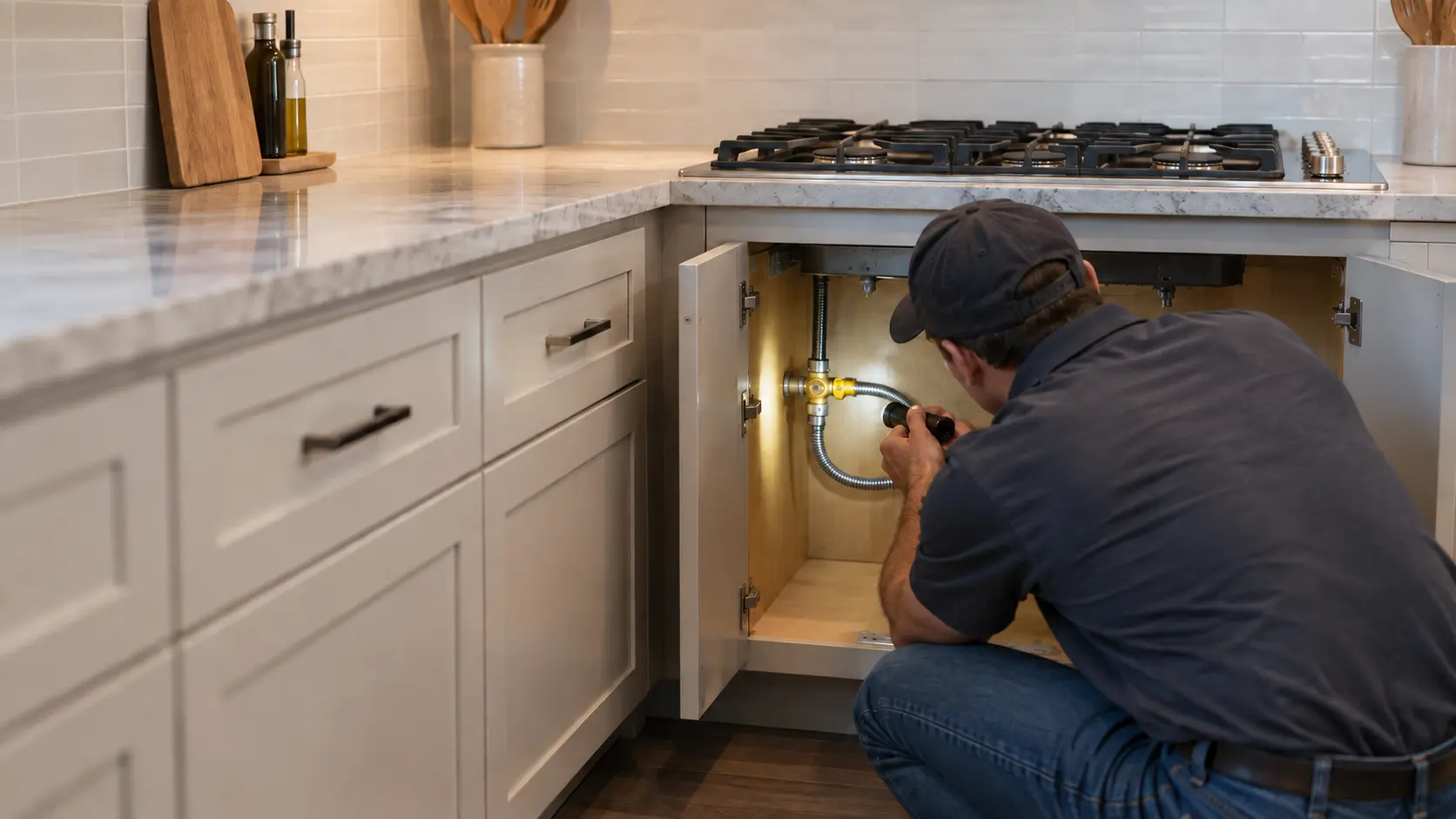
Opening the cabinet under the cooktop shows a coated or stainless flexible gas line rising to the underside of the unit.
Turning a knob clicks a few times and lights a ring of flame, and the knobs sit on the top surface or on its front lip rather than on a panel of their own.
The rating plate is stuck to the bottom of the burner box, and a copy often sits on a card taped inside the cabinet or in the owner's packet.
What fails
on this design.
On a gas cooktop: electrodes soaked by a boil-over, clogged ports under the cap, spark switches on the valve stems, valves and the regulator.
The problems it showsElectrodes soaked by a boil-over
Water and sauce run down around the burner base and reach the ceramic electrode. The burner then clicks with no flame until the part dries, and a cracked one never lights reliably again.
Clogged ports under the cap
Grease and cleaning spray bake into the slots of the burner head. The flame comes up patchy, tall and orange on one side, or refuses to catch at all.
Spark switches on the valve stems
A switch that stays closed sends the whole top into nonstop clicking. Liquid that seeps past a knob is the usual cause, and the switch sits on the stem beneath the top.
Valves and the regulator
Rare, but serious: a valve that sticks, seeps at its stem or will not hold a low flame is replaced, and the connection under the counter is tested for leaks afterward.
Getting at it,
and whether to.
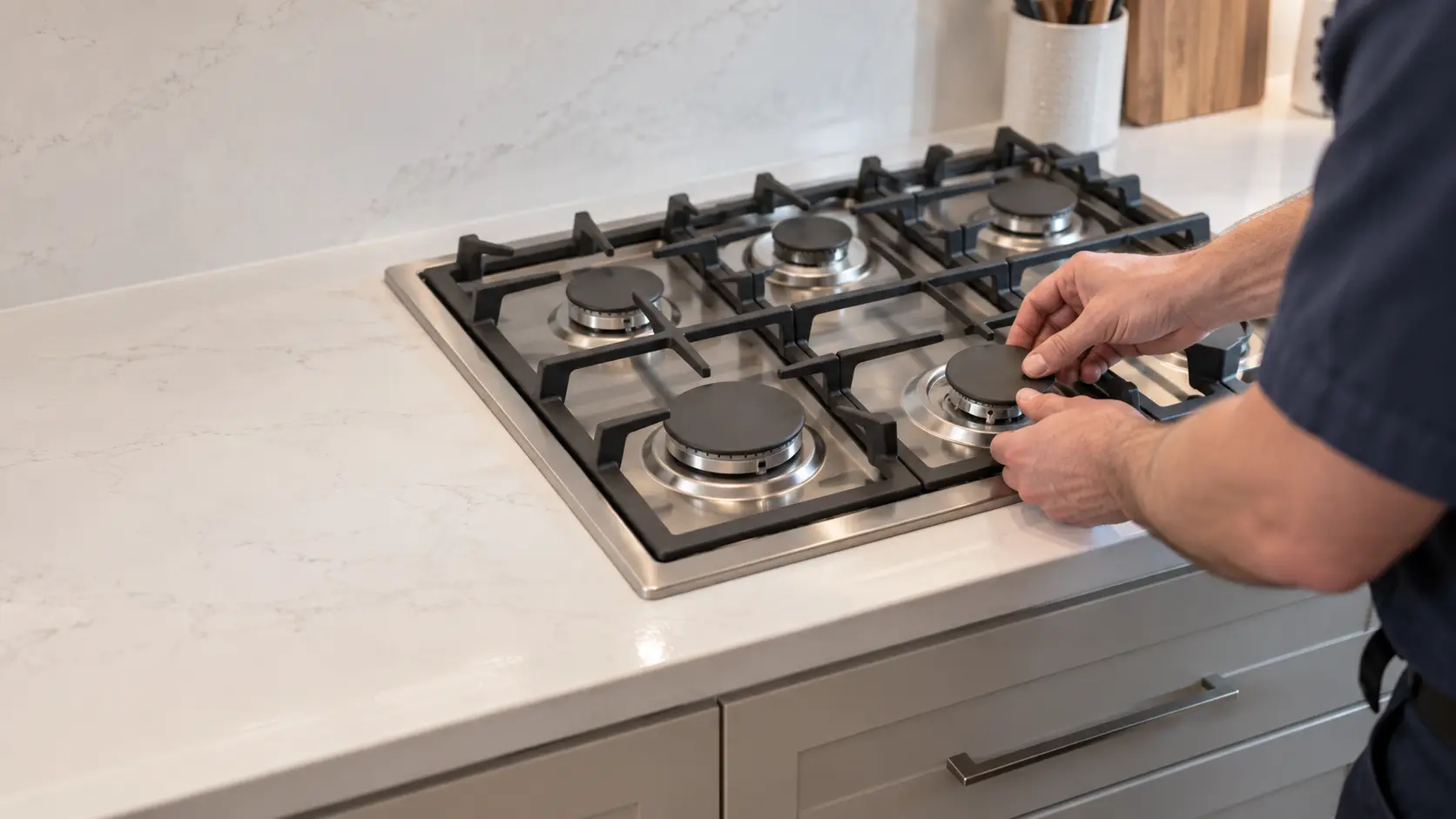
Grates, caps and burner heads lift off by hand, and the electrode is right below them, so the first look happens without tools.
What repairs costOn the visit
- For the valves, switches and manifold, the cooktop is released from its clips or brackets and raised out of the counter, with the gas closed at the valve in the cabinet first.
- The regulator, the connector and the spark module are usually reached from inside the cabinet, so clearing that space before the visit saves time.
- When the cooktop sits over drawers or a second built-in appliance, the room for hands underneath is tight, and a job there takes longer.
Repair or replace
Keeping a gas cooktop working is usually the sensible choice. Electrodes, spark switches, burner heads and even a valve are modest parts, and a new cooktop has to match the existing cutout to a fraction of an inch or the counter gets recut. Replacement makes more sense when a model's valves or top are no longer sold, the burner box has corroded, or you want to change fuel altogether.
Book a visit for a gas cooktopThe problems
it shows.
On a gas cooktop, most often cooktop burner won't light.
All problems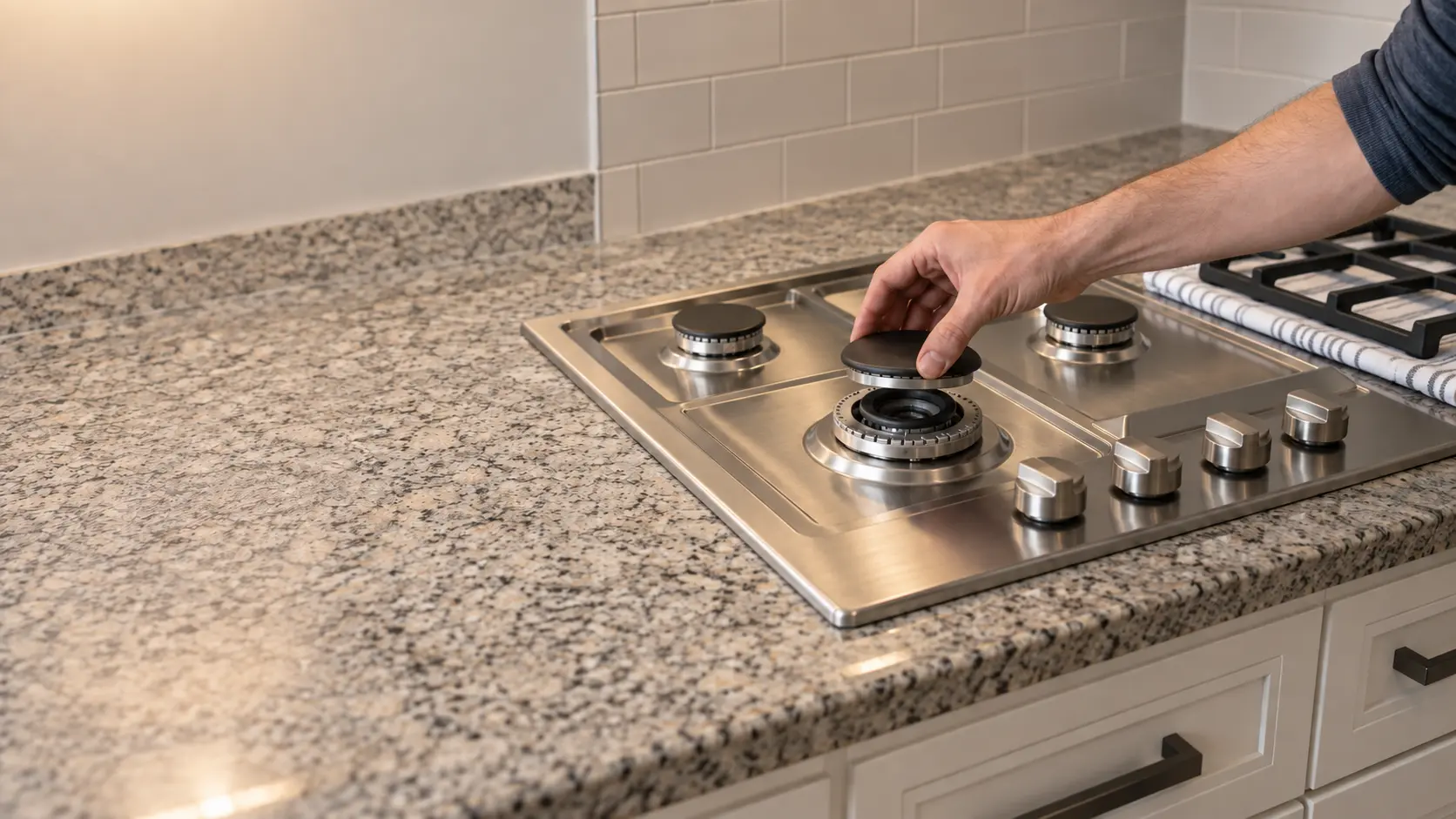
Cooktop Burner Won't Light
6 causes, cheapest first
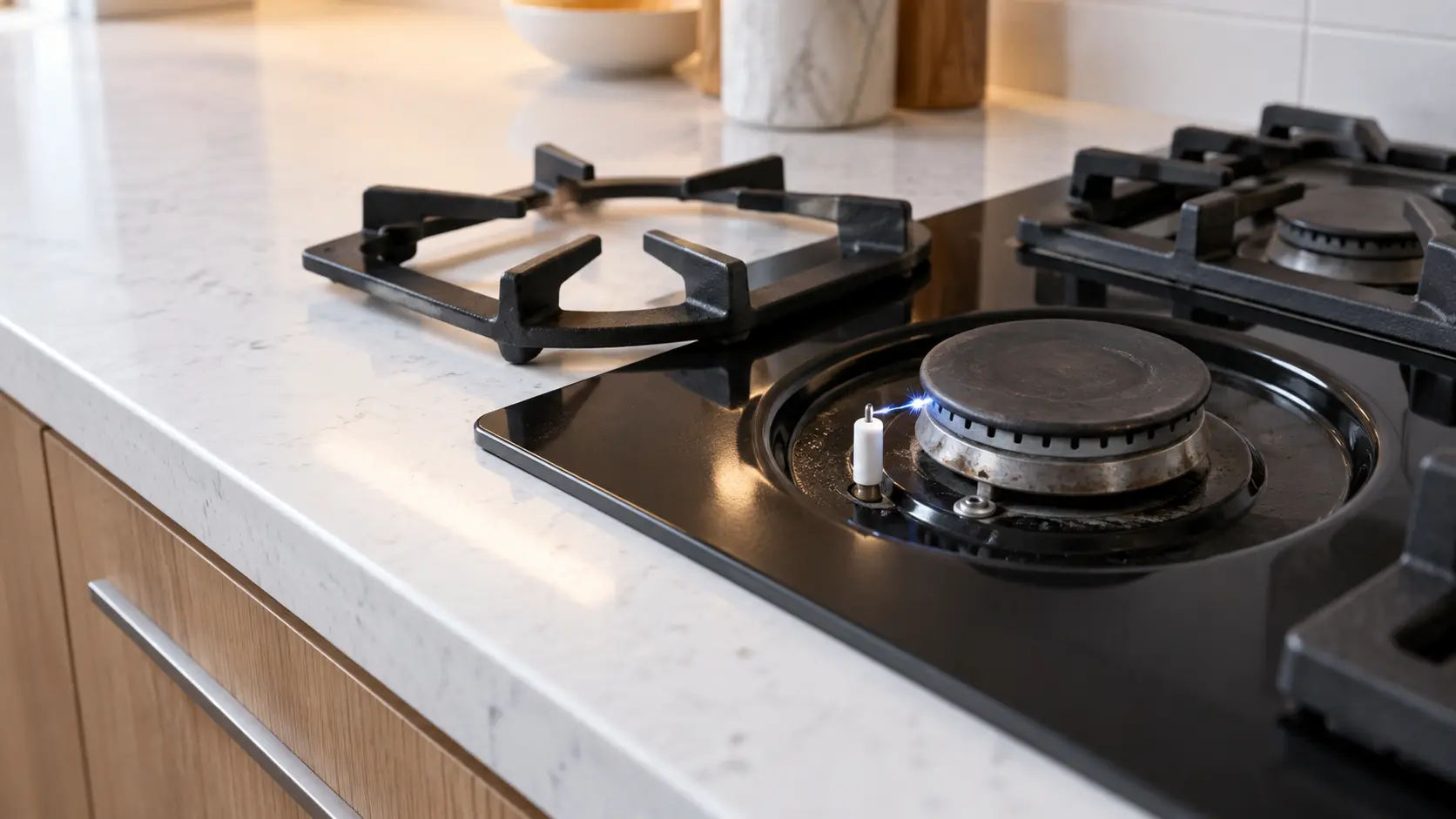
Cooktop Igniter Keeps Clicking
5 causes, cheapest first
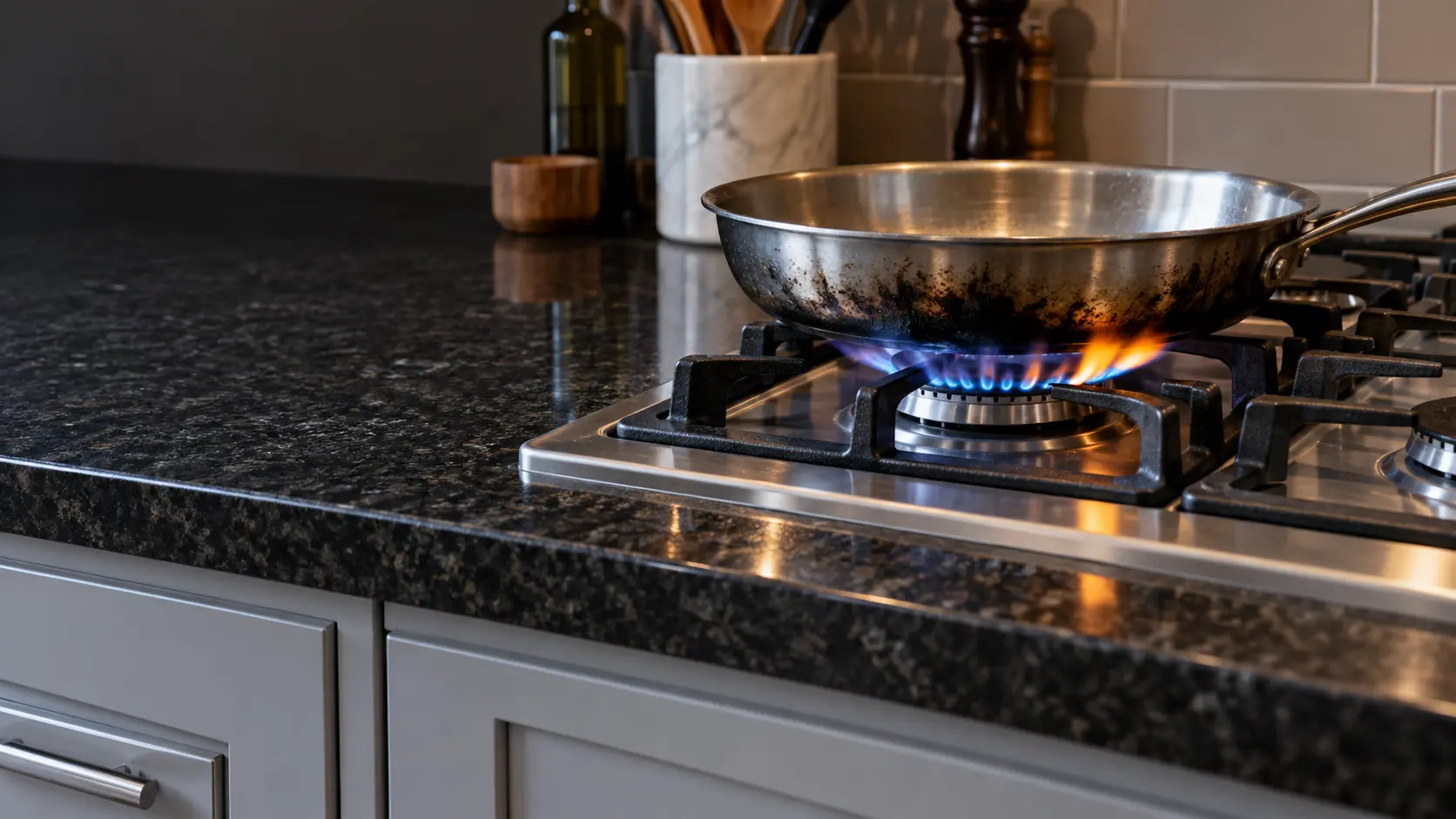
Cooktop Flame Yellow or Uneven
6 causes, cheapest first
Cooktop Gas Smell
5 causes, cheapest first

Cooktop Burner or Element Won't Turn Off
6 causes, cheapest first

Cooktop Fan Runs Constantly
6 causes, cheapest first
Who builds
a gas.
26 of the makes on this site build a gas cooktop. Each mark opens that make's own page.
All 29 brandsGas cooktop repair,
where we come out.
9 metros, each with its own page.
All service areasTampa BayFL · 31 areas
Miami / South FloridaFL · 47 areas
New York MetroNY · 75 areas
HoustonTX · 36 areas
ChicagoIL · 50 areas
Los AngelesCA · 95 areas
San DiegoCA · 31 areas

Questions about
gas cooktops.
Every burner on my gas cooktop clicks, even the ones I did not turn on. Is that normal?
Where is the gas shutoff for a cooktop?
Can I put a gas cooktop of the same width from another make into my counter?
What should I do if I smell gas at the cooktop?
Back to your everyday
Is it a gas cooktop?
Say so when you book — it changes what the technician brings and how the visit is planned.