
Cooktop
Diagnostic Visit
A visit that runs every burner or zone on the cooktop, looks under it from the cabinet below and names the failed part before anything is ordered.
Mon–Sat, 8am–8pm
- Price before any work
- 5 steps on the visit
- 6 problems it answers
Book a visit
Three short steps, about a minute.
or call (844) 252-4077
Loading appointment form…
The appointment form couldn’t load. Please try again.
What the cooktop diagnostic visit
involves.
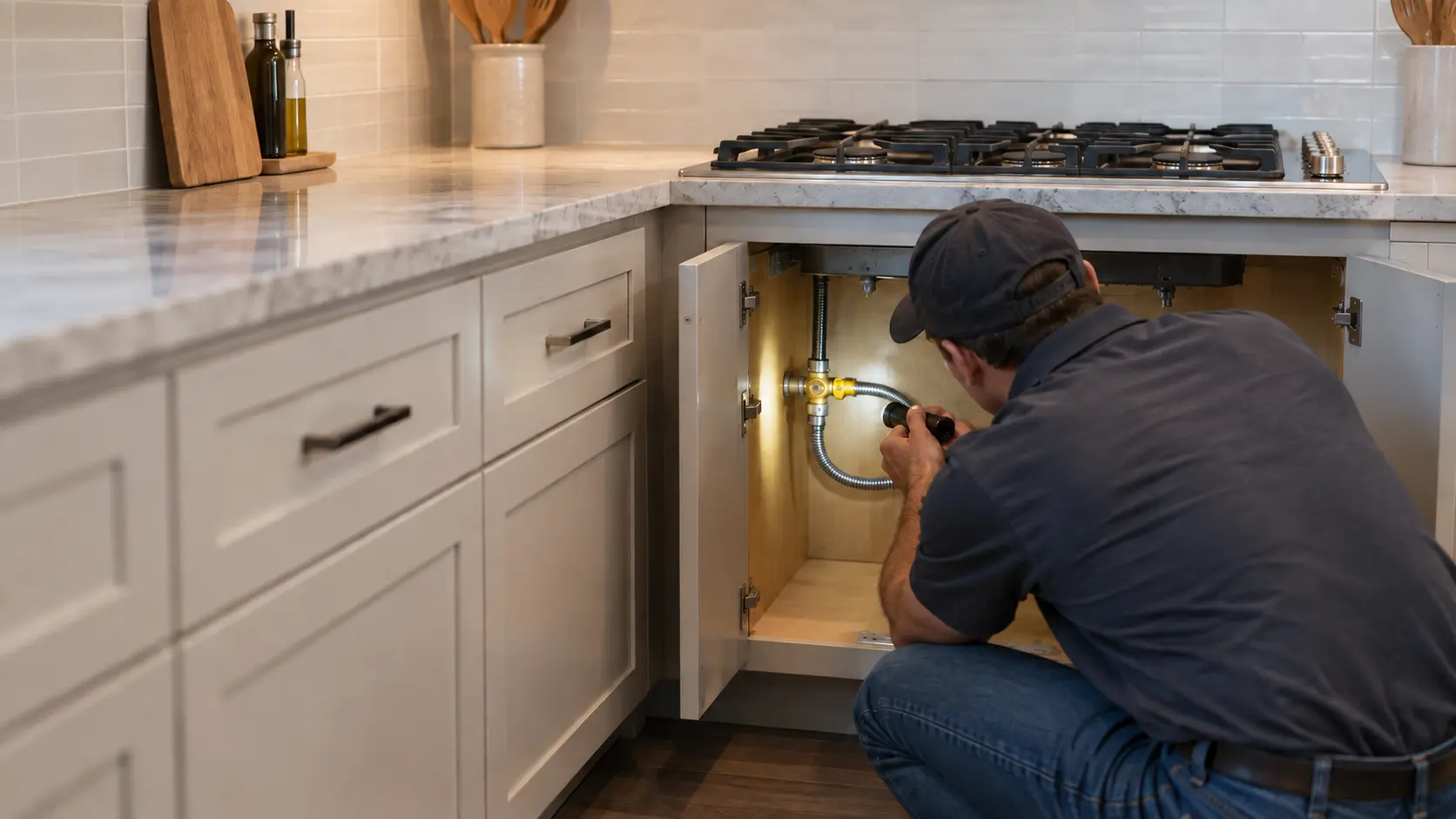
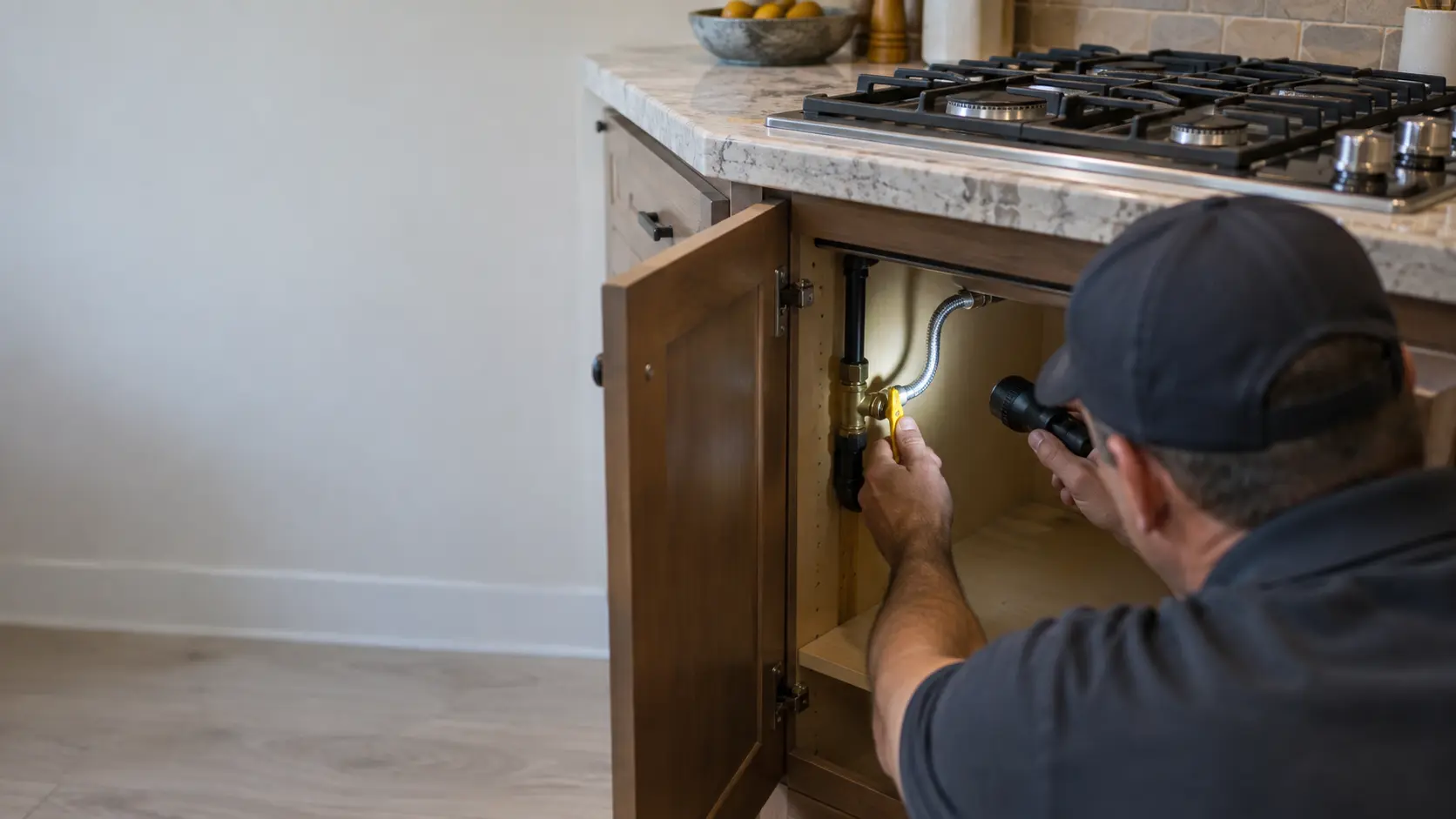
A cooktop diagnostic visit begins at the counter, with the problem happening in front of the technician. Every burner is lit, or every zone is started with a pan on it, from the lowest setting to the highest, and the controls, the hot-surface lights and any downdraft fan are run as well. Then the check moves under the counter: the gas shutoff and connector, or the junction box and the breaker, and the space the cooktop needs for air. Only after that does the unit come out of its cutout, if it has to, and parts are measured rather than guessed at. You are left with a named cause, the work it needs and a price, or plain advice that a new cooktop suits the opening better.
How the visit goesWhat it costsA cooktop is priced once it has been tested
The scale on this page shows where cooktop jobs tend to fall, never what yours will come to.
Answers 6 problemsCooktop Element Not Heating
Cooktop Burner Won't Light · Cooktop Error Code · Cooktop Controls Unresponsive · Cooktop Tripping Breaker · Cooktop Burning Smell
Comes up most onGas cooktop
Electric cooktop · Induction cooktop · Rangetop
Diagnostic visit,
step by step.
Name the failed part, the work and the price, or say plainly when the cooktop is not worth the repair.
Run the cooktop as you use it: light every burner or start every zone with a pan, from simmer up to full heat.
Check what sits beneath the counter, including the gas shutoff, the connector, the junction box, the breaker and the air space under the unit.
Lift the cooktop from its cutout when the answer is underneath, and test the electrodes, elements, switches, boards or fan with a meter.
Look for gas at every fitting on a gas model and for heat marks on the wiring of an electric or induction model.
Name the failed part, the work and the price, or say plainly when the cooktop is not worth the repair.
The problems
it answers.
6 of them, from cooktop element not heating to cooktop burning smell.
All problems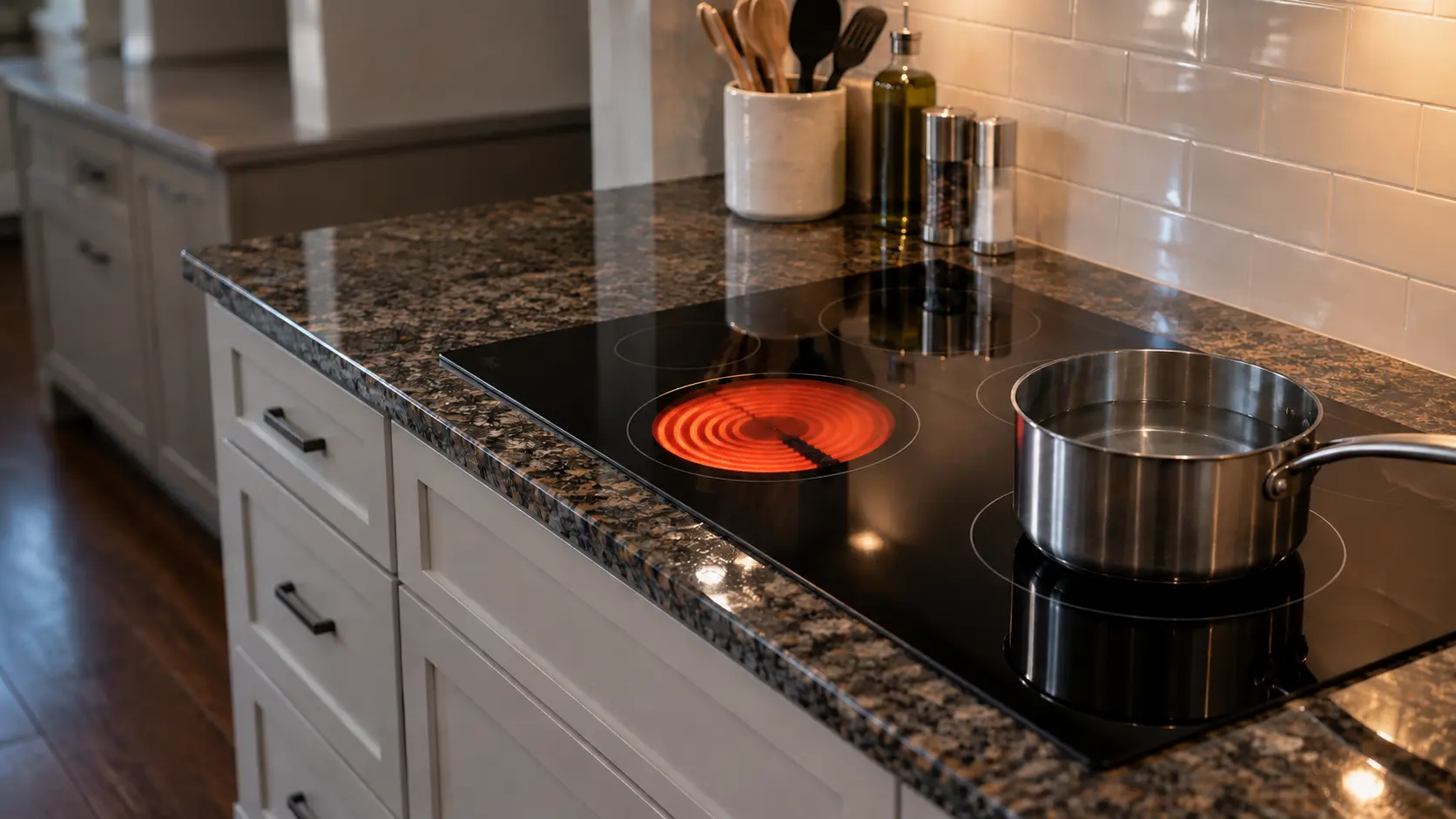
Cooktop Element Not Heating
6 causes, cheapest first
Before you call
Tell us this when you book
- Whether the cooktop is gas, electric coil, radiant glass, induction or a pro rangetop
- Which burner or zone misbehaves, and on which settings
- Any code, blinking symbol or light on the controls
- The model number from the plate under the unit or the card in the cabinet below
It also answers
A price before
any work.
The scale on this page shows where cooktop jobs tend to fall, never what yours will come to. A zone that stays cold can be an element, a limiter, a switch, a relay or a board; a burner that only clicks can be a wet electrode, a cracked one or a tired module. A description cannot separate them. A figure given before the cooktop has been run and measured is a guess, or it is padded to cover the worst case. Here the price comes after the diagnosis and before any part is fitted, and whether to go ahead is your call.
Read the full cost guideWhere it
comes up most.
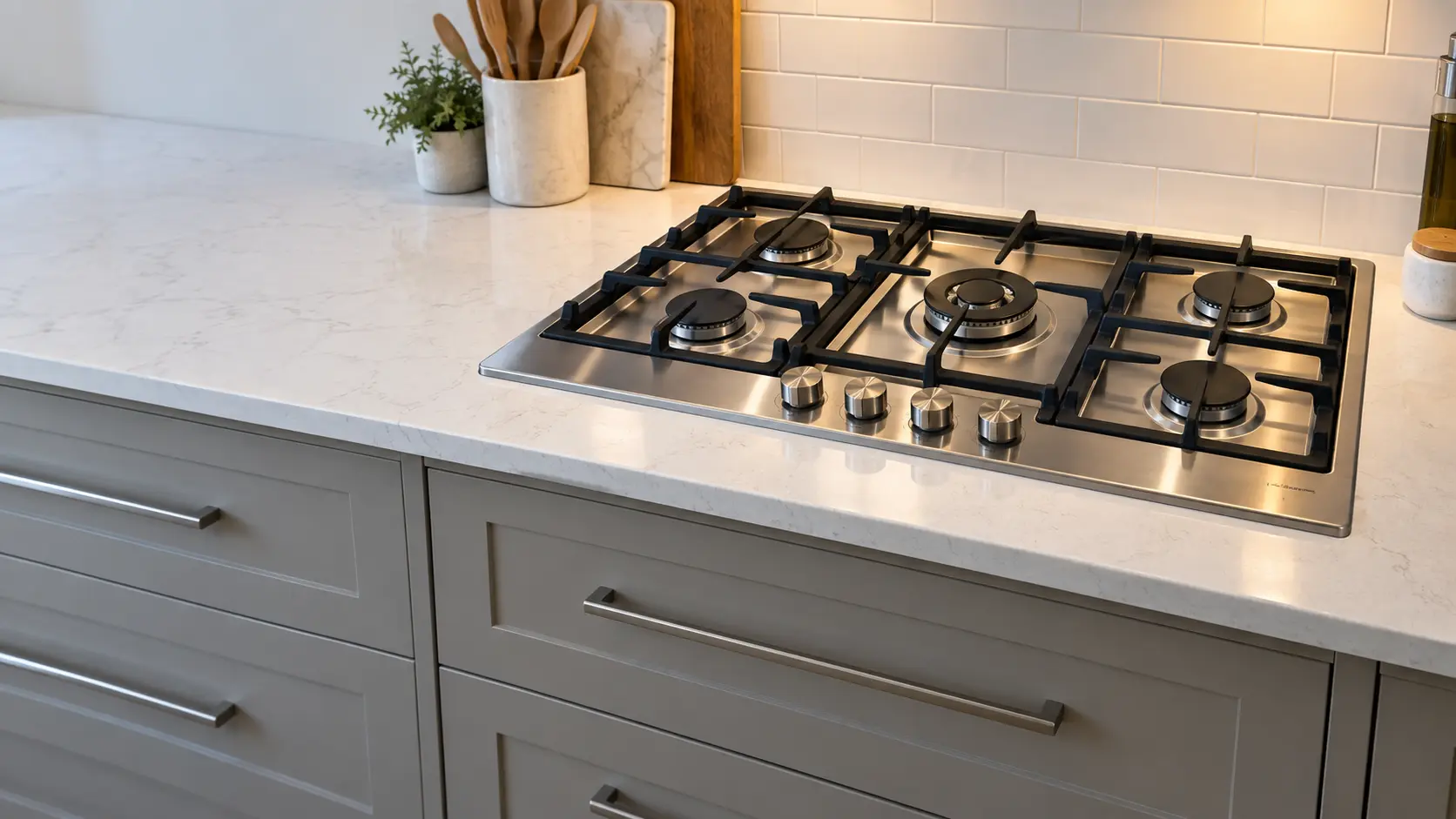
Most bookings: Gas cooktop, Electric cooktop, Induction cooktop, Rangetop.
All cooktop typesOften the same visit
The makes
we see it on.
29 makes on this site, and the cooktop diagnostic visit on any of them. Each mark opens that make's own page.
All 29 brandsDiagnostic visit,
where we come out.
The kitchen, the climate and the building all change how the cooktop diagnostic visit goes. These notes are about that, metro by metro.
All service areasTampa BayFL · 31 areas
Around Tampa Bay most built-in cooktops are electric, radiant glass or coil, so the diagnostic begins at the junction box in the cabinet below, confirming both legs of the 240-volt feed before any element or switch is judged, since summer surges leave scorched splices there as often as in the cooktop.
OrlandoFL · 30 areas
Orlando builder kitchens and rental homes often set a glass cooktop over drawers or a separate oven, and the diagnostic reads the model tag under the burner box, runs every zone and control, so the part that failed is identified by number before any order goes in.
Miami / South FloridaFL · 47 areas
In South Florida towers the cooktop is almost always radiant or induction glass set into stone, so the diagnostic is done from above the glass and from the cabinet beneath, inside the building's work hours, without lifting the top out unless a part demands it.
New York MetroNY · 75 areas
A New York diagnostic often takes place in a galley kitchen where a gas cooktop sits over an under-counter oven or a bank of drawers, and ignition, flame and each valve are tested with the shutoff in the base cabinet within reach.
HoustonTX · 36 areas
Houston kitchens split between gas cooktops and electric or induction ones, so the diagnostic first settles the fuel and the model, then tests burners, zones and controls, and after a storm outage looks for surge damage on the boards.
ChicagoIL · 50 areas
Chicagoland houses mostly cook on gas, so a diagnostic on a built-in cooktop usually covers igniters, the spark module and every burner valve, and in lakefront high-rises it turns to radiant or induction zones on their own circuit instead.
Los AngelesCA · 95 areas
In Los Angeles the diagnostic often meets a pro rangetop on a base cabinet or a 36-inch gas cooktop in an island, and it runs every burner at high and at simmer along with any griddle, grill or downdraft built into that counter.
San DiegoCA · 31 areas
A San Diego diagnostic reads the cooktop's model and fuel first, since established houses lean toward gas and newer ones toward induction, and in homes near the beach it adds a look at electrodes and connectors for salt corrosion.
San Francisco Bay AreaCA · 74 areas
Bay Area kitchens are moving from gas cooktops to induction, so a diagnostic may test a burner valve in one house and a generator board in the next, including whether the cabinet under an induction top leaves it enough cooling air.

Questions about
the cooktop diagnostic visit.
What should I clear before the technician arrives?
Will the cooktop have to come out of the counter?
Can the problem be diagnosed from a photo or a description?
Does the diagnostic fee count toward the repair?
Back to your everyday
Ready to book the cooktop diagnostic visit?
Have these to hand: whether the cooktop is gas, electric coil, radiant glass, induction or a pro rangetop, which burner or zone misbehaves, and on which settings, any code, blinking symbol or light on the controls, the model number from the plate under the unit or the card in the cabinet below.