What an induction zone actually gives off
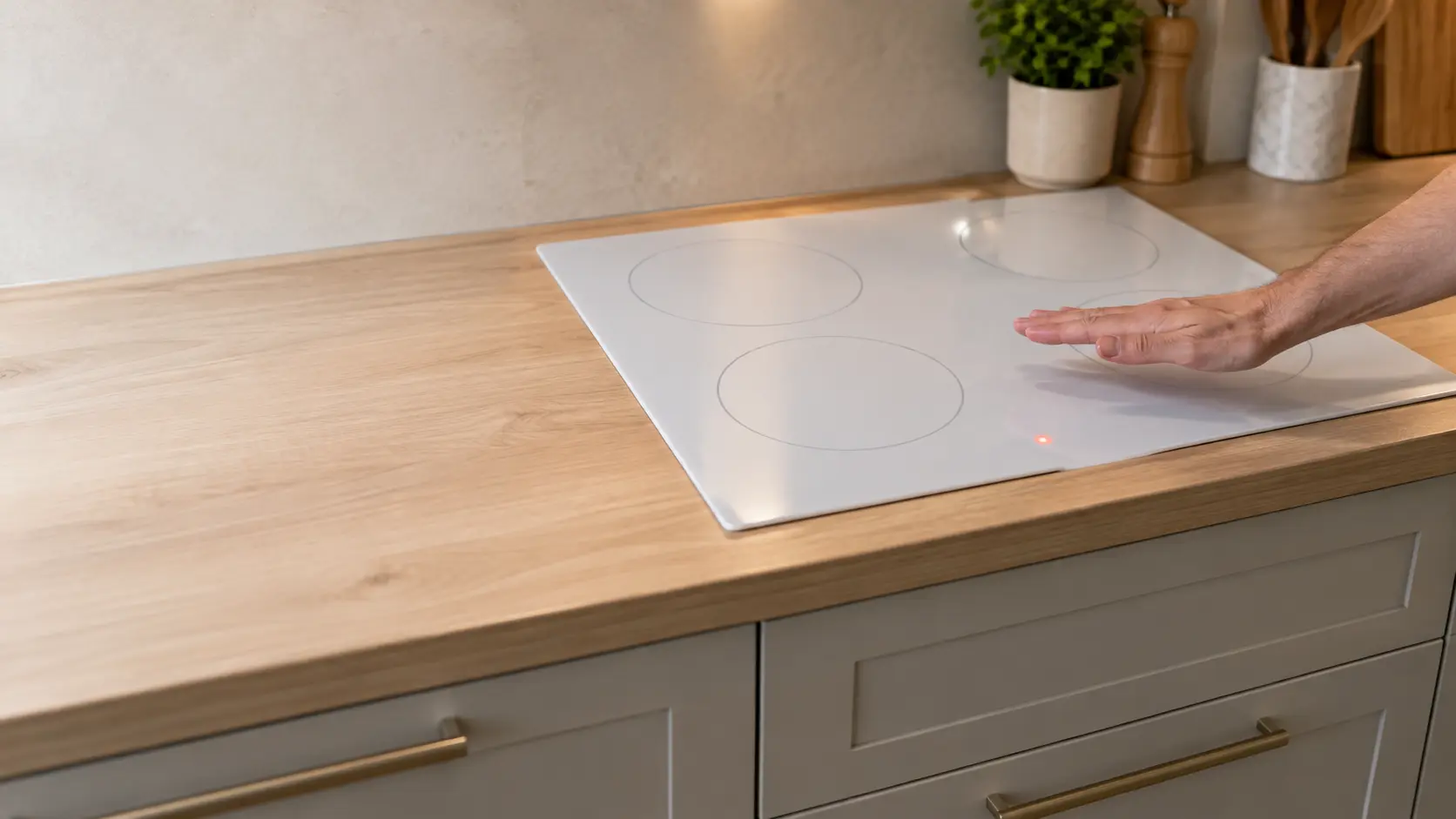
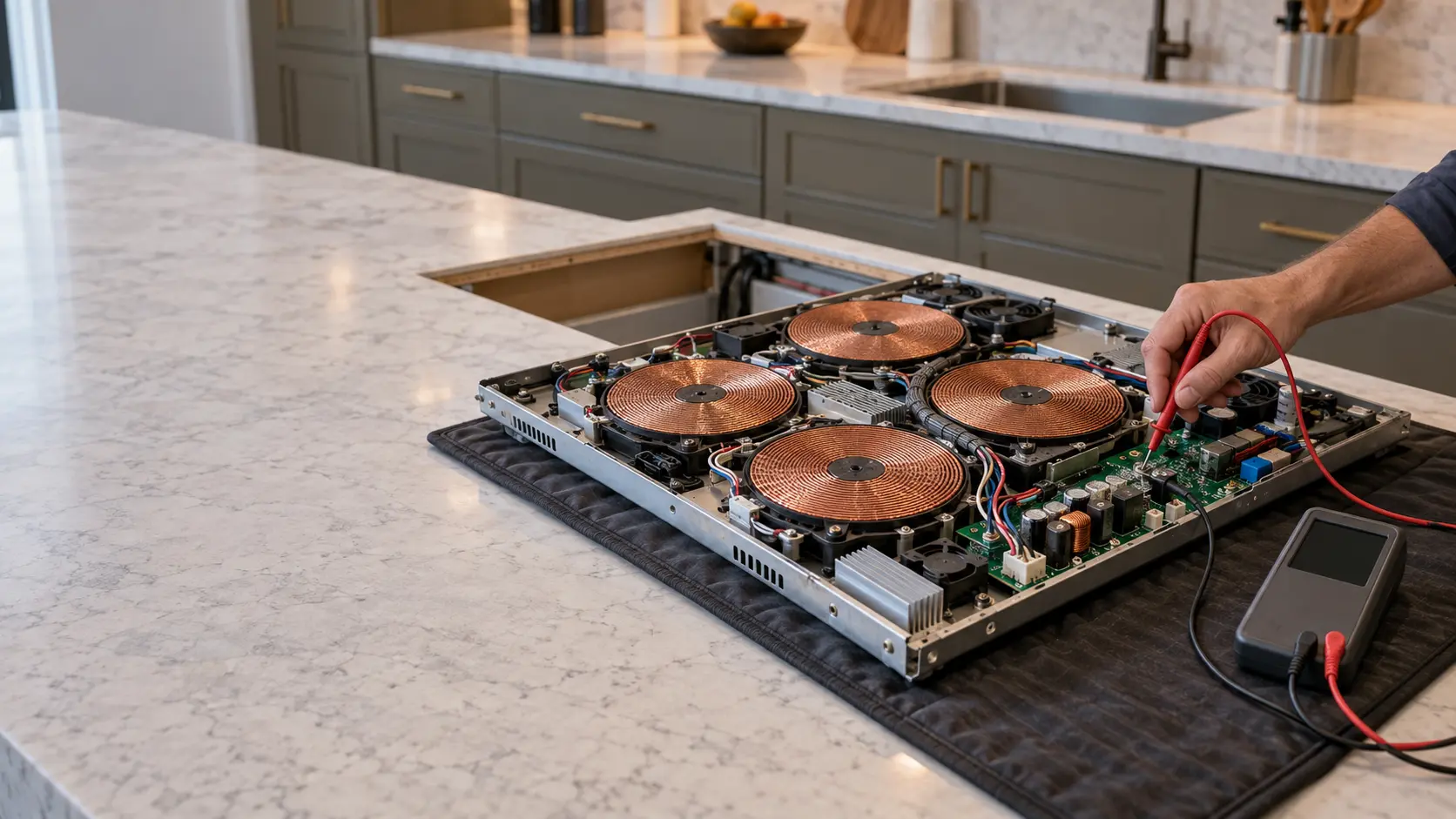
Under each zone of an induction cooktop is a flat copper coil. When the zone is on, a board drives an alternating current through that coil, which produces a rapidly changing magnetic field just above the glass. A pan made of iron or magnetic stainless steel sitting in that field heats up; the glass itself stays comparatively cool, warmed mostly by the pan.
The field does its work over a short distance, which is why a pan must sit directly on the zone. GE's manual for one of its induction cooktops states that the cooktop uses electromagnetic energy which can interfere with the operation of some pacemakers, and asks owners to make sure any pacemaker near it has adequate interference protection. That sentence, or one like it, appears in most induction manuals; it is the cooktop maker's way of passing the question to the people who know the implant.
Cards, watches and the kitchen radio
The same GE manual lists other things that dislike the field: watches, credit cards, tickets and magnetic tapes can be damaged if they are brought close to a zone in use, and an AM radio nearby may pick up interference. None of that is dangerous, but it is a useful reminder that the field is real and extends a little way beyond the pan.
Source: GE Appliances — Induction Cooktop Use and Care Guide and Installation Instructions (49-8269) — The cooktop uses electromagnetic energy that can interfere with some pacemakers; make sure any pacemaker has adequate interference protection; watches, credit cards, tickets and magnetic tapes may be damaged; AM radio interference; beeping when the pan is too small, off center or not magnetic
What the heart-device makers advise
The companies that build implanted heart devices publish their own lists of household items. Medtronic's guide, which covers its pacemakers, defibrillators, heart failure devices and insertable cardiac monitors, tells patients to maintain at least a 2-foot distance between an induction cooktop and the heart device. It also notes that most household items are unlikely to affect a heart device when they are in good working order, used as intended and kept at the recommended distance.
Abbott's guidance for its pacemakers, defibrillators and resynchronization devices takes the same calm line and adds what to do if something feels wrong: turn the equipment off or walk away. Its devices are designed to resume normal operation once outside the range of interference, usually 12 to 24 inches, and the symptoms it lists to watch for are lightheadedness, dizziness and palpitations.
What two feet looks like at the counter
Two feet is roughly the depth of a standard base cabinet. A cook standing at the front edge of the counter and reaching over to a front zone is well inside that distance, with the chest a few inches above the pan. Habits that hold that distance:
- Use the rear zones when you can, and keep the front ones for someone else in the house.
- Stand upright and use a long-handled spoon or tongs rather than leaning over the glass.
- Set the pan down and center it on the zone before switching on, and switch off before lifting it away.
- Do not rest your chest or stomach against the counter edge in front of a zone that is on.
- At an island with seating, keep the stools on the side away from the zones.
Source: Medtronic — Electromagnetic compatibility guide: household and hobby items — Maintain at least a 2-foot distance between an induction cooktop and the heart device; guide covers pacemakers, defibrillators, heart failure devices and insertable cardiac monitors; most household items are unlikely to affect a heart device in good working condition at the recommended distance; Abbott — Electromagnetic interference and your heart device — If near electrical equipment, turn it off or walk away; devices resume normal operation outside the interference range, usually 12 to 24 inches; symptoms to watch for are lightheadedness, dizziness and palpitations

Pan size, centering and what the cooktop does about them
An induction cooktop checks for a suitable pan before it delivers full power. GE's troubleshooting chart lists beeping when the pan is too small, off center or not magnetic, and other makers flash a symbol instead. A pan that covers the zone properly is the arrangement the cooktop was designed around, so matching pan to zone is good practice for everyone, and especially for someone keeping a distance.
Bridge zones and flexible surfaces that treat several coils as one area are worth a look in your own manual. They let a long griddle pan span two coils, which is convenient, but it also means more of the front of the cooktop can be active at once. If the person with the implant does most of the cooking, a layout with usable rear zones matters more than the number of zones on the spec sheet.
Choosing a cooktop when someone has an implant
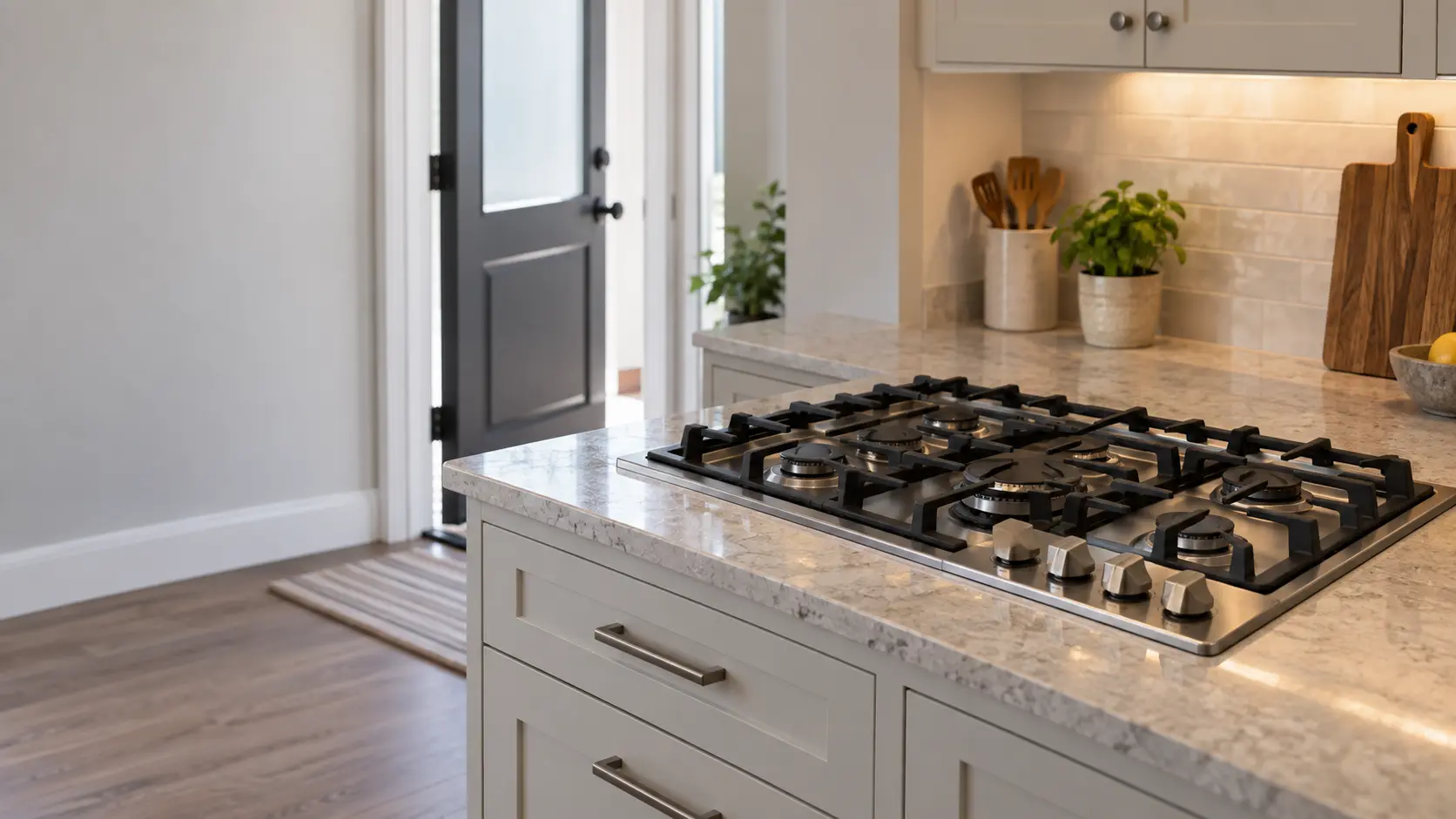
If you are still deciding between induction and a gas or radiant electric top, put the question to the cardiologist before buying rather than after installation. A radiant glass top or a gas cooktop does not rely on a magnetic field to heat the pan, and some households choose one of those simply to take the question off the table.
Source: GE Appliances — Induction Cooktop Use and Care Guide and Installation Instructions (49-8269) — The cooktop uses electromagnetic energy that can interfere with some pacemakers; make sure any pacemaker has adequate interference protection; watches, credit cards, tickets and magnetic tapes may be damaged; AM radio interference; beeping when the pan is too small, off center or not magnetic
Other implants and worn devices
Heart devices get the most attention because their makers publish household guidance, but they are not the only electronics people carry in or on the body. Neurostimulators, insulin pumps, cochlear implants and hearing aids each have their own manufacturer and their own advice, and we do not try to summarize it here. The FDA treats electromagnetic compatibility as a design requirement for medical devices and has studied interference with pacemakers since the late 1960s; the practical answer for any one device still comes from the company that made it.
Bring the model of the cooktop, or its manual, to the appointment. A clinician can say far more from the actual appliance than from the word induction on its own.
Questions to take to the cardiologist or device clinic
A short list keeps the conversation practical:
- Does my device maker publish a distance for induction cooktops, and does it apply to my model?
- Does the side of the chest where my device sits change which zones I should use?
- Which symptoms mean I should step away and call you?
- Would you prefer I avoid induction altogether in a new kitchen?
Source: U.S. Food and Drug Administration — Electromagnetic Compatibility (EMC) — Definition of electromagnetic compatibility for medical devices; FDA has investigated interference with cardiac pacemakers since the late 1960s
When an induction cooktop needs service
Repairing an induction cooktop means testing it switched on: running zones with a pan, watching the boards and checking the cooling fan in the cabinet below. If the person with the implant is the one who usually uses the cooktop, it is sensible for someone else to show the technician the problem and for the patient to stay out of the kitchen while zones are being tested.
A repair does not change the advice in this guide. A cooktop with a failing board or a buzzing coil is a reason to book a visit, but the distance a device maker recommends is the same for a cooktop that works perfectly.