
Start with what you own
Cooktop
types,
told apart.
Two cooktops can look alike set into a counter and work in completely different ways. A gas top burns fuel under grates, an electric one heats coils or ribbons under glass, induction makes the pan itself the heat source, and a pro-style rangetop carries big sealed or open burners with knobs along its front edge. Knowing which one you have answers part of the repair question before anyone arrives.
Mon–Sat, 8am–8pm
- 4 types
- Serviced in place
- What each one costs
Book a visit
Three short steps, about a minute.
or call (844) 252-4077
Loading appointment form…
The appointment form couldn’t load. Please try again.
Four types,
each its own job.
Each one is built, reached and repaired differently. Open yours for what fails on it and what the work involves.
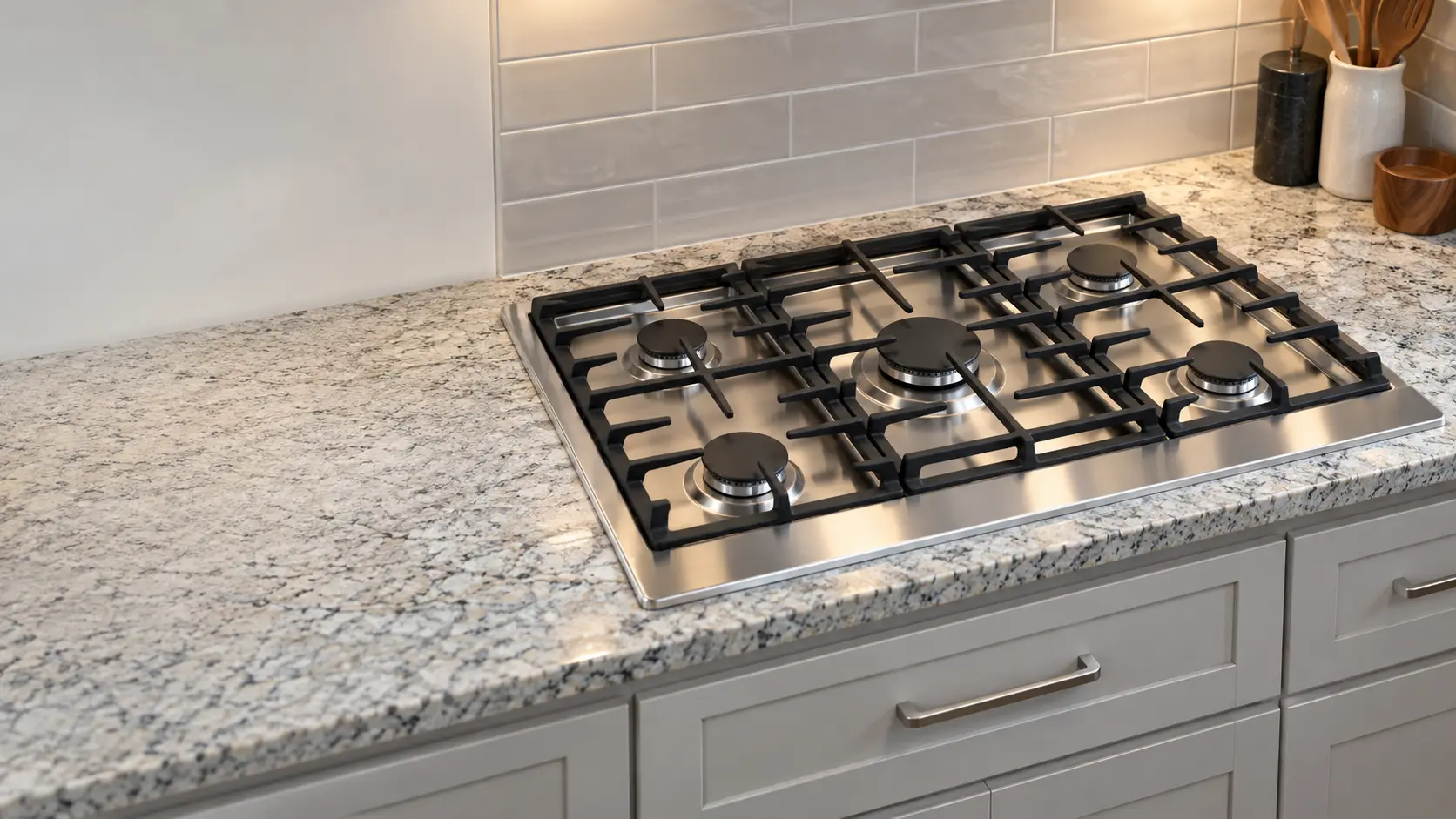
Gas cooktop
A gas cooking surface dropped into a countertop cutout, with its gas line and power cord running down into the cabinet underneath.
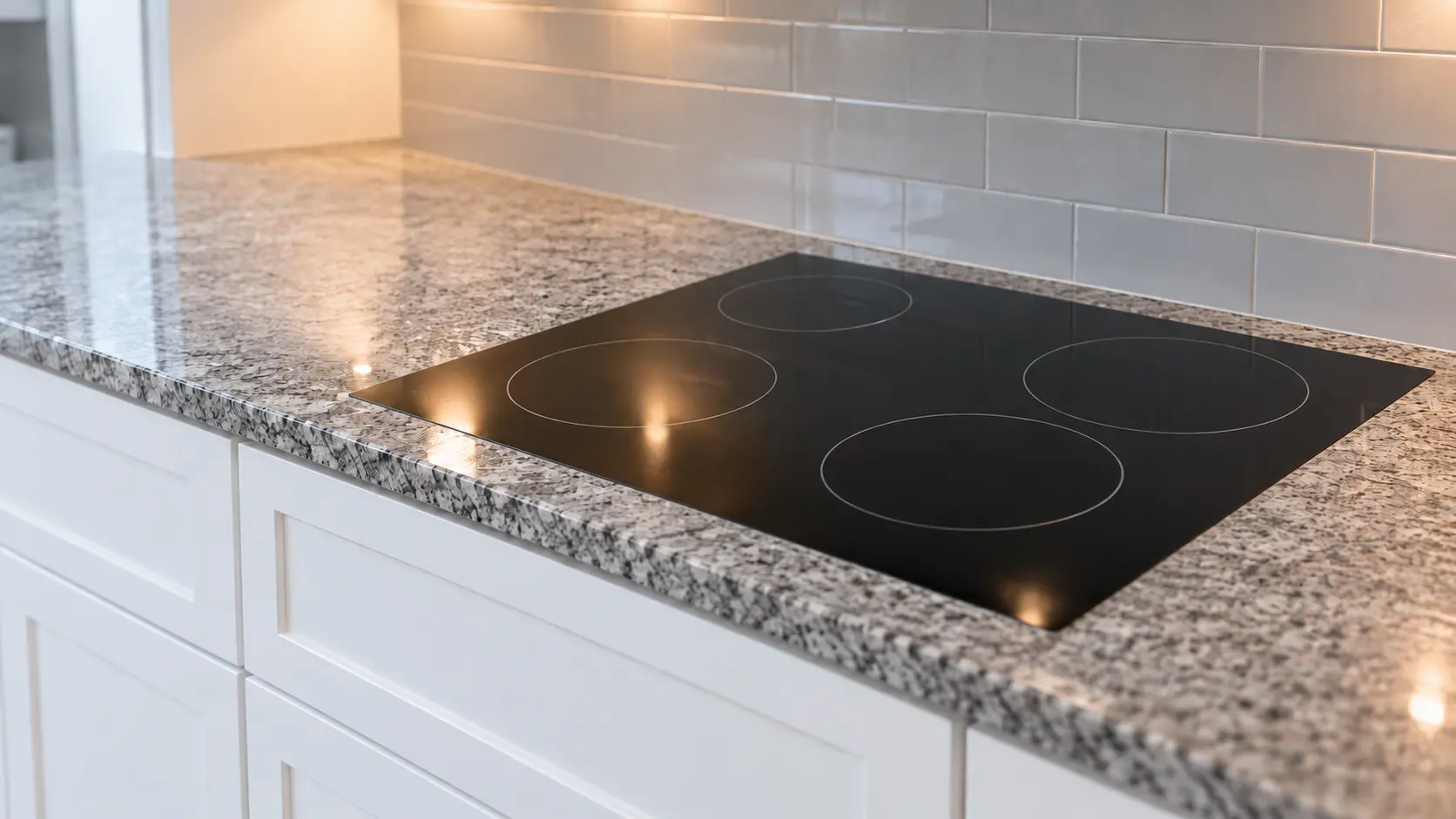
Electric cooktop
A coil or smooth-glass radiant cooking surface built into the countertop and wired to its own circuit in the cabinet or wall behind it.
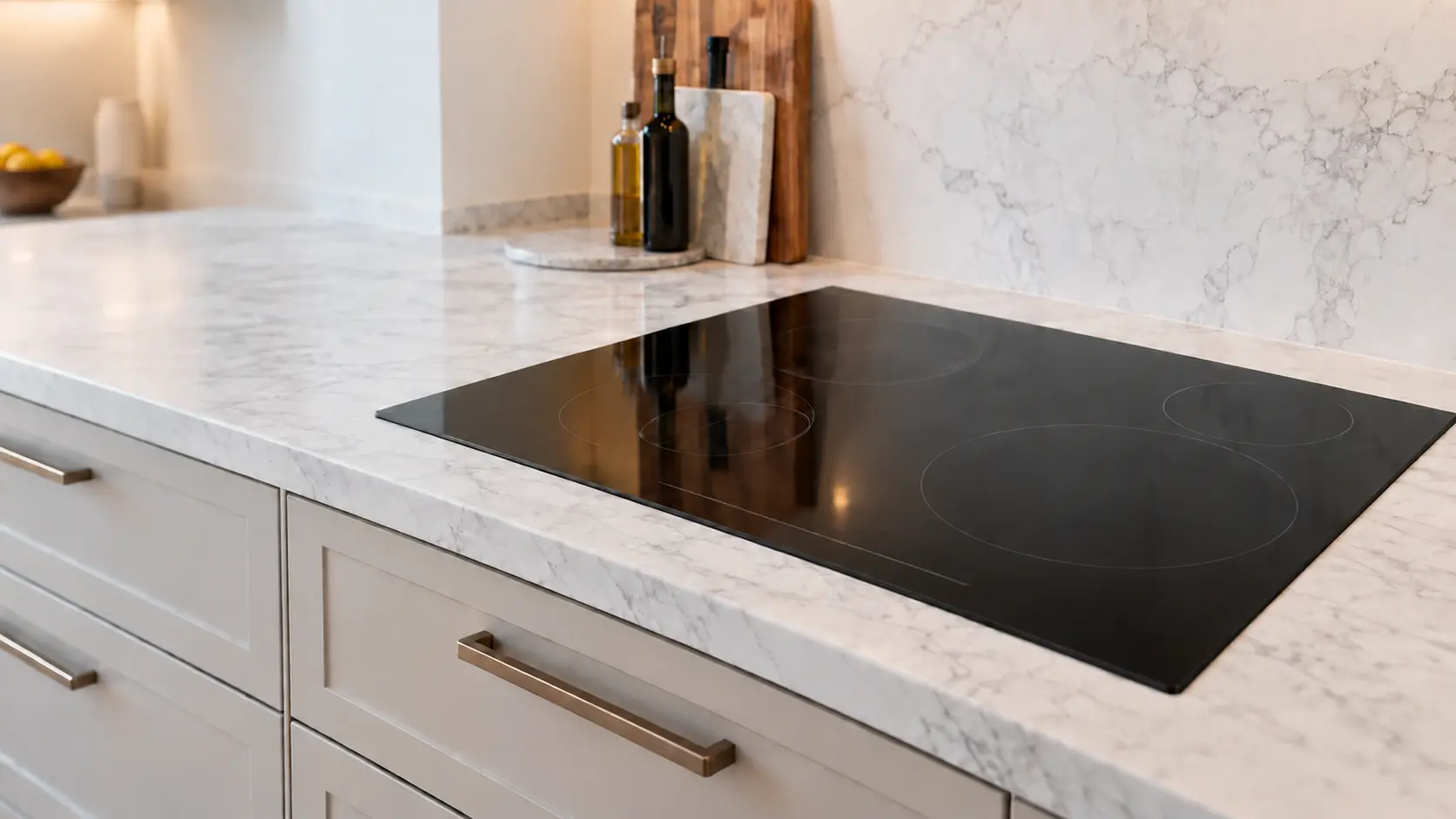
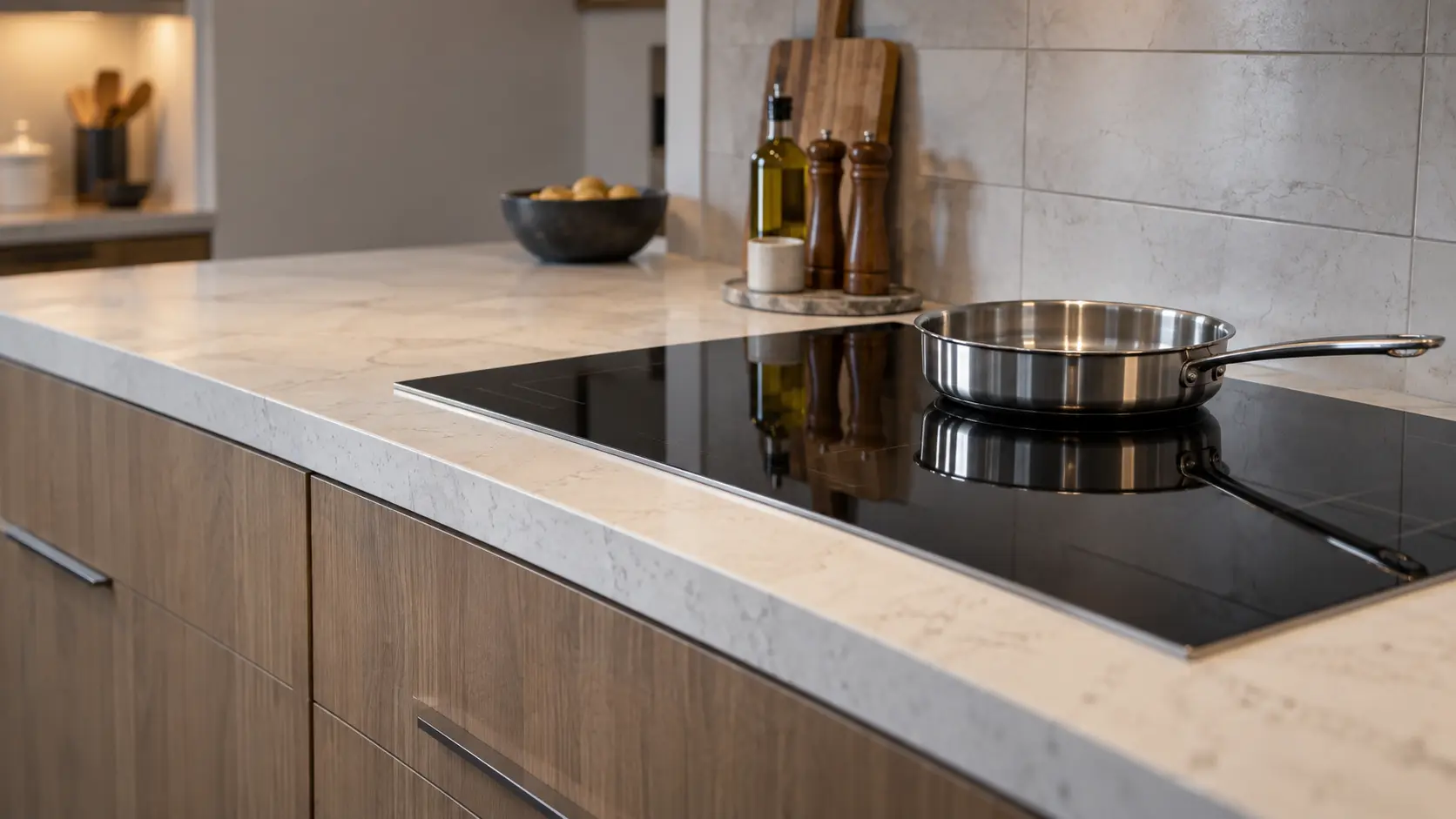
Induction cooktop
A glass cooktop in the counter that heats the pan itself through magnetic coils, run by power boards and cooled by a fan underneath.
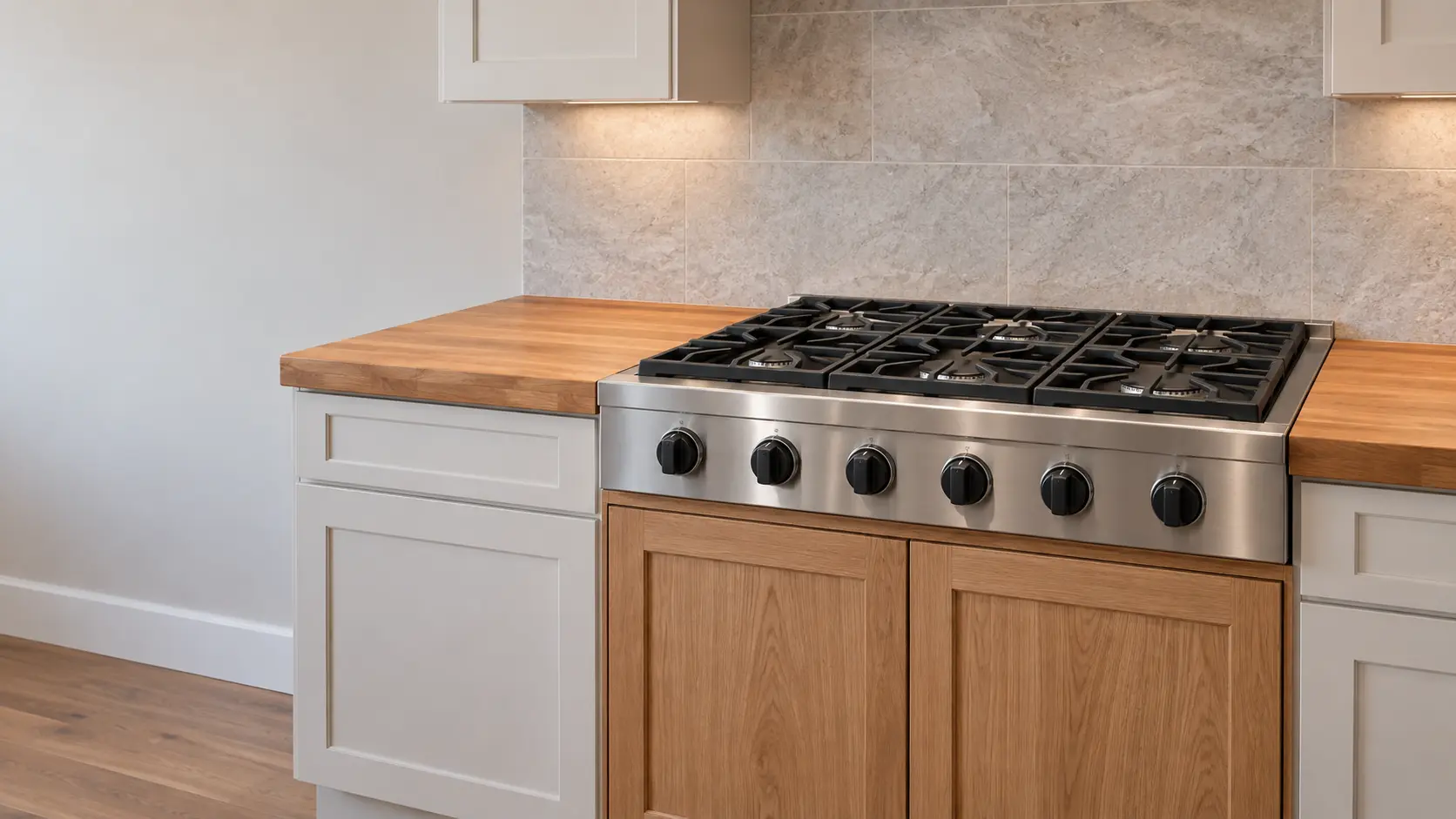
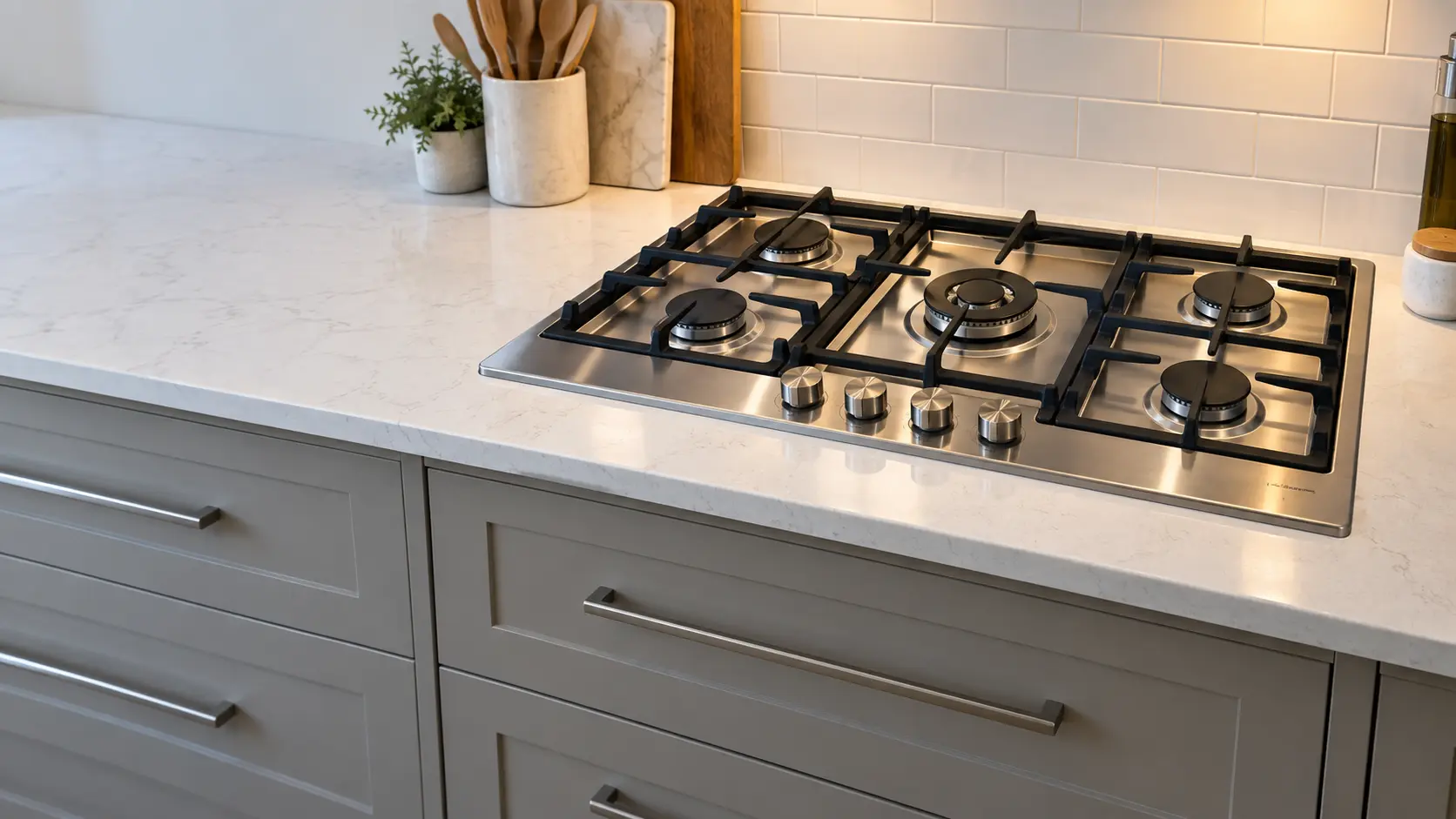
Rangetop
A pro-style gas cooking top with its knobs across the front, set into a notch above a base cabinet, often with a griddle or char-broiler beside the burners.
Not sure which you have?Start from what it is doing
If the cooktop in your kitchen does not obviously match one of these, work from the symptom instead. It reaches the same answer from the other end.
17 problemsIn order of costWhat to check first Go to the problemsWhich one
is yours?
One look at the cooktop usually settles it. The first sign of each type is on the right; its page has the rest, and what that type means for a repair.
Gas, radiant or inductionGasGas cooktop
Grates and burner caps sit on a surface that is level with the countertop, with only cabinet doors or drawers beneath it.
ElectricElectric cooktop
The surface is either removable coil rings over chrome or black drip bowls, or a flat black glass sheet with painted circles marking the zones.
InductionInduction cooktop
A pan placed on a zone heats within seconds, and the glass next to it stays cool enough to touch.
RangetopRangetop
The knobs are on an upright front panel, not on the cooking surface, and the unit sits in a notch in the counter with a base cabinet underneath.
What a repair
usually costs.
The fair comparison for a cooktop repair is not a new cooktop's shelf tag but a new one that fits your existing cutout. Counter openings differ between makes by fractions of an inch, a model that needs a larger hole means recutting stone or replacing a section of countertop, and a change of fuel brings a gas fitter or an electrician into the job. That is why electrodes, coils, switches, elements and fans are nearly always worth replacing, and why a new cooktop tends to win only when the glass and a board fail together, a discontinued model has no boards left, or a gas burner box has corroded through.
| Repair | Relative cost | Notes |
|---|---|---|
| Burner head, cap or electrode | low | Cleaning and reseating a burner needs no parts at all. An electrode, a burner head or a cap is a small part fitted from above, with no need to lift the cooktop out of the counter. |
| Spark module, gas valve or regulator | low to moderate | A spark switch or module sits toward the lower end. A valve or a regulator comes out higher, because the cooktop is raised from its cutout and every joint that was opened is leak-tested before it goes back. |
| Radiant element or limiter | low to moderate | The element itself is a modest part. The time goes into lifting a glass cooktop out of the counter and resealing it, and a dual or triple element sits a little above a single ring. |
| Glass-ceramic top | moderate to highest | The panel is large and made for one model, and moving the elements, coils and keys across to it takes time. On a premium induction cooktop this is among the costliest jobs the site lists. |
| Coil element, receptacle or drip bowl | lowest | Coils, receptacles and drip bowls are some of the least costly parts a cooktop uses. Scorched wire behind a receptacle adds a little time and not much more. |
| Induction power board, coil or sensor | moderate to highest | A coil temperature sensor stays near the middle. A power board, or a pair of boards on a wide induction cooktop, sits at the top of this site's scale. |
| Touch control board or key panel | moderate | A reseated ribbon cable costs little. A control board lands in the middle, and a key panel bonded to the glass can push the job toward the glass-top row. |
| Infinite switch or knob | low | A knob is minor, and a switch is a short job reached through the lifted top or the front panel. Burnt terminals on the switch are renewed during the same visit. |
| Cooling fan, downdraft blower or lift motor | low to moderate | A cooling fan under an induction cooktop sits near the low end. A downdraft blower reached through the cabinet or ducted under the floor, or the lift motor of a rising vent, moves the job toward the middle. |

Questions about
the types.
How is a rangetop different from a gas cooktop?
Why does the type of cooktop matter for the repair?
Is an induction cooktop harder to repair?
What details about how the cooktop is fitted help the booking?
Back to your everyday
Let’s get your cooktop working again.
Three short steps online, or one call. Tell us what you are seeing and pick a window that works.