A mark and a scratch are not the same thing
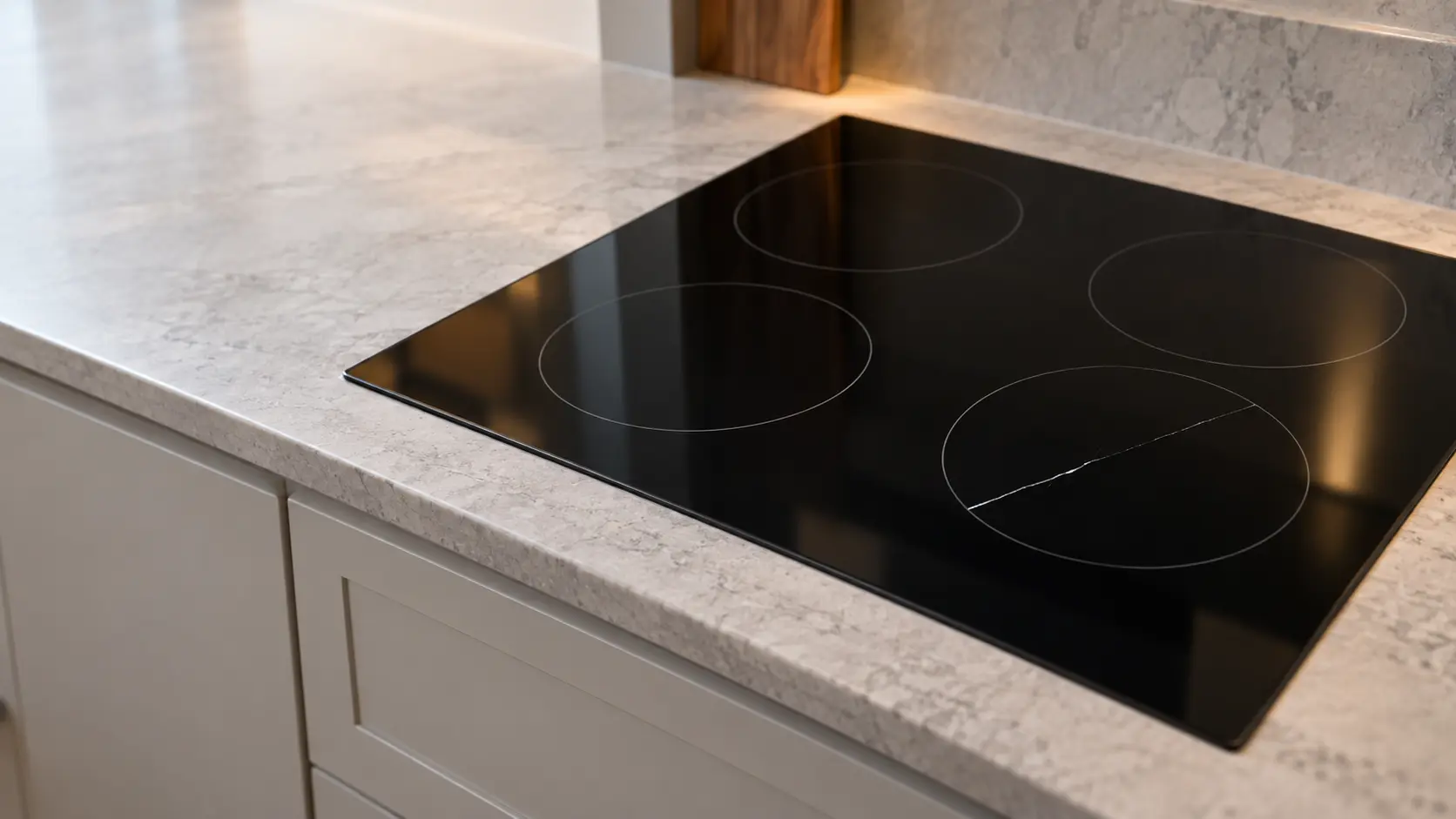
GE describes its glass-ceramic tops as scratch resistant rather than scratch proof, and that distinction explains most of what owners see. A true scratch is a groove cut into the glass; it catches a fingernail, and cleaning only makes it less visible. A mark is something left on top of the glass, such as a thin smear of aluminum or copper from the pan base, and it comes away with ceramic cooktop cream if you deal with it soon.
Before deciding that a pan has ruined the glass, clean the area. If the line disappears, the pan is fine and the habit to change is sliding it. If the line stays, look at the base of the pan that sits on that zone: a burr, a ring of burned food or grit stuck to the bottom is usually the culprit.
Source: GE Appliances — Scratches on glass cooktop — Scratches are not removable; some marks that look like scratches clean off; coarse particles such as salt and pepper under pans cause scratches; do not slide cookware; GE Appliances — Scratch resistant glass ceramic cooktops — Glass ceramic cooktops are scratch resistant, not scratch proof, and pan marks can often be removed by cleaning
Pans by material, from best to worst on glass
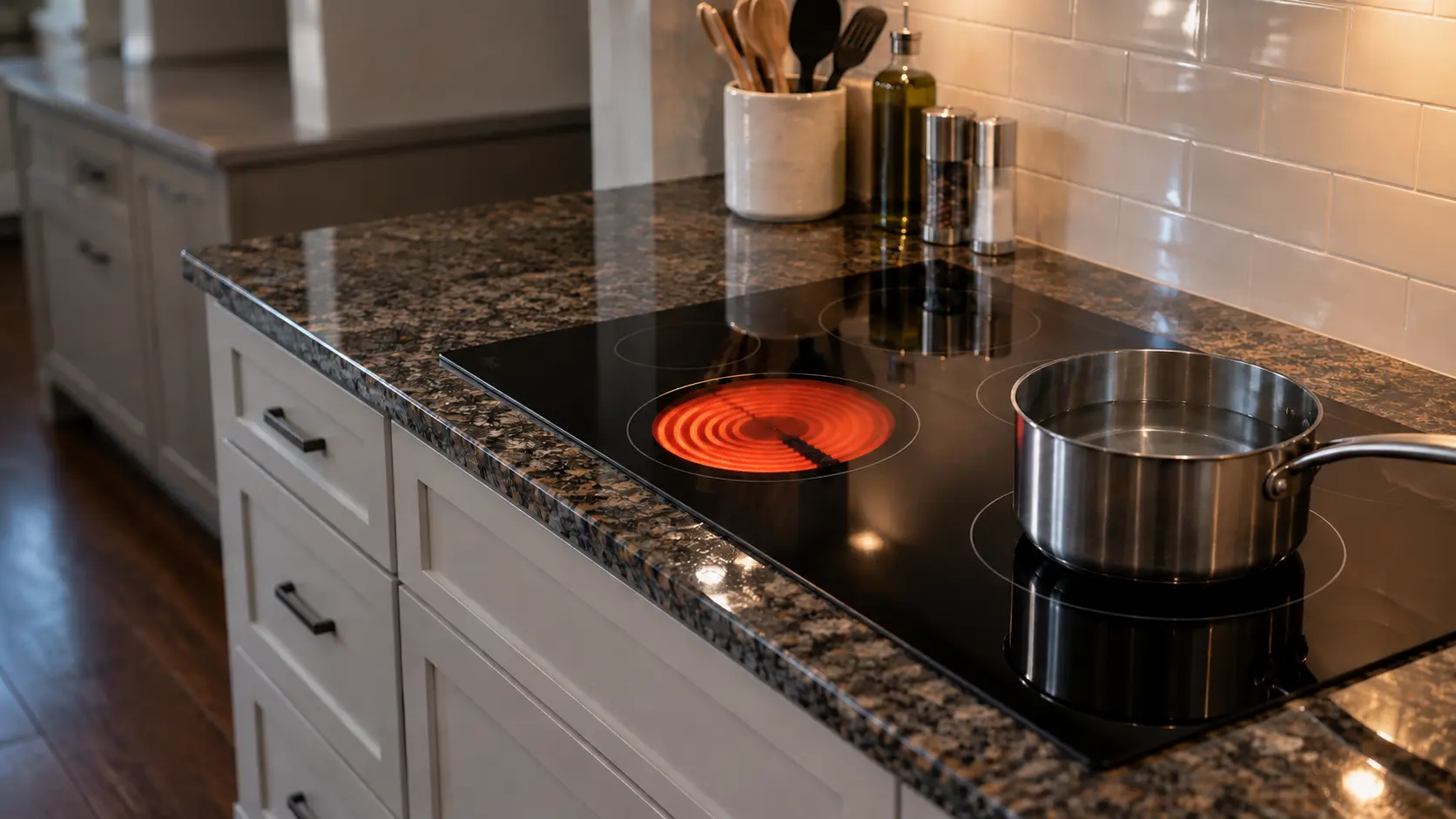
GE's guidance on choosing cookware for a glass cooktop of the radiant kind ranks the common materials fairly clearly. The same rules protect induction glass, with the extra condition that the pan has to be magnetic.
Materials that suit glass
Medium or heavy stainless steel is GE's first recommendation, especially with a sandwich-clad base that carries aluminum or copper inside for even heat. Heavy aluminum is recommended too, with the warning that its residue can look like scratches until cleaned. Carbon steel is acceptable when the bottom is flat and smooth.
- Stainless steel, ideally with a clad base.
- Heavy-gauge aluminum, wiped clean after cooking.
- Copper-bottomed pans, never allowed to boil dry.
- Cast iron only when its base is completely covered in smooth porcelain enamel.
Materials that cause trouble
GE does not recommend glass or ceramic pans, which can scratch and conduct heat poorly, or stoneware, which can scratch and cooks badly. Plain cast iron is on its not-recommended list for two reasons: a burr on the base cuts the glass, and a heavy pan that has soaked up heat on high can pass so much back into the surface that the temperature limiter shuts the element down. Enamel-coated pans are fine until they boil dry, when the enamel can melt and fuse to the glass.
Source: GE Appliances — Cookware used on a radiant smooth glass cooktop — Stainless steel with a clad base and heavy aluminum are recommended; glass, ceramic, stoneware and plain cast iron are not; stored heat in cast iron can trip the temperature limiter; enamel can fuse if boiled dry; non-flat pans may crack the glass

Why a flat base matters on both kinds of glass
A radiant zone heats the pan through contact, so a bowed or rocking base leaves an air gap and cooks unevenly. GE goes further and warns that a pan that is not flat can crack the glass. Whirlpool's advice for its induction tops is to avoid rounded, warped, ribbed or dented bottoms, and it describes a simple test: lay the straight edge of a ruler across the bottom of the pan and turn it slowly around; no light should show beneath it.
On induction, a warped base has a second symptom. The pan may buzz, rattle or skate slightly on the zone, and on some models the zone will not recognize a pan whose base touches the glass only at the rim.
The magnet test for induction
Hold a fridge magnet to the center of the pan's base. If it grips firmly, the pan will work on induction; ENERGY STAR gives this as the quick way to tell. If it barely holds or slides off, expect the zone to flash or refuse the pan. Some stainless and aluminum pans carry a magnetic disk only in the middle of the base, so they heat well on a small zone and poorly on a large one.
Source: GE Appliances — Cookware used on a radiant smooth glass cooktop — Stainless steel with a clad base and heavy aluminum are recommended; glass, ceramic, stoneware and plain cast iron are not; stored heat in cast iron can trip the temperature limiter; enamel can fuse if boiled dry; non-flat pans may crack the glass; Whirlpool — Maintenance of ceramic glass (induction cooktops) — Use flat-bottomed cookware and check flatness with a ruler; do not slide cookware; keep pan bottoms clean and dry; do not leave a hot lid on the glass; ENERGY STAR — 5 reasons to switch from gas to certified electric cooking — A pan that a magnet sticks to is likely to work on induction
Habits that protect the glass every day
Good pans still scratch glass if they are handled badly. GE notes that coarse grains such as salt, ground pepper or dried herbs caught between the pan and the glass can scratch it, and both GE and Whirlpool tell owners not to slide cookware across the surface.
- Lift a pan to move it, even a short distance to the next zone.
- Wipe the glass and the pan base before cooking, so no grit is trapped between them.
- Keep pan bottoms dry; water and residue on the base leave deposits when heated.
- Never let aluminum, copper or enamel pans boil dry on glass.
- Do not leave a hot lid upside down on the glass to cool.
Source: GE Appliances — Scratches on glass cooktop — Scratches are not removable; some marks that look like scratches clean off; coarse particles such as salt and pepper under pans cause scratches; do not slide cookware; Whirlpool — Maintenance of ceramic glass (induction cooktops) — Use flat-bottomed cookware and check flatness with a ruler; do not slide cookware; keep pan bottoms clean and dry; do not leave a hot lid on the glass
Sorting the pan cupboard after a new cooktop arrives
A new glass or induction top is the right moment to go through the pans rather than finding out one burner at a time. Put every pan base-up on a towel, test it, and sort it into three piles: pans that pass every check, pans that suit only certain zones, and pans that belong on a different appliance or in the donation box.
Keep a note of which pan fits which zone. A pan whose base matches the ring printed on the glass heats evenly and keeps boil-overs off bare hot glass, while an oversized pan on a small radiant zone leaves its rim cooler and tempts people to slide it toward a bigger one. Pans that fail only the magnet test can still go on a gas burner elsewhere in the house, if there is one.