
What belongs in the cleaning kit
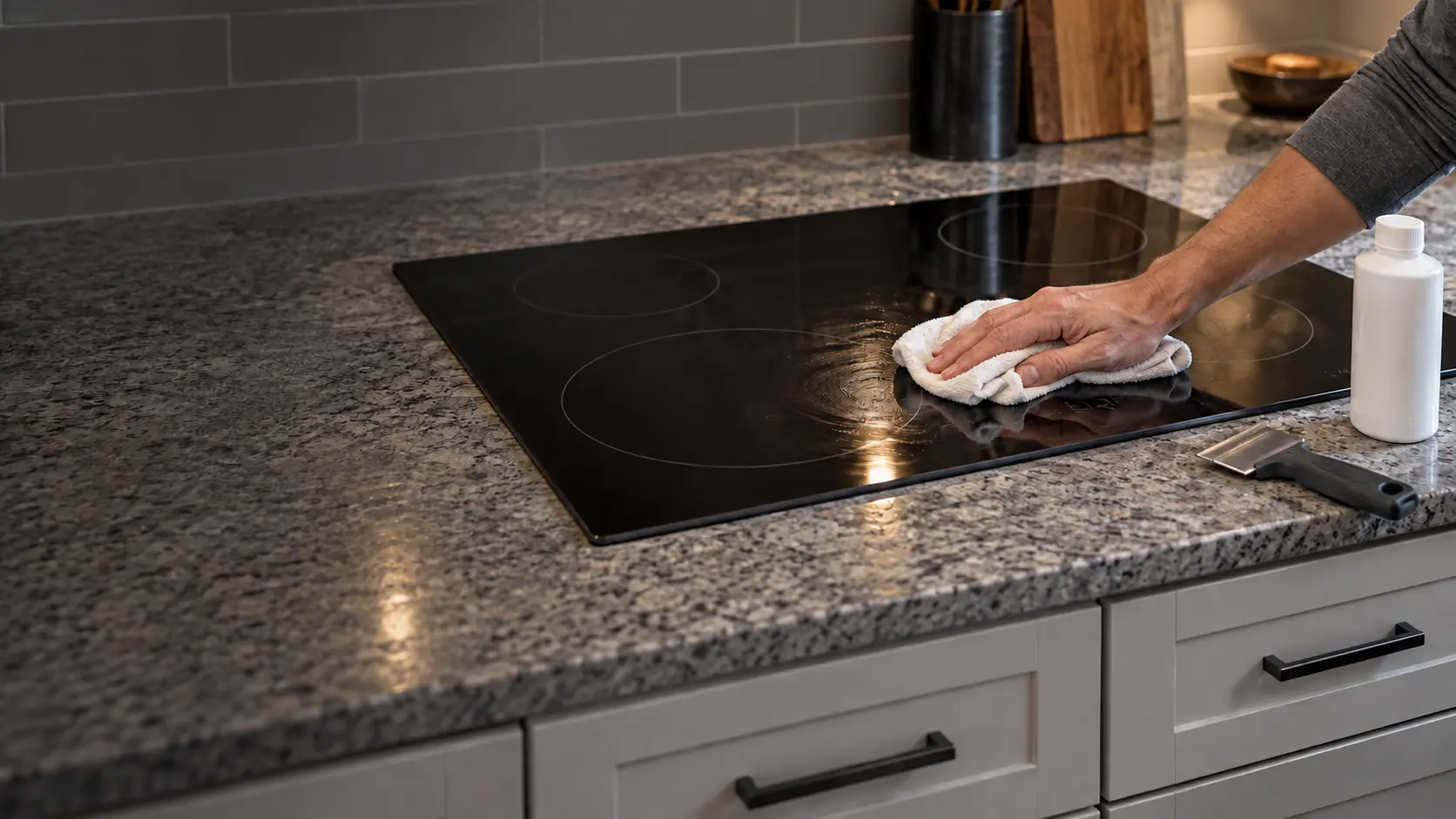
Glass-ceramic tops on radiant and induction cooktops are looked after with the same small kit, and cleaning a glass cooktop well starts with having it ready. GE recommends cleaning a new glass cooktop with an approved ceramic cooktop cleaner before its first use and daily after that, and warns that sponges or cleaners other than the recommended ones can damage the surface.
Keep the kit in a drawer near the cooktop, not under the sink, so it is at hand when a spill happens:
- A ceramic cooktop cleaning cream, shaken well before each use.
- A non-scratch cleaning pad made for glass cooktops, or plain paper towels.
- A razor scraper with a spare pack of blades; GE notes that its scraper ships with the blade reversed for safety and that a dull or nicked blade must not be used.
- A dry, lint-free cloth for buffing off the last of the cream.
- Oven mitts, for the one job that has to happen while the glass is hot.
Source: GE Appliances — Electric range and cooktop: glass cooktop cleaning instructions — Clean with an approved ceramic cooktop cleaner before first use and daily; do not heat until the cream is wiped off; mineral marks and pan metal rub-off clean away; scrape at about 45 degrees with cream; move sugary spills and melted plastic to a cool area while hot; pitting or bonded plastic means replacing the glass; GE Appliances — Electric range and cooktop: glass cooktop cleaners — The razor scraper is packed with its blade inverted for safety and must be reinserted before use; do not use a dull or nicked blade
Daily wipe and weekly polish
Once the glass is cool, put a few drops of cream on the surface, spread it with the pad or a paper towel over the whole top, then buff it off with a dry cloth. There is no need to rinse, but GE is explicit that the cooktop should not be heated until the cream is gone, because baked cream leaves its own film.
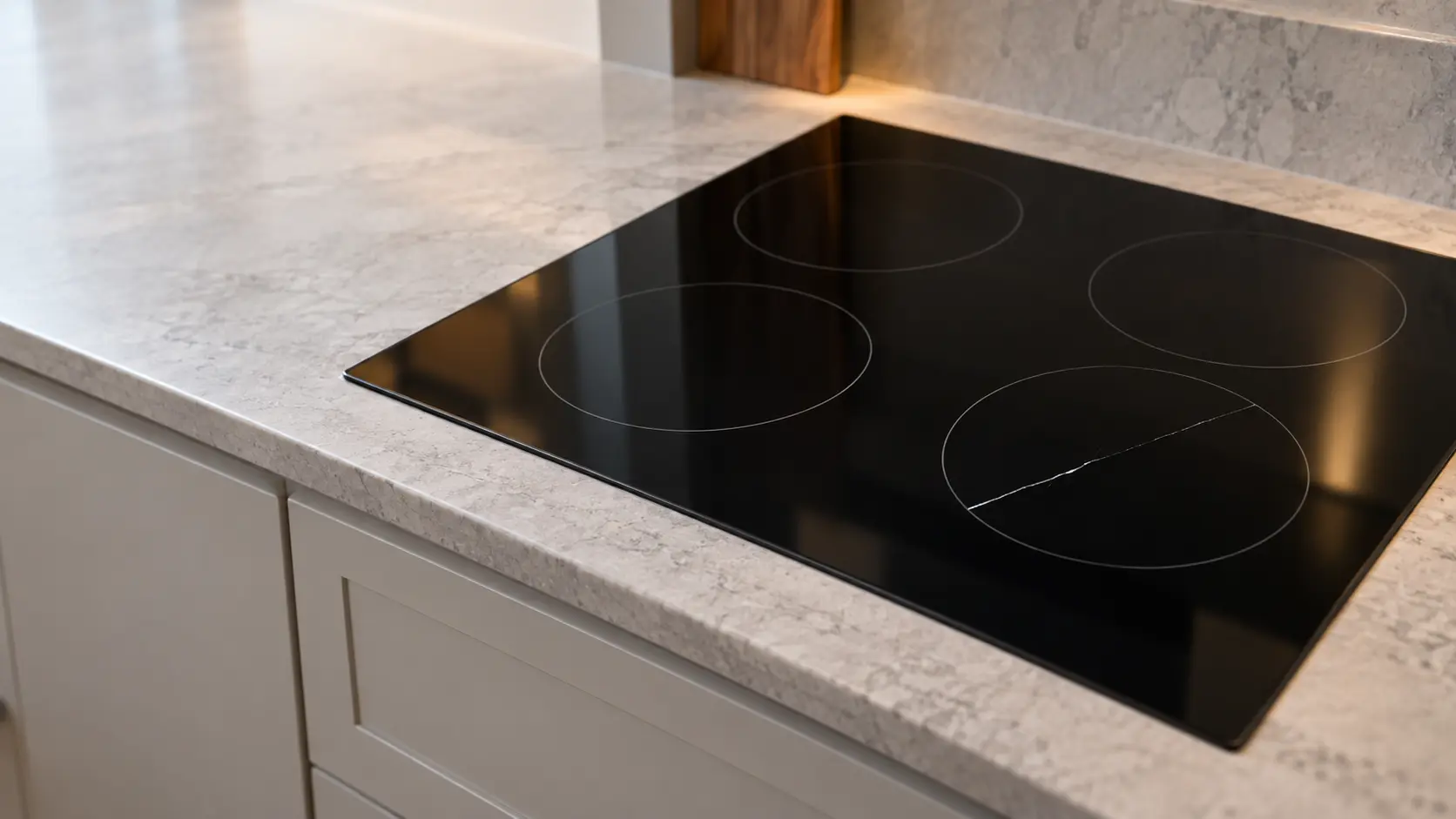
Whitish or metallic-looking patches are usually minerals left when water or food boiled off. They are not scratches, and the same cream lifts them. A shiny gray line that looks like a scratch is often metal rubbed off an aluminum or copper pan base, which also comes away with cream if it is dealt with promptly.
On a radiant top
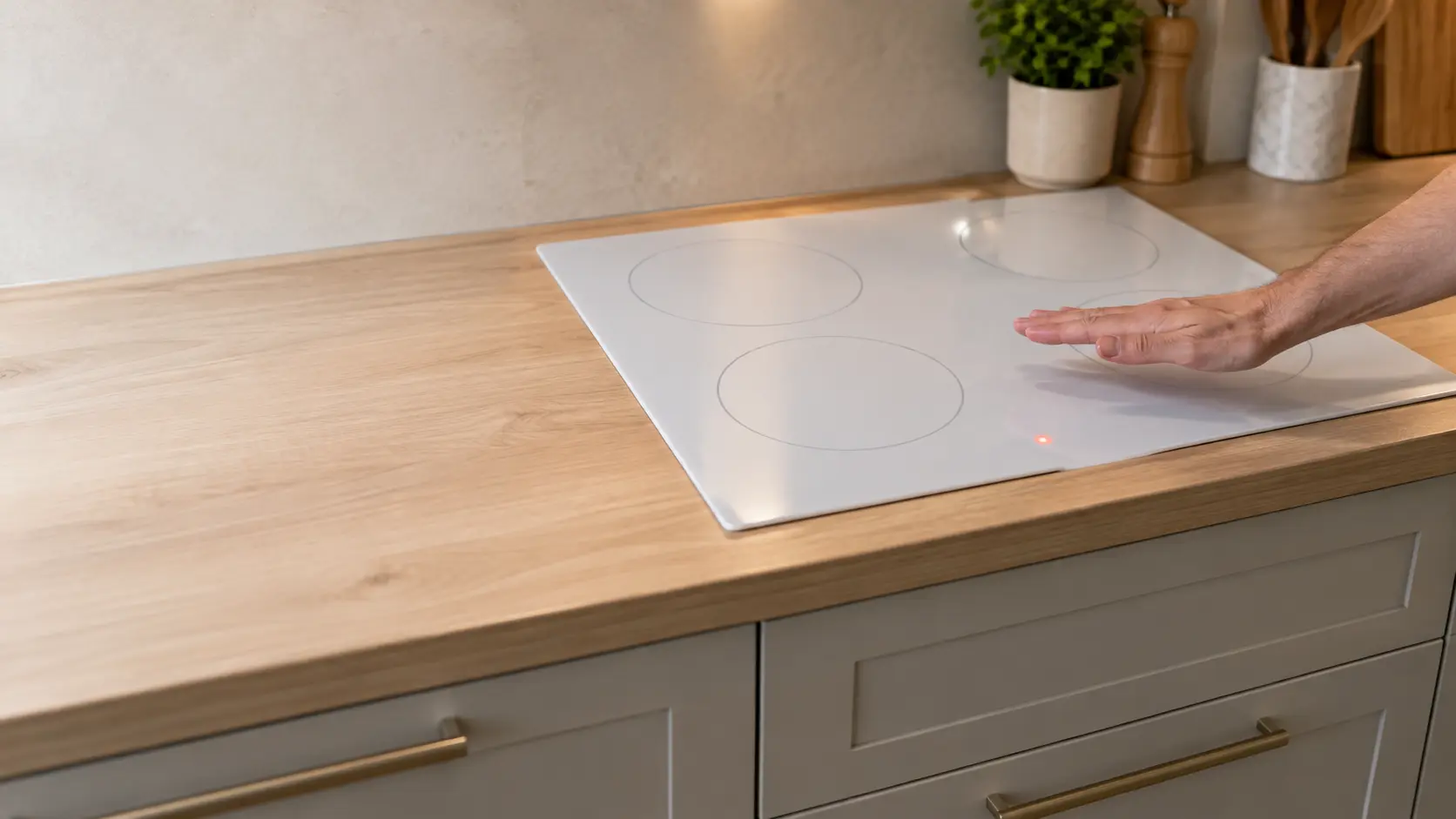
Radiant glass stays hot for a long time after the element dims, and the hot-surface light is the reminder. Wait for it to go out before wiping, both for your fingers and because cream on hot glass bakes on. Food that lands on a radiant zone chars quickly, so spills on this kind of top turn into scraper work sooner.
On an induction top
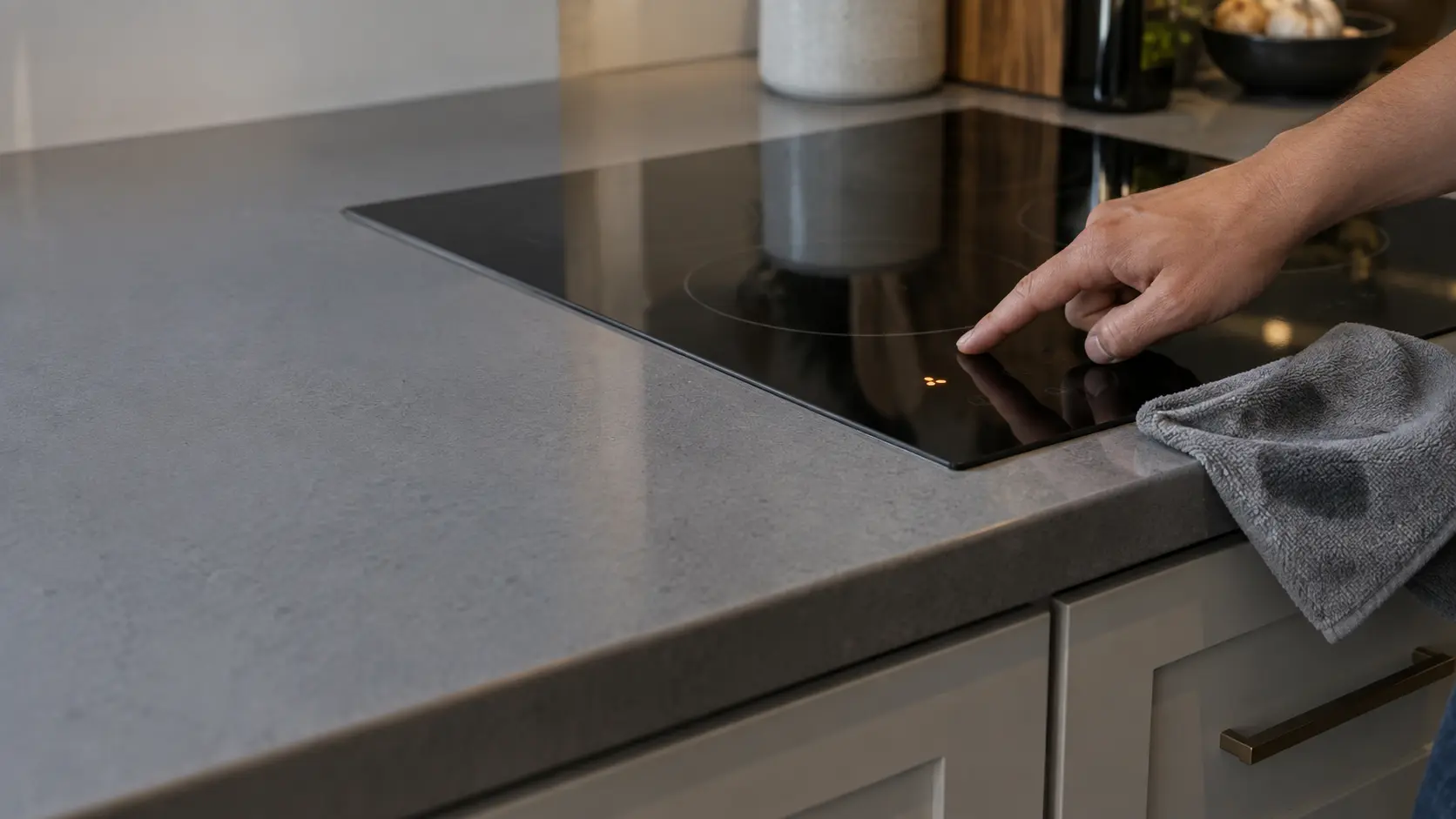
Induction glass warms only from the pan sitting on it, so most spills stay soft and wipe off easily once the pan is lifted. Whirlpool's care page for its induction tops asks owners to wipe the glass before and after each use and to keep the bottoms of pans clean and dry, since residue and water can leave deposits once heated. Switch the cooktop off, or use its lock or wipe-pause feature if it has one, before running a cloth across the touch keys.
Source: GE Appliances — Electric range and cooktop: glass cooktop cleaning instructions — Clean with an approved ceramic cooktop cleaner before first use and daily; do not heat until the cream is wiped off; mineral marks and pan metal rub-off clean away; scrape at about 45 degrees with cream; move sugary spills and melted plastic to a cool area while hot; pitting or bonded plastic means replacing the glass; Whirlpool — Maintenance of ceramic glass (induction cooktops) — Clean an induction top before and after each use; remove sugary spills while still warm; a hot lid left on the glass can break it; keep plastic and foil off; do not use the top as a cutting board; keep pan bottoms clean and dry
Burned-on residue, sugar and melted plastic
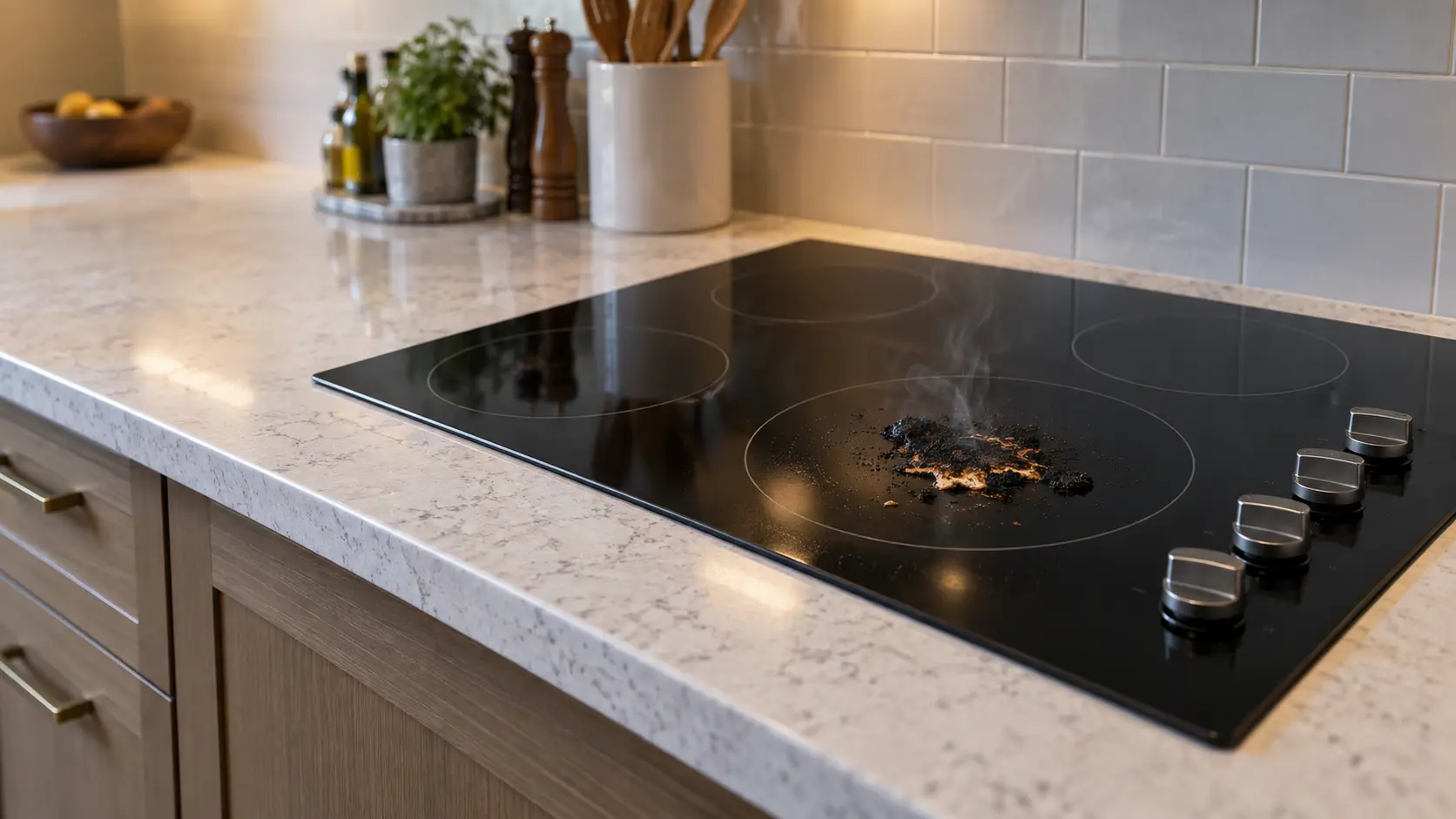
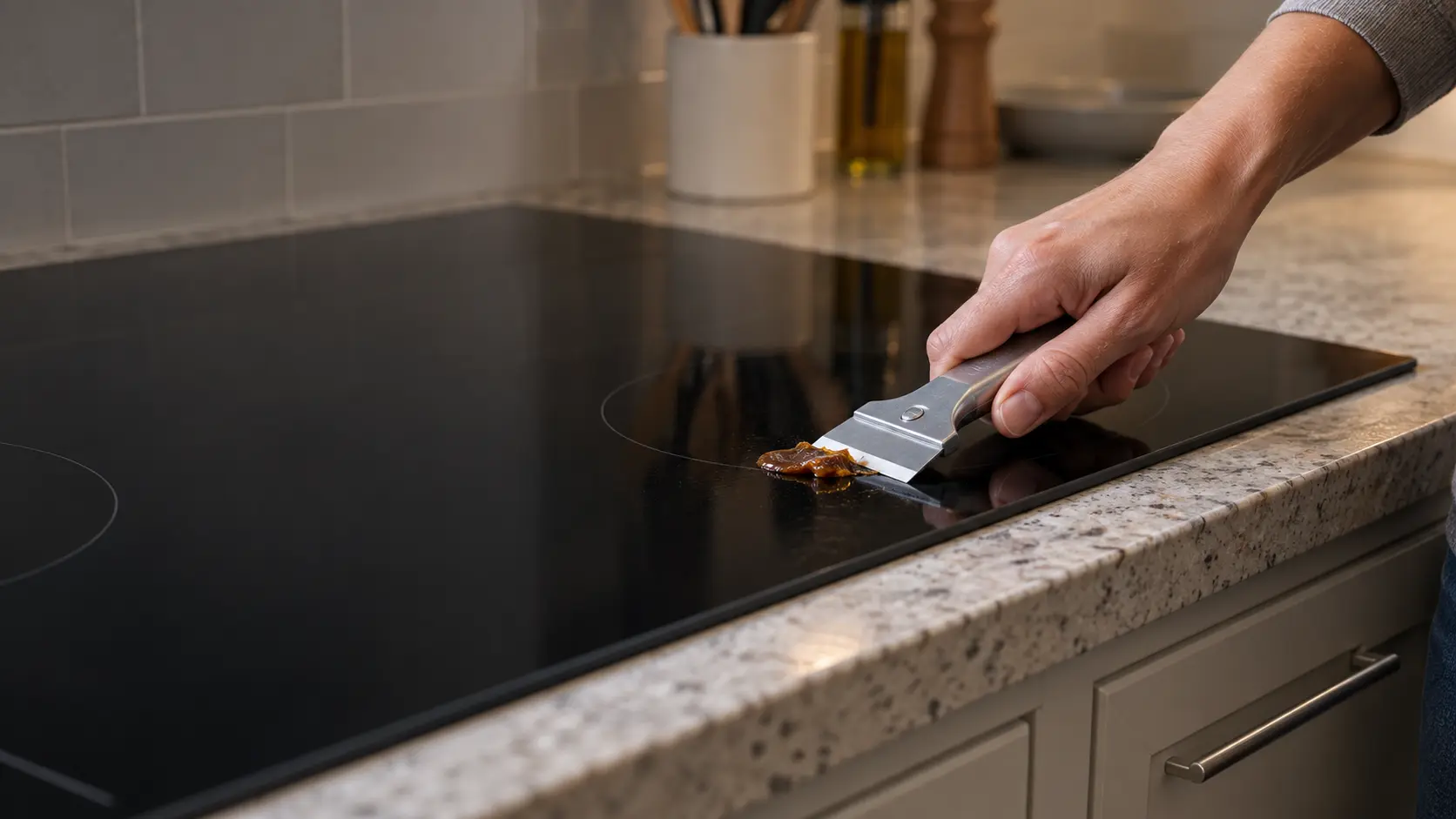
For ordinary burned-on food, let the cooktop cool, put a little cream on the spot and work it with the pad. If that does not shift it, GE describes holding the razor scraper at about 45 degrees to the glass and scraping firmly with some cream still on the residue, then wiping away the loosened material and polishing the whole top.
Sugar and plastic are the exception to the cool-first rule. Jam, syrup, candy and fudge, or a bread bag that touched a warm zone, can pit the surface if they harden on it. GE's method is to switch off the zones, lift the hot pans away, and with an oven mitt use a new, sharp scraper to push the spill to a cool part of the glass, then lift it off with paper towels. Whirlpool gives the same advice for induction: remove sugary spills while the glass is still warm. If pitting has already happened, the glass has to be replaced; a hardened teapot fragment or melted plastic that has bonded is usually permanent too.
Source: GE Appliances — Electric range and cooktop: glass cooktop cleaning instructions — Clean with an approved ceramic cooktop cleaner before first use and daily; do not heat until the cream is wiped off; mineral marks and pan metal rub-off clean away; scrape at about 45 degrees with cream; move sugary spills and melted plastic to a cool area while hot; pitting or bonded plastic means replacing the glass; Whirlpool — Maintenance of ceramic glass (induction cooktops) — Clean an induction top before and after each use; remove sugary spills while still warm; a hot lid left on the glass can break it; keep plastic and foil off; do not use the top as a cutting board; keep pan bottoms clean and dry
The seam where the glass meets the counter
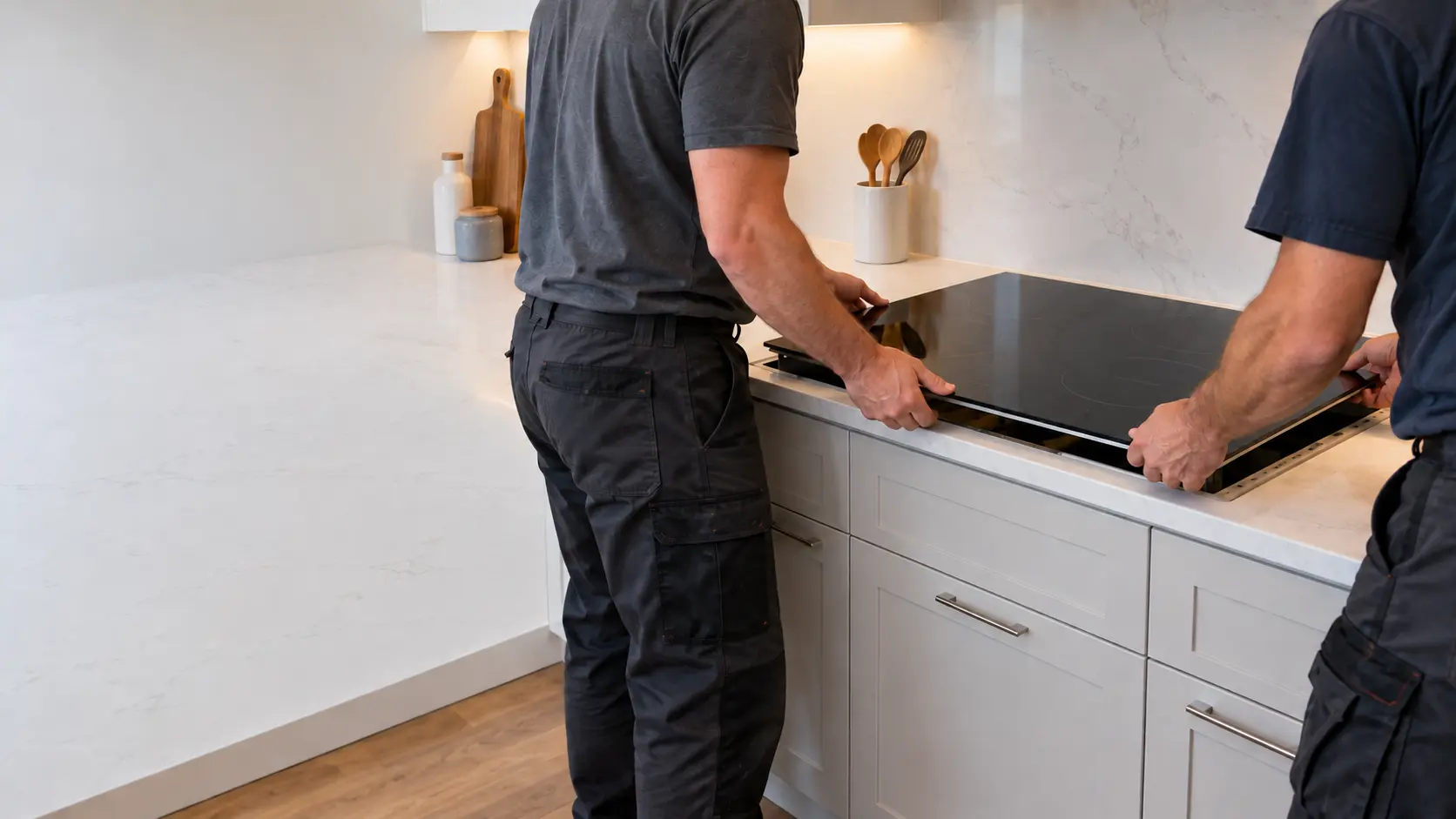
A glass cooktop in a counter has an edge that a freestanding appliance does not: the joint between the glass, its metal trim or bevel, and the stone or laminate around it. Liquid that pools there can creep under the trim and drip onto the chassis, the wiring connection or the drawer contents below. That is why this guide never suggests flooding the glass, spraying cleaner in quantity, or leaving a wet towel along the edge.
Clean the border with a barely damp cloth, working toward the center of the glass, and dry it straight away. If the silicone or gasket along the edge has lifted or cracked, mention it at the next service visit rather than cutting or regluing it yourself, because the seal also holds the top in position.
- Wipe toward the middle of the glass, never outward toward the trim.
- Blot a boil-over at the edge immediately, before it finds the joint.
- Check the drawer or cabinet below after any large spill for drips on the underside of the chassis.
Frameless edges and metal trim
A frameless top has a ground or beveled glass edge sitting directly on the counter, so the joint is a thin line of sealant that is easy to wipe but easy to chip with a pan handle or a scraper corner. A trimmed top has a stainless or aluminum frame around the glass; grease and cream collect in the angle where frame meets glass, and a soft toothbrush with a little cream clears it without scratching. On either kind, keep the scraper blade away from the very edge of the glass.
What never touches the glass
The list of things that scratch or stain glass-ceramic is short, and most of it is already in the kitchen. Avoid scouring powder, steel wool, the green side of a kitchen sponge and oven cleaner. Do not set aluminum foil or anything plastic on a warm zone, and do not use the top as a cutting board or a trivet for a hot lid; Whirlpool warns that a hot lid left on the glass can trap air as it cools and break the glass when it is lifted. When a product is not named in your owner's manual, treat it as not approved for the glass.
Source: Whirlpool — Maintenance of ceramic glass (induction cooktops) — Clean an induction top before and after each use; remove sugary spills while still warm; a hot lid left on the glass can break it; keep plastic and foil off; do not use the top as a cutting board; keep pan bottoms clean and dry