
Three ways a cooktop puts heat into a pan
Every cooktop in a counter does the same job, and each kind does it by a different route. The route decides how fast water boils, how hot the kitchen gets and what is left on the surface when the burner is off. The gas vs induction cooktop question is really a question about those routes, with radiant electric sitting between the two.
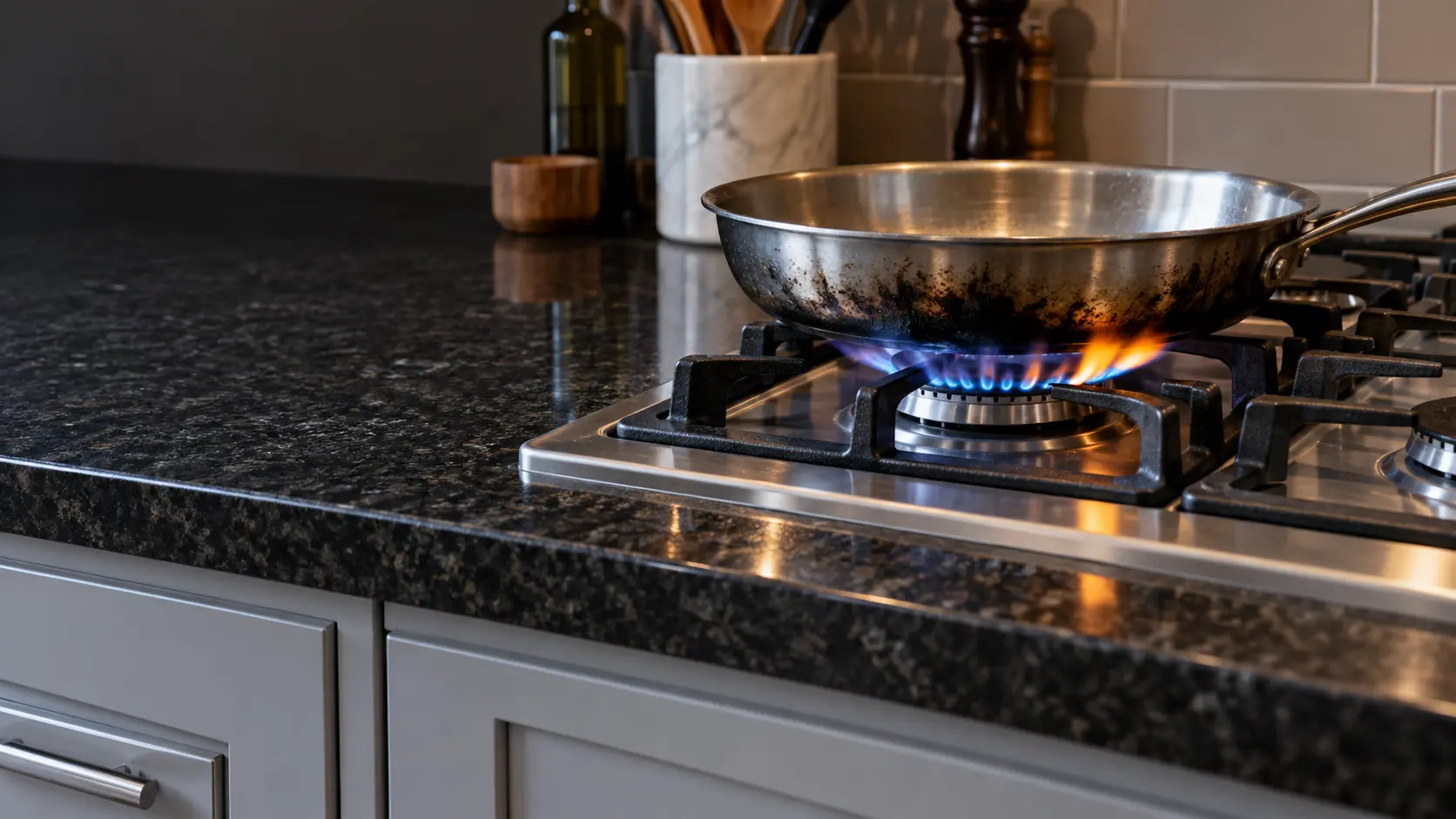
A gas flame
Burning gas heats the underside of the pan and a good deal of the air around it. ENERGY STAR puts the share that reaches the food at roughly a third. In return, gas gives an instant, visible response, and works with almost any pan, including a round-bottomed wok set on a grate made to hold one.
A radiant element
A radiant smooth top has a coiled metal ribbon under the glass that glows and heats the glass, which then heats the pan. It is slower to respond than gas because the glass stores heat, and it stays hot for a while after switching off. ENERGY STAR gives resistance cooking tops an efficiency of 75 to 80 percent.
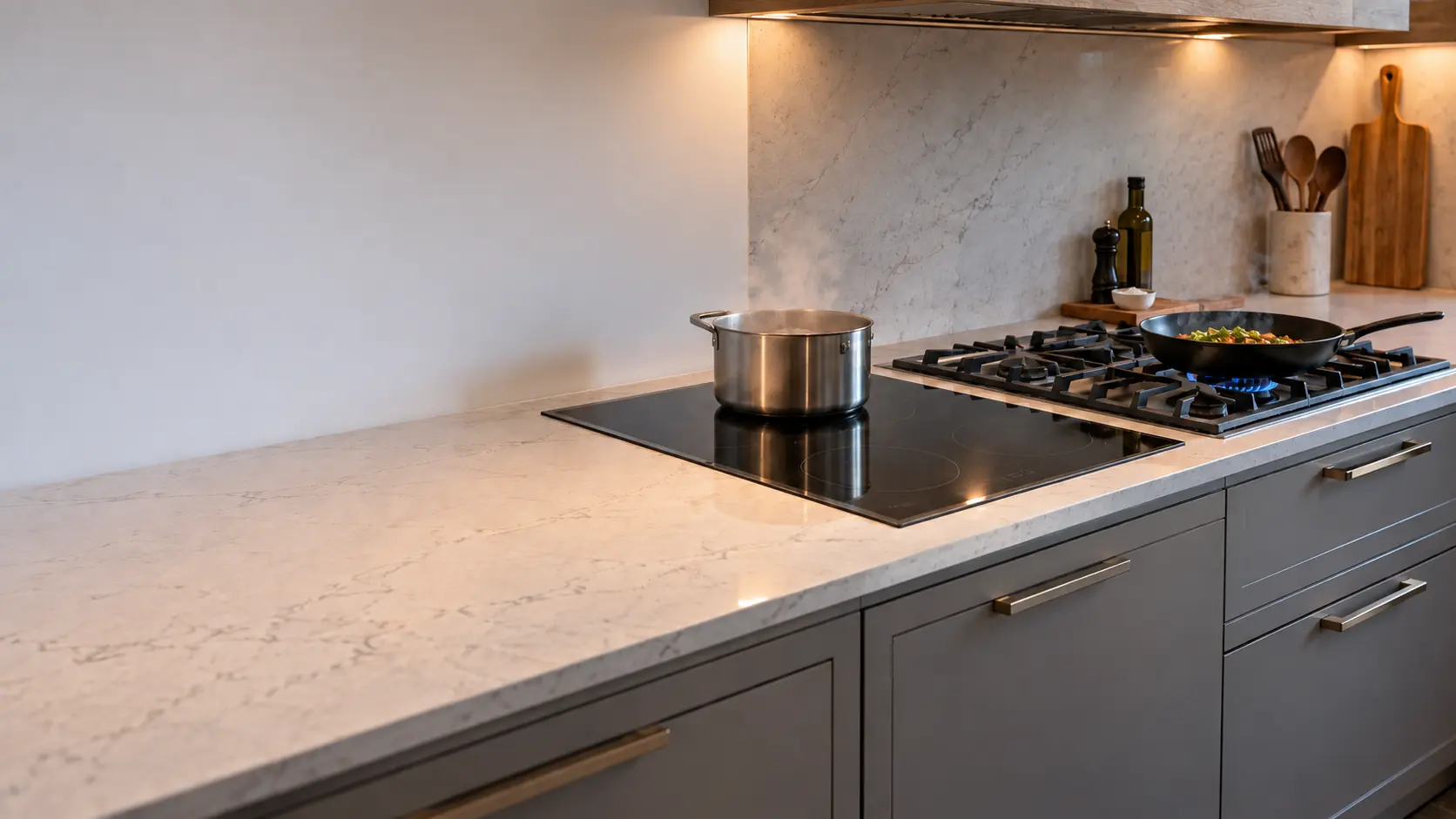
An induction coil
An induction coil under the glass creates a magnetic field that warms compatible cookware from within, so the pan itself becomes the heat source. ENERGY STAR measures about 85 percent efficiency, says the surface stays cooler than on other tops, and reports that induction can boil water in less than half the time of gas or conventional electric. The glass still gets warm from the pan sitting on it.
Source: ENERGY STAR — Residential induction cooking tops (Emerging Technology Award) — Gas cooking tops transfer about 32% of their energy and resistance tops 75–80%; induction about 85%, with a cooler surface and less heat lost to the room; ENERGY STAR — 5 reasons to switch from gas to certified electric cooking — Induction boils water in less than half the time of gas or conventional electric, is about 5–10% more efficient than conventional electric, and works with pans a magnet sticks to
What each kind needs from the cabinet underneath
Because a cooktop is fed from below, the choice shows up inside the cabinet as much as on the counter. The three kinds make very different demands on that space:
- Gas: a gas supply with an accessible shutoff valve and a flexible connector, plus an ordinary outlet for the spark ignition; Monogram lists 15 amps for its gas cooktops.
- Radiant electric: a dedicated 240-volt circuit ending in a junction box where the cooktop's armored cable is connected.
- Induction: a 240-volt circuit sized to the model, which Monogram gives as 40 amps for a 30-inch unit and 50 amps for a 36-inch one, and open space below the chassis so the cooling fan can breathe.
- Any of them: room for drawers or a wall oven underneath only when the installation instructions for that exact model allow the combination.
Source: Monogram — Appliance amp size — Monogram lists 15 amps for gas cooktops, 40 amps for a 30-inch induction cooktop and 50 amps for a 36-inch induction cooktop

Air, heat and the room around the counter
The EPA names gas stoves among the main indoor sources of nitrogen dioxide and notes that in homes with them, indoor levels often exceed outdoor ones. Its advice is to keep gas appliances properly adjusted and to use an exhaust fan vented to the outdoors over the burners. For a gas cooktop on an island, that means planning either an overhead extractor or a downdraft vent that is ducted outside, not one that recirculates.
Electric tops of both kinds burn nothing, so the ventilation they need is for cooking smoke, steam and grease. Induction adds a smaller benefit: less heat spills into the room, which the ENERGY STAR program points out can ease the load on air conditioning in summer.
Source: ENERGY STAR — Residential induction cooking tops (Emerging Technology Award) — Gas cooking tops transfer about 32% of their energy and resistance tops 75–80%; induction about 85%, with a cooler surface and less heat lost to the room; EPA — Nitrogen dioxide's impact on indoor air quality — Gas stoves are an indoor source of nitrogen dioxide; indoor levels in such homes often exceed outdoor levels; an exhaust fan vented outdoors over the burners reduces exposure
Pans, cleanup and everyday habits
Gas is the least fussy about cookware and the most work to clean, with grates, caps and burner heads to lift off and wash. Radiant and induction tops wipe clean as one sheet of glass, but they punish dragged pans, and sugar that cools on a radiant zone can pit the surface.
Induction asks one more thing of the kitchen: its pans must be magnetic. Cast iron, enameled steel and most stainless pans with a magnetic base work; aluminum, copper, glass and some stainless pans do not, unless the base has a bonded magnetic layer. ENERGY STAR's quick check is a fridge magnet held to the underside of the pan.
- Gas: lift-off grates, caps and burner heads to wash, and spark electrodes to keep dry.
- Radiant: one sheet of glass, a ceramic cream and a scraper, and sugar lifted off while it is still hot.
- Induction: the same glass care, with fewer baked-on spills, plus a magnet test for every new pan.
Source: ENERGY STAR — 5 reasons to switch from gas to certified electric cooking — Induction boils water in less than half the time of gas or conventional electric, is about 5–10% more efficient than conventional electric, and works with pans a magnet sticks to
Where each kind tends to need repair
Over ten or fifteen years, the three kinds wear out in characteristic places, and the likely bill differs with them.
| Point of comparison | Gas | Radiant | Induction |
|---|---|---|---|
| Supply below the counter | Gas line and a small outlet | 240-volt circuit | 240-volt circuit, often the largest |
| Cookware | Any | Flat-bottomed | Magnetic, flat-bottomed |
| Surface after cooking | Hot grates | Hot glass for a long while | Warm glass under the pan |
| Most frequent repair | Electrodes and spark parts | Elements and limiters | Power boards and fans |
Gas cooktops over time
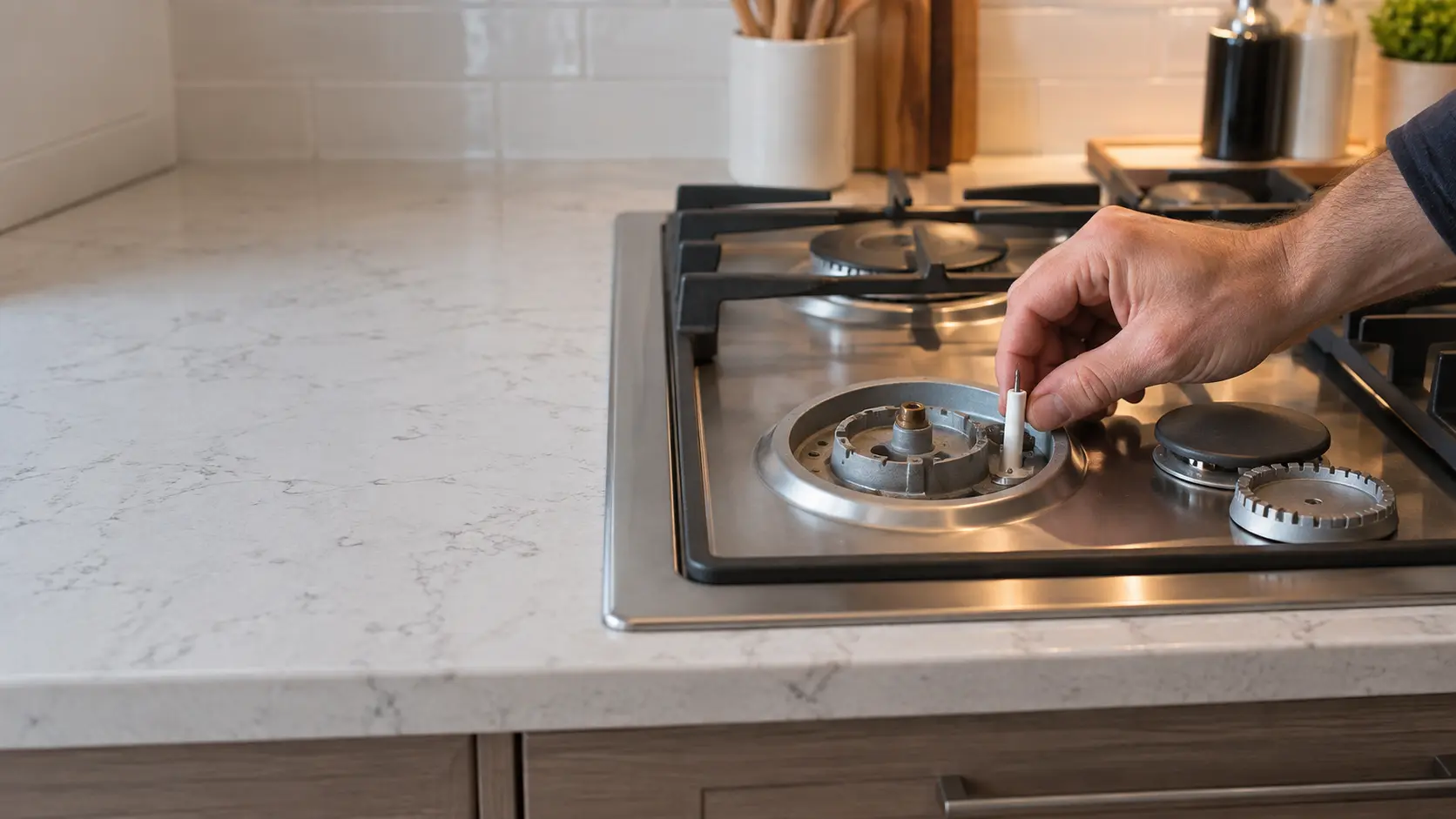
Spark electrodes crack or get soaked by boil-overs, spark switches stick, and the spark module can fail and leave every burner ticking. These are modest repairs. Gas valves last a long time, and a gas top with mechanical knobs may have no board at all.
Radiant and induction tops over time
Radiant elements burn out one at a time and their limiters can drift, while the glass can crack from an impact or a hot lid. Induction tops concentrate their risk in the power boards and the cooling fan, which fail more often when the cabinet below is packed tight and the fan cannot draw air.