
A cooktop is a handful of parts in a shallow box
Lift a built-in cooktop out of its counter and what you find is a shallow metal pan with the cooking surface on top and a short list of components underneath. There is no cavity to heat, no door lock, no convection fan for an oven. That short list is good news for anyone weighing repair: when something stops working, the cause is usually one part, and most of those parts are reached from above or through the open cabinet beneath without disturbing the counter.
What those parts are depends on how the top makes heat, and that is where the repair picture splits.
Under a gas cooktop
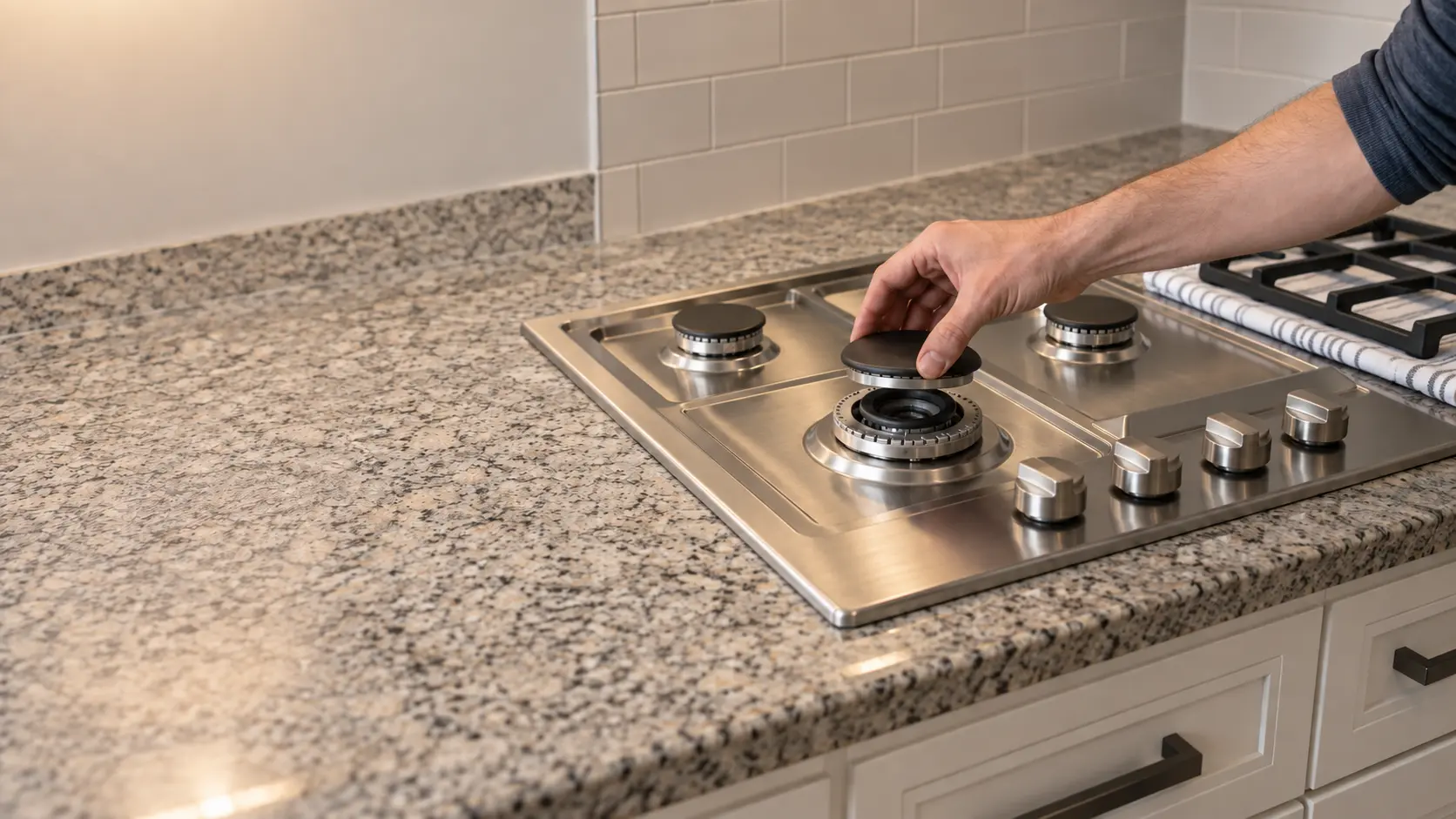
Each burner has a spark electrode, a valve behind its knob and a small switch that tells the spark module to fire. The module itself sits in the burner box and serves every burner at once, which is why one failed module can make all the burners tick or none of them. Valves, electrodes and modules are ordinary parts with long catalog lives; a technician replaces them, never the owner, because every one of them lives on the gas side.
Under a radiant or coil top
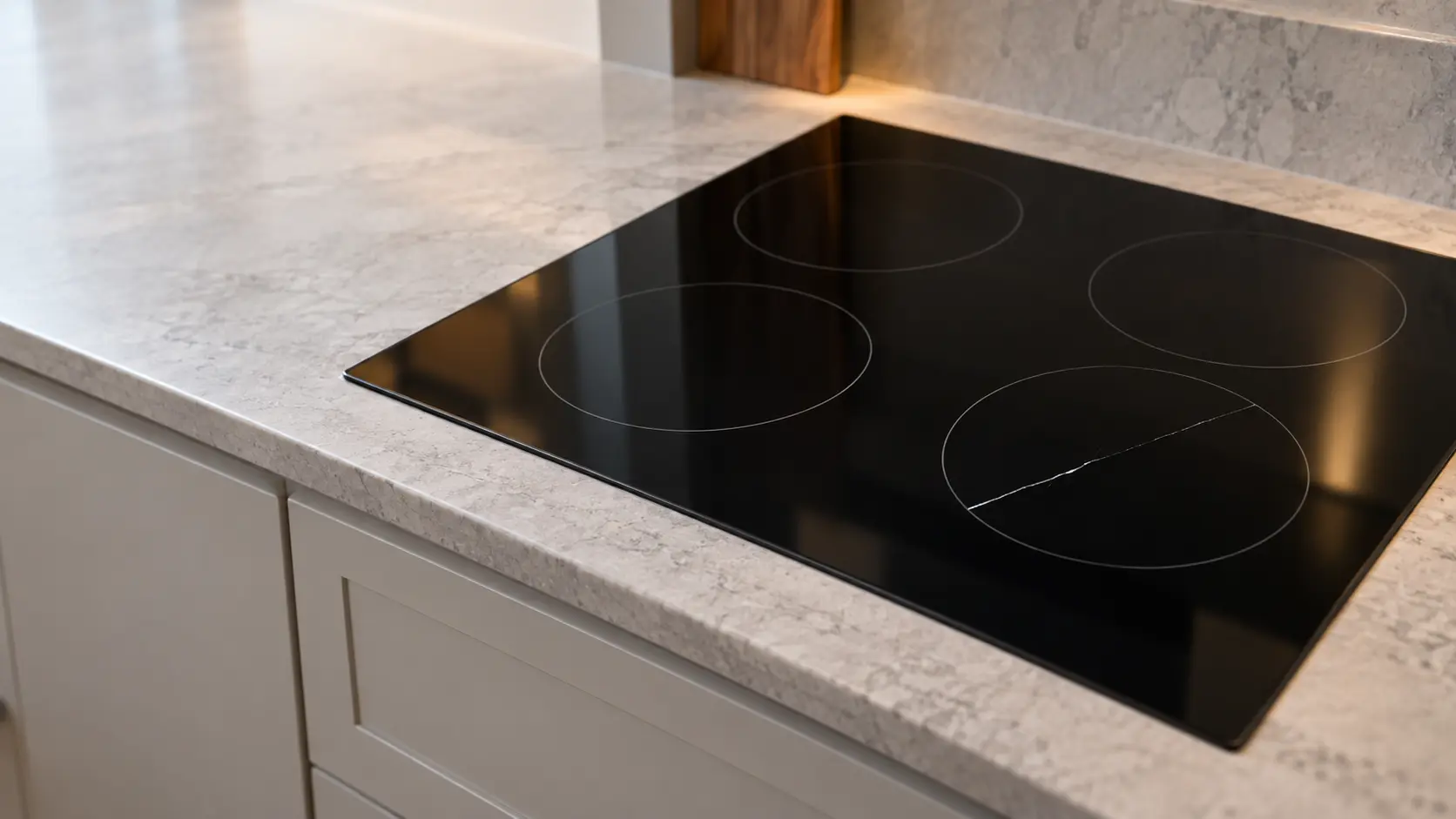
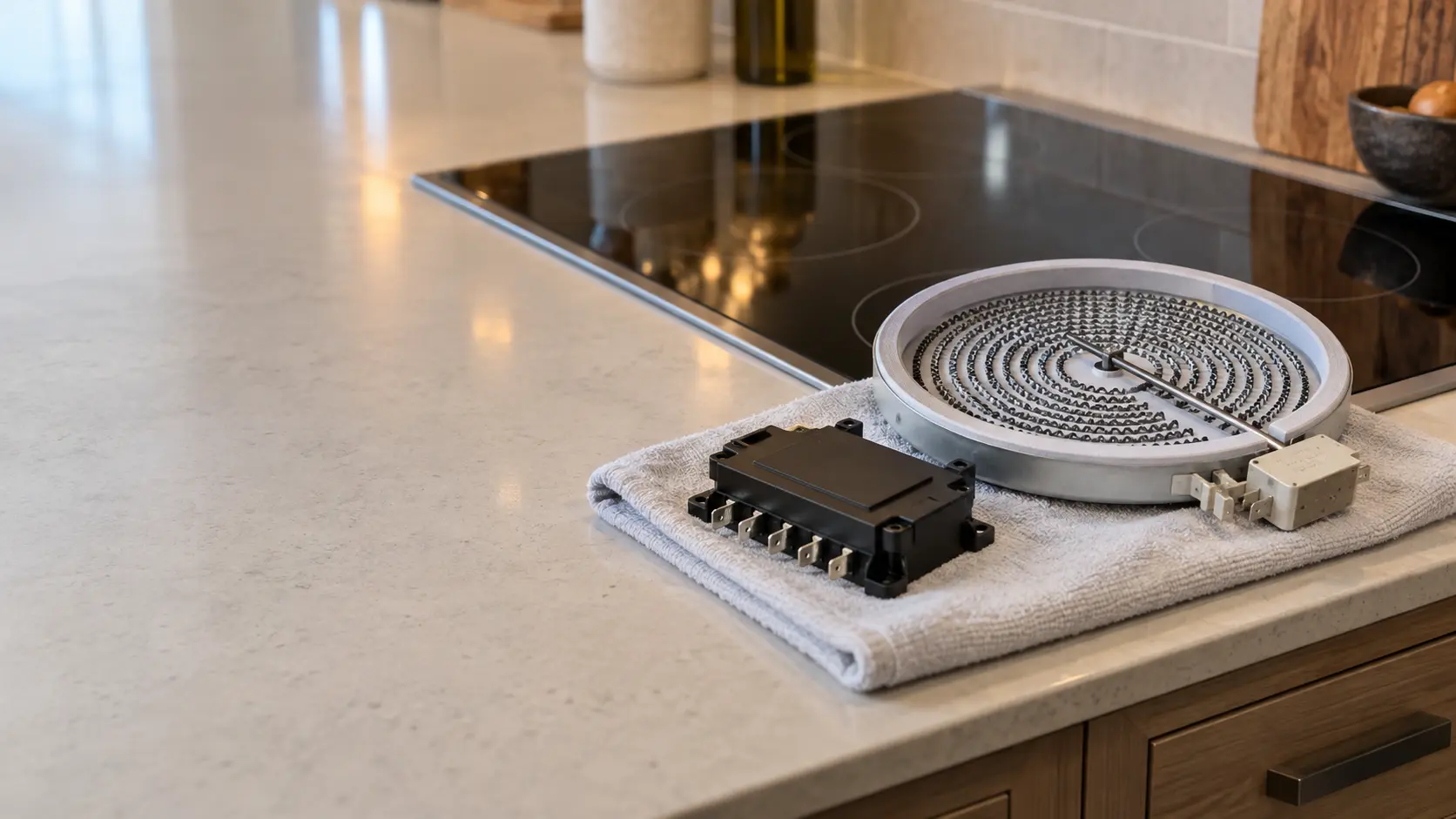
A coil cooktop has plug-in elements, the receptacles they sit in and an infinite switch per element. A radiant smooth top hides a ribbon element and a temperature limiter under each zone, and newer models swap the switches for a touch panel and a relay board. The glass is the one component that changes the arithmetic, since it is large, fragile and specific to the model.
Under an induction top
Induction replaces elements with copper coils and adds the electronics that drive them: one or more power boards, a control board behind the touch strip and a cooling fan that pulls air from the cabinet space below. Boards are the expensive items here, and a board that has left the maker's parts list is the most common reason a younger induction top gets retired.
Cooktop repairs sorted from lightest to heaviest
How alarming a symptom looks says little about what it will cost. A burner that ticks endlessly is often a wet electrode, while a cooktop that looks perfect but shows a code can need a board. Sort the problem into its band before comparing it with a new unit:
- No part at all, the cheapest kind of visit: a tripped breaker, a control lock left on, a burner cap sitting off center, a spill still drying inside an igniter well.
- One small stocked part, the low band: a spark electrode, a spark switch, a coil element and its receptacle, a knob, an infinite switch.
- Moderate work: a spark module, a radiant element under the glass, a temperature limiter, an induction cooling fan, the blower of a downdraft vent.
- The top band: a new glass top, an induction power board, a touch control panel on a premium model, a gas valve manifold, and any part the maker no longer lists.
Why the hole in the counter can settle the question
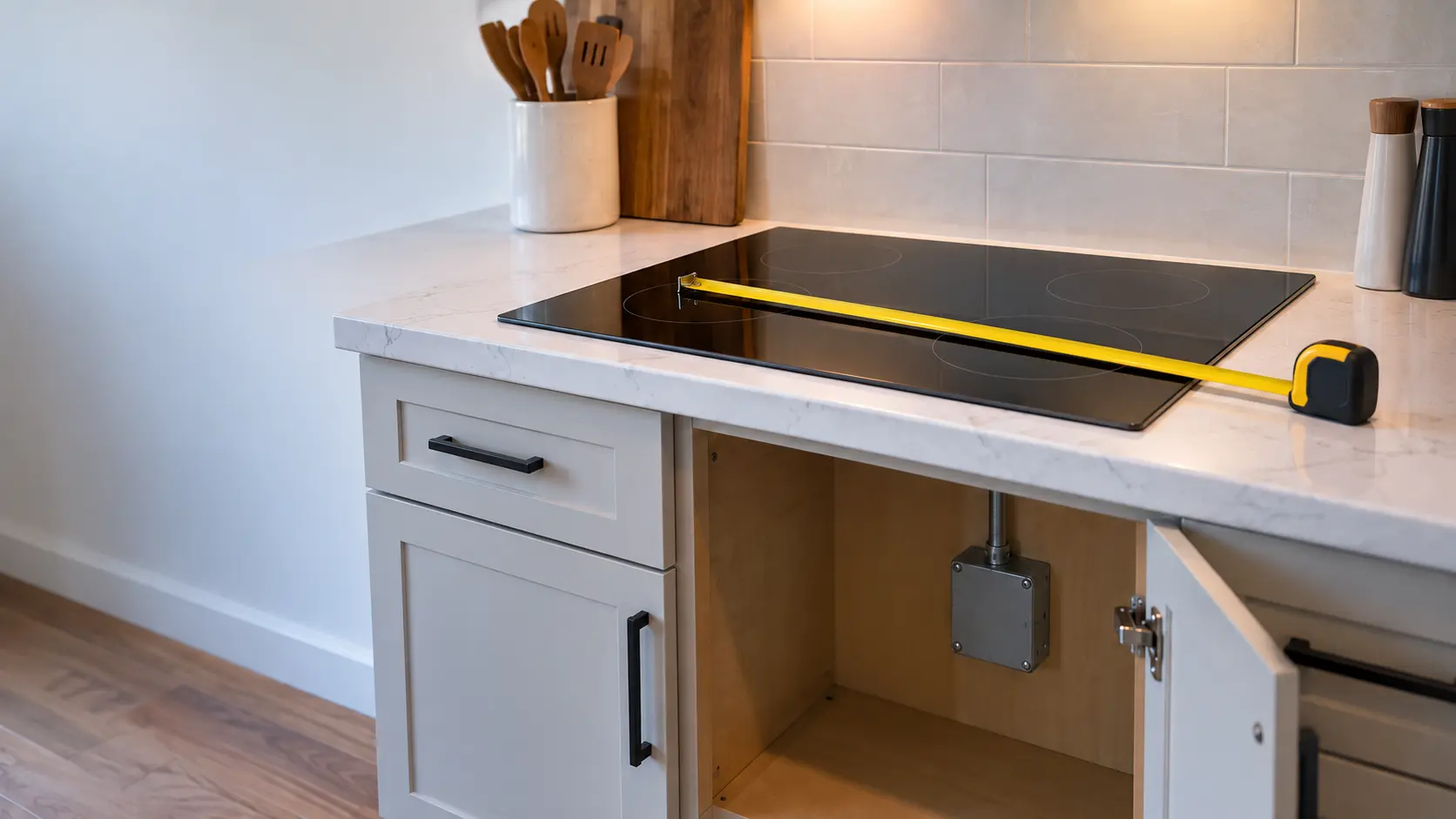
A range slides into a standard gap between cabinets; a cooktop drops into a hole cut for one particular chassis. Cooktops sold as 30-inch or 36-inch vary in the exact cutout width and depth from one maker to the next, and even between a maker's own generations. A new model whose chassis is a little larger means cutting granite, quartz or tile in place, with dust, risk to the slab and a fabricator's visit. One that is a little smaller can leave a visible gap the trim does not cover.
That is why repair keeps its edge on cooktops longer than on most appliances. Before you repair or replace a cooktop, have the installation instructions for any candidate model beside the measurements of the opening you already have.
- Width and depth of the existing opening, measured at the counter surface, not the trim.
- Distance from the front edge of the opening to the front of the counter.
- Depth of the cabinet space beneath, and whether drawers or a wall oven sit under it.
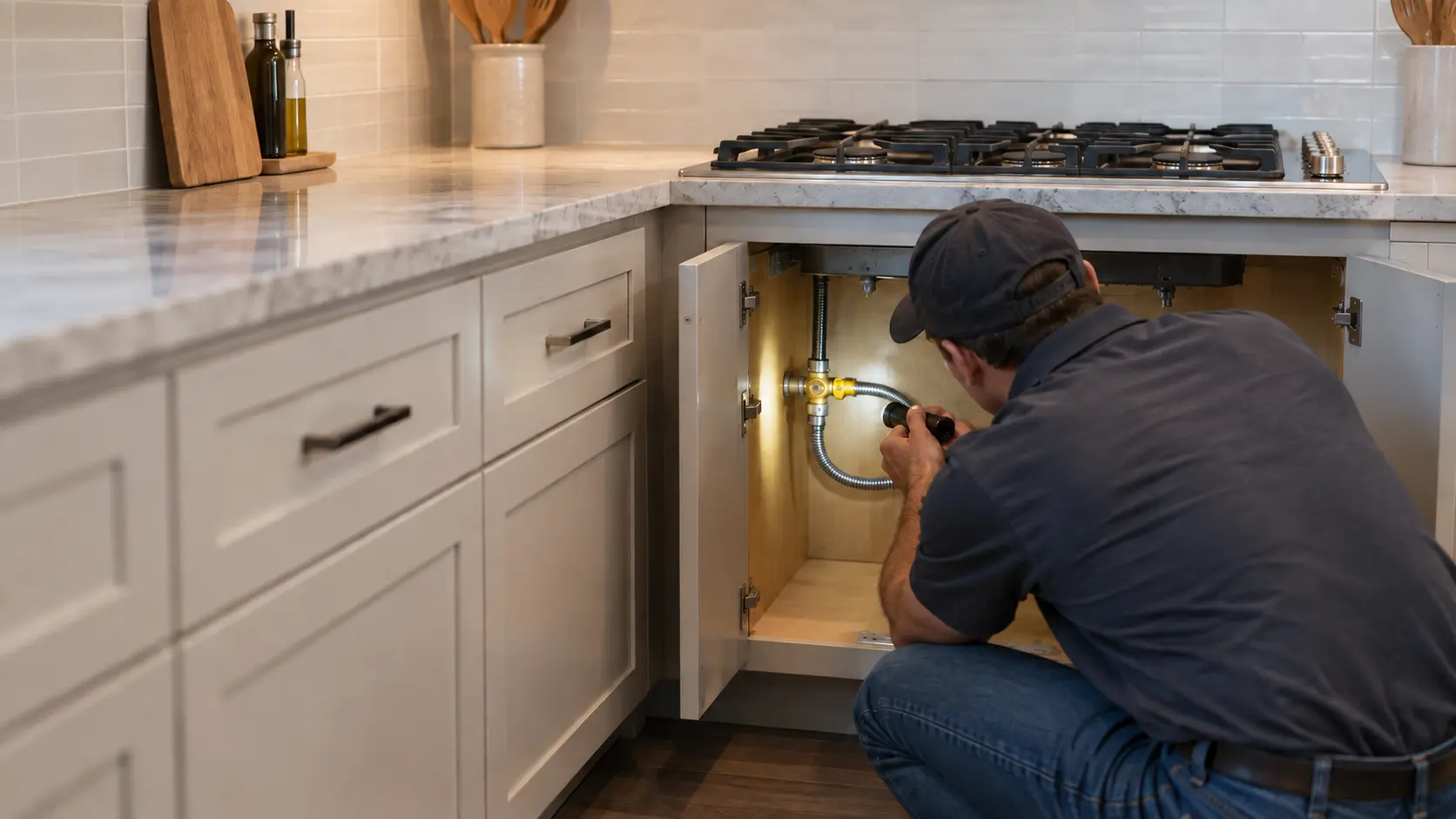
- Where the gas shutoff or the junction box is, so a new chassis will not land on top of it.
What a new top asks of the cabinet below
The supply under the counter is the second hidden cost. Monogram's general amperage guide lists 15 amps for its 30-, 36- and 48-inch gas cooktops, which only need power for ignition and lights, but 40 amps for a 30-inch induction cooktop and 50 amps for a 36-inch one. A household swapping a tired radiant top for induction may find the existing breaker and wire too light, which means new cable from the panel to the junction box.
Changing fuel costs more still. Replacing gas with induction leaves a gas line to be capped by a qualified installer and calls for a heavy 240-volt circuit where only a small outlet stood. Going the other way means running gas to a spot that never had it. Add that work to the price of the new cooktop before setting it against a repair estimate.
Source: Monogram — Appliance amp size — Monogram lists 15 amps for 30-, 36- and 48-inch gas cooktops, 40 amps for a 30-inch induction cooktop and 50 amps for a 36-inch induction cooktop
Findings that usually point to a new cooktop
Some discoveries end the discussion quickly, whatever the age of the unit. It is also worth searching the Consumer Product Safety Commission's recall list by brand and model before paying for any repair, because a recalled cooktop is handled through the recall remedy rather than an ordinary visit.
- Glass that is cracked, deeply pitted or chipped at the edge on a model whose replacement top is no longer made.
- A control or power board dropped from the parts list with nothing approved in its place.
- Rust eating through the burner box of a gas top, usually after years of boil-overs reaching the metal.
- Heat-darkened, brittle wiring under the top, the sign of a unit that has been running hot for a long time.
- Several unrelated parts failing together on an older low-end model, where the combined estimate approaches a new one.
Source: CPSC — Recalls and product safety warnings — The Consumer Product Safety Commission publishes product recalls that owners can search by product and brand