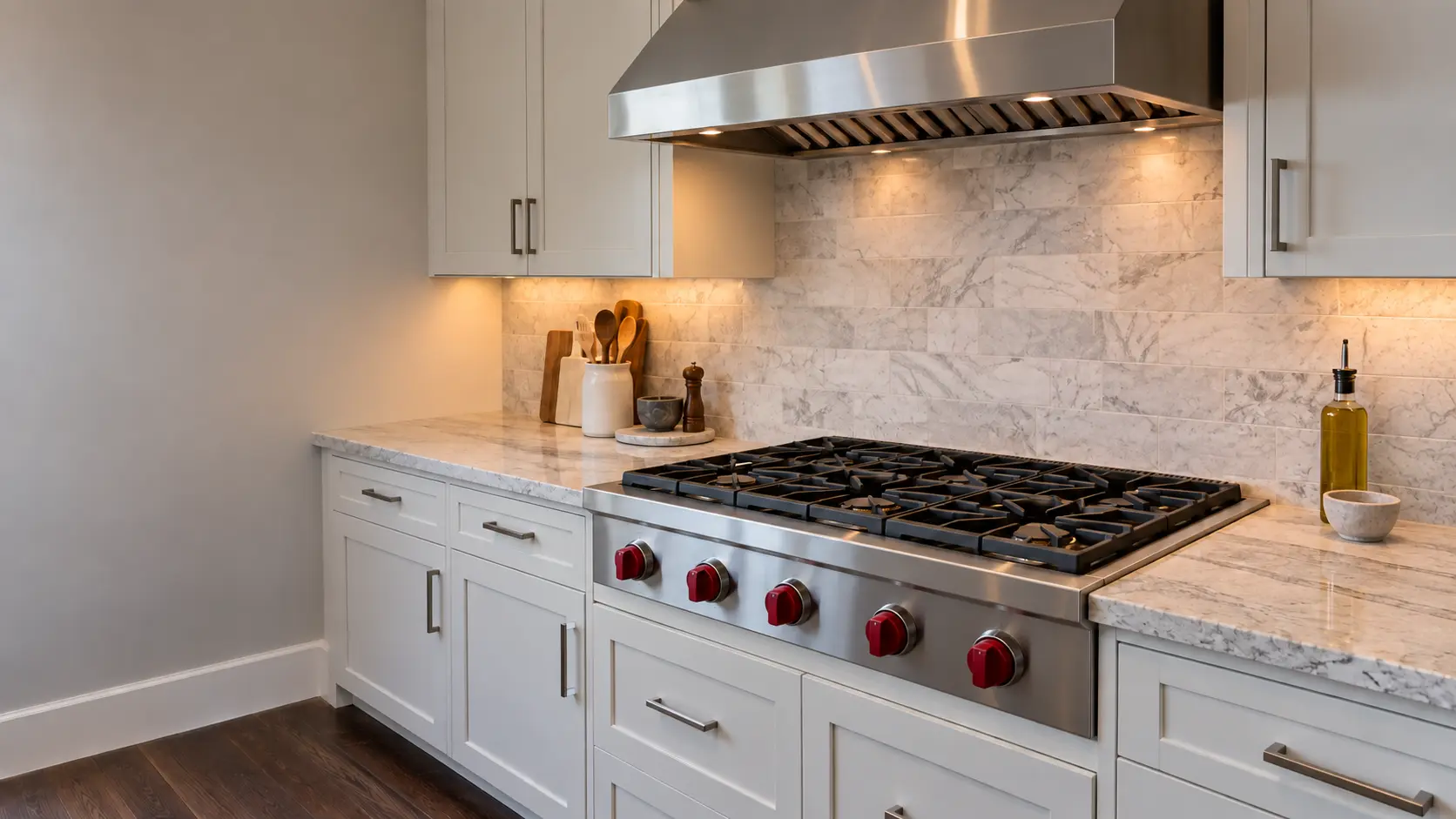

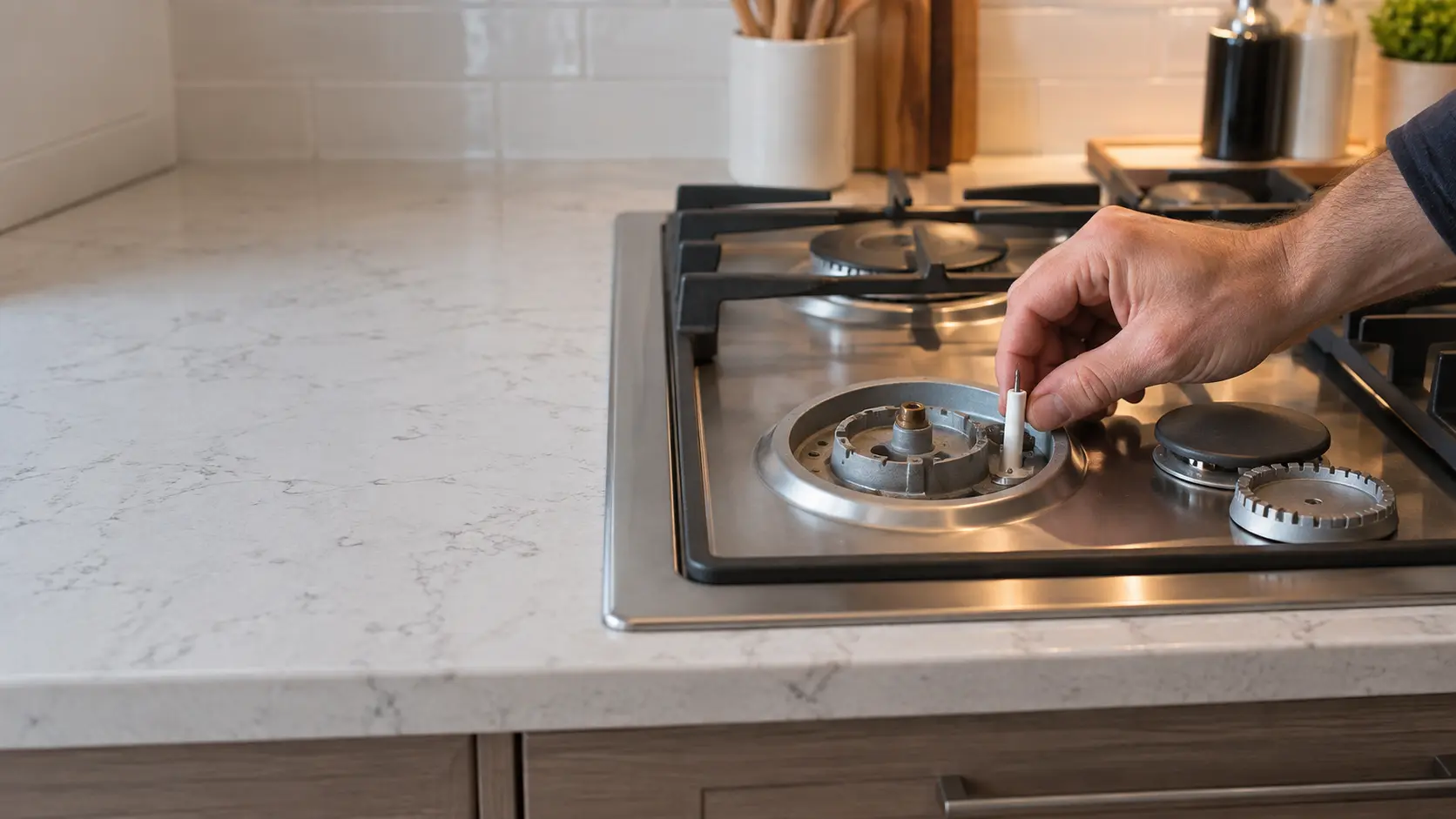
How each one sits in the counter
The difference begins with the cut in the countertop. The rangetop vs cooktop choice decides whether the stone fabricator makes a simple rectangular hole or a notch that runs out to the front edge of the counter and down into the cabinet.
A drop-in cooktop
A cooktop lowers into a rectangular opening and rests on its own rim or trim, with the counter surface running unbroken in front of it. The controls are on the glass or on the top frame, so the cabinet front below stays an ordinary set of drawers or doors. Only the chassis, a few inches deep, hangs down into the cabinet space.
A pro-style rangetop
A rangetop is deeper and heavier, and its knob panel faces the room. Thermador's installation manual describes its rangetops hanging from the counter by side flanges, notes that the counter may need cleats, a corner brace or a supporting deck to carry the weight, and says a solid cabinet side wall must be notched to clear the front of the unit. The front may sit flush with the cabinets or project, depending on counter depth.
Source: Thermador — Installation manual for Professional rangetops (9000942462) — Rangetops hang from the counter by side flanges; sealed burners rated 18,000 BTU/hr (15,000 on propane); 120 V dedicated circuit of 10 A, 15 A with an electric griddle; overhead extractor strongly recommended, downdraft not to be used; hood width, 30-inch height, make-up air; 36-inch cabinet, 5-inch side, 12-inch rear clearances; gas and power reachable without removing the unit
Burners, griddles and the power behind them
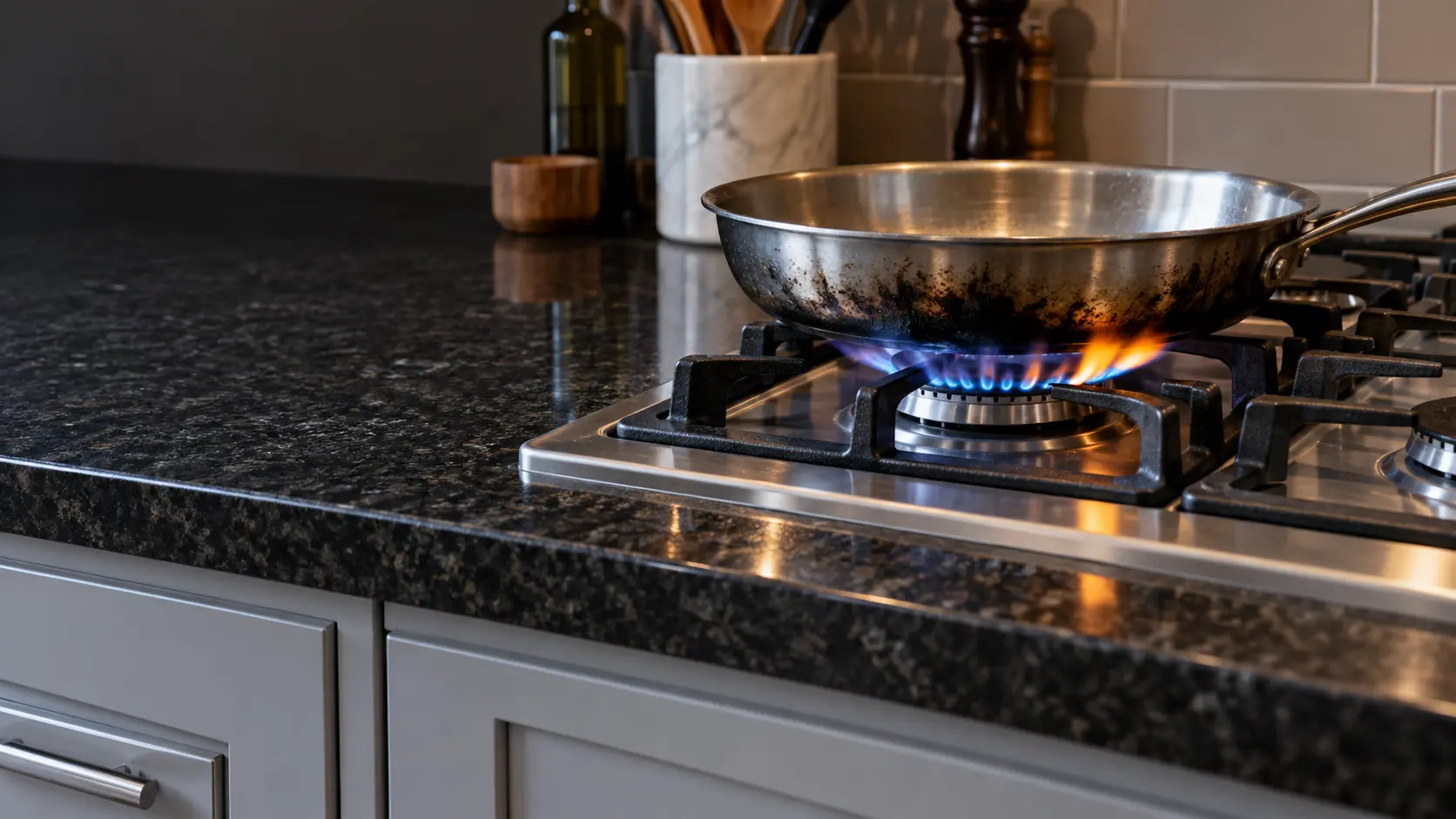
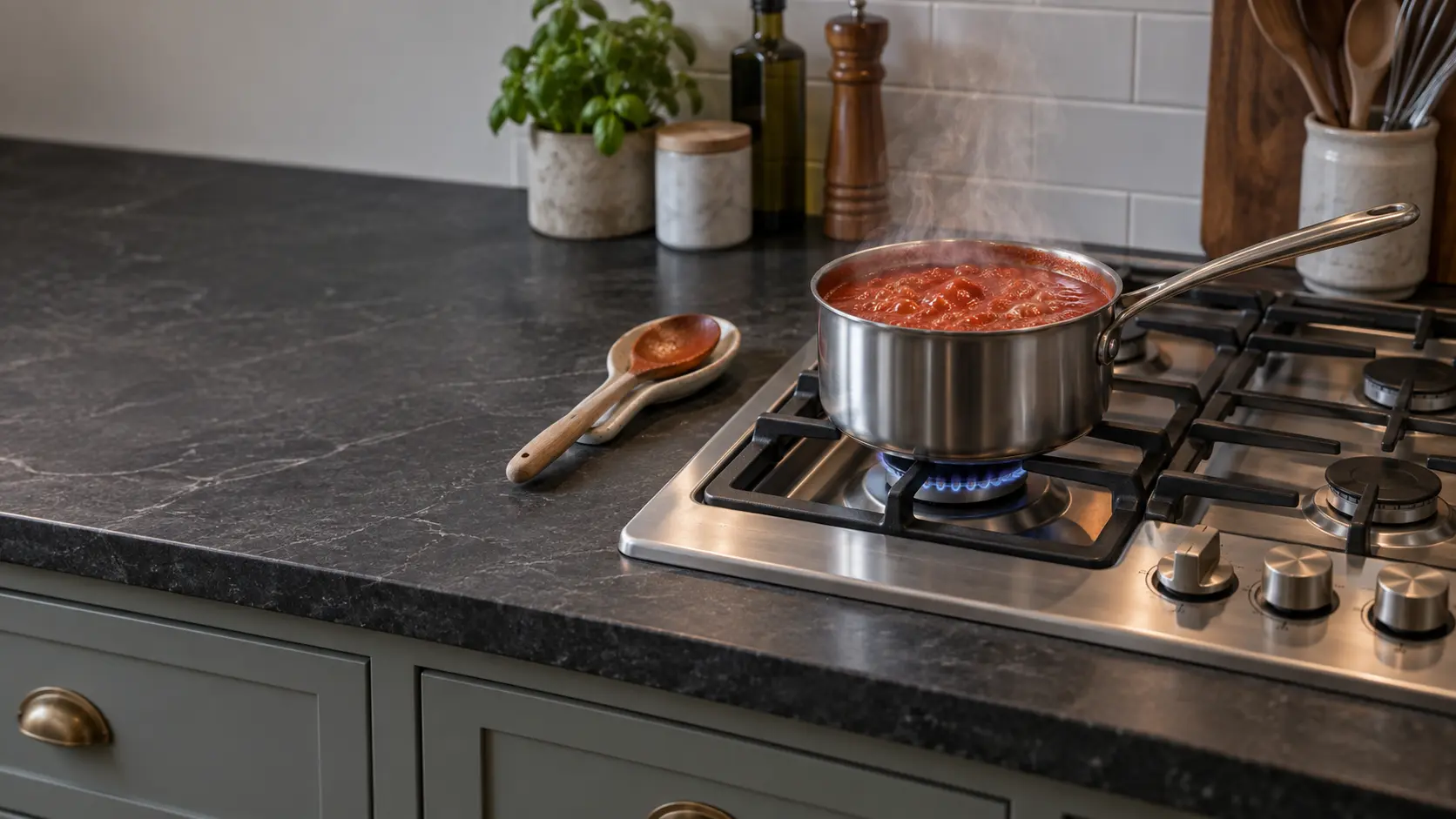
Rangetops are built for high heat. Thermador rates every sealed burner on its Professional rangetops at 18,000 BTU per hour on natural gas and 15,000 on propane, and some burners cycle on and off automatically to hold a very low simmer. Consumer gas cooktops usually mix one or two strong burners with smaller ones, while radiant and induction cooktops offer zones of different sizes rather than flames.
Even an all-gas rangetop needs electricity. The same manual lists a dedicated 120-volt, 10-amp circuit for its four- and six-burner models and 15 amps when an electric griddle is built in. Many rangetops come in 30, 36 and 48-inch widths, with the wider ones combining burners with a griddle plate.
- Choose a rangetop for many high-output burners, a built-in griddle and front knobs you can reach without leaning over a hot pan.
- Choose a cooktop for a flush, uninterrupted counter, touch controls, the option of induction, and an island where a large overhead extractor would be unwelcome.
Source: Thermador — Installation manual for Professional rangetops (9000942462) — Rangetops hang from the counter by side flanges; sealed burners rated 18,000 BTU/hr (15,000 on propane); 120 V dedicated circuit of 10 A, 15 A with an electric griddle; overhead extractor strongly recommended, downdraft not to be used; hood width, 30-inch height, make-up air; 36-inch cabinet, 5-inch side, 12-inch rear clearances; gas and power reachable without removing the unit

The ventilation a rangetop asks for
This is where the two part company most sharply. Thermador strongly recommends that its rangetops be installed with a suitable overhead extractor, says downdraft ventilation should not be used, and warns against any system that pulls air downward toward the burners because it can upset ignition and combustion. It also advises against an over-the-counter microwave with a built-in fan above the rangetop because of the heat.
A cooktop gives more room to choose. Many gas, radiant and induction cooktops can be paired with a downdraft vent on an island, provided the model's own instructions allow it, which keeps the sightline open.
- Width: at least the width of the rangetop on a wall; on an island, overhanging it by at least 3 inches on each side.
- Height: the lower edge about 30 inches above the cooking surface for best smoke capture, or 36 inches if the extractor has combustible materials such as a wood cover.
- Make-up air: a source of outside replacement air is recommended because of the high airflow, especially in a tight, well-insulated house.
Source: Thermador — Installation manual for Professional rangetops (9000942462) — Rangetops hang from the counter by side flanges; sealed burners rated 18,000 BTU/hr (15,000 on propane); 120 V dedicated circuit of 10 A, 15 A with an electric griddle; overhead extractor strongly recommended, downdraft not to be used; hood width, 30-inch height, make-up air; 36-inch cabinet, 5-inch side, 12-inch rear clearances; gas and power reachable without removing the unit
Clearances to cabinets and walls
The same manual sets out the space a rangetop needs around it, and these figures often decide whether a rangetop can go where a cooktop sat before. They include a minimum of 36 inches from the cooking surface to the bottom of an unprotected cabinet above, reducible to 30 inches only when that cabinet bottom is protected as the manual describes; 5 inches from the side of the unit to a combustible side wall; and a recommended 12 inches behind an island installation with the flush trim. Against a combustible back wall, a low backguard is required.
A cooktop's clearances come from its own installation guide and are often smaller, which is one reason cooktops fit more easily into existing kitchens.
What to measure before choosing
A few measurements taken now save an expensive surprise after the counter is cut. Take them with the doors and drawers of the cabinet below open, so you can see what is already fixed to the back wall.
- Height from the counter to the underside of any cabinet above the cooking area.
- Distance from the planned side edge of the unit to the nearest wall or tall cabinet.
- Counter depth, which decides whether a rangetop front sits flush or projects.
- Position of the gas shutoff and outlet, which must remain reachable once the new unit is in place.
Source: Thermador — Installation manual for Professional rangetops (9000942462) — Rangetops hang from the counter by side flanges; sealed burners rated 18,000 BTU/hr (15,000 on propane); 120 V dedicated circuit of 10 A, 15 A with an electric griddle; overhead extractor strongly recommended, downdraft not to be used; hood width, 30-inch height, make-up air; 36-inch cabinet, 5-inch side, 12-inch rear clearances; gas and power reachable without removing the unit
Service and upkeep over the years
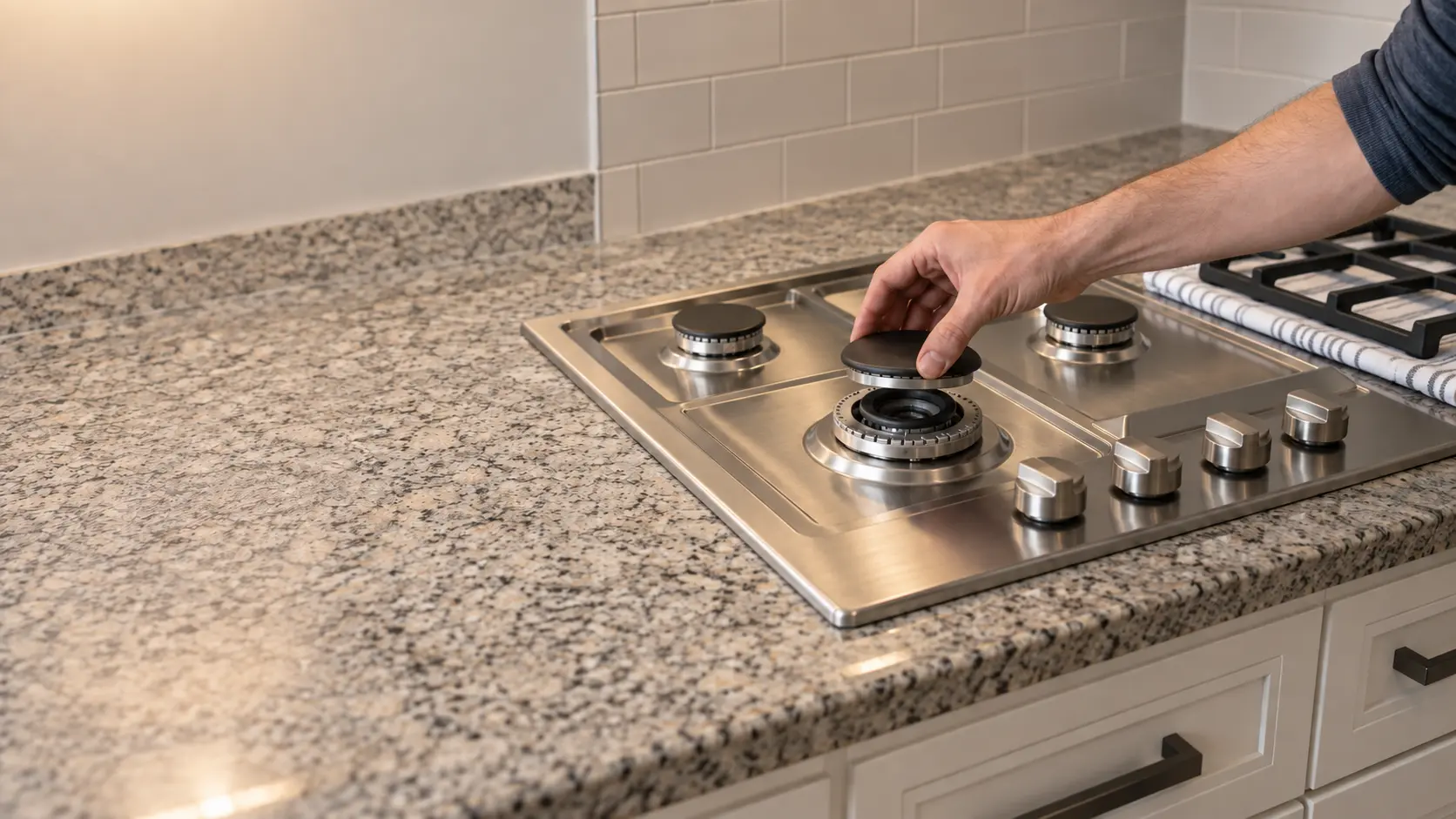
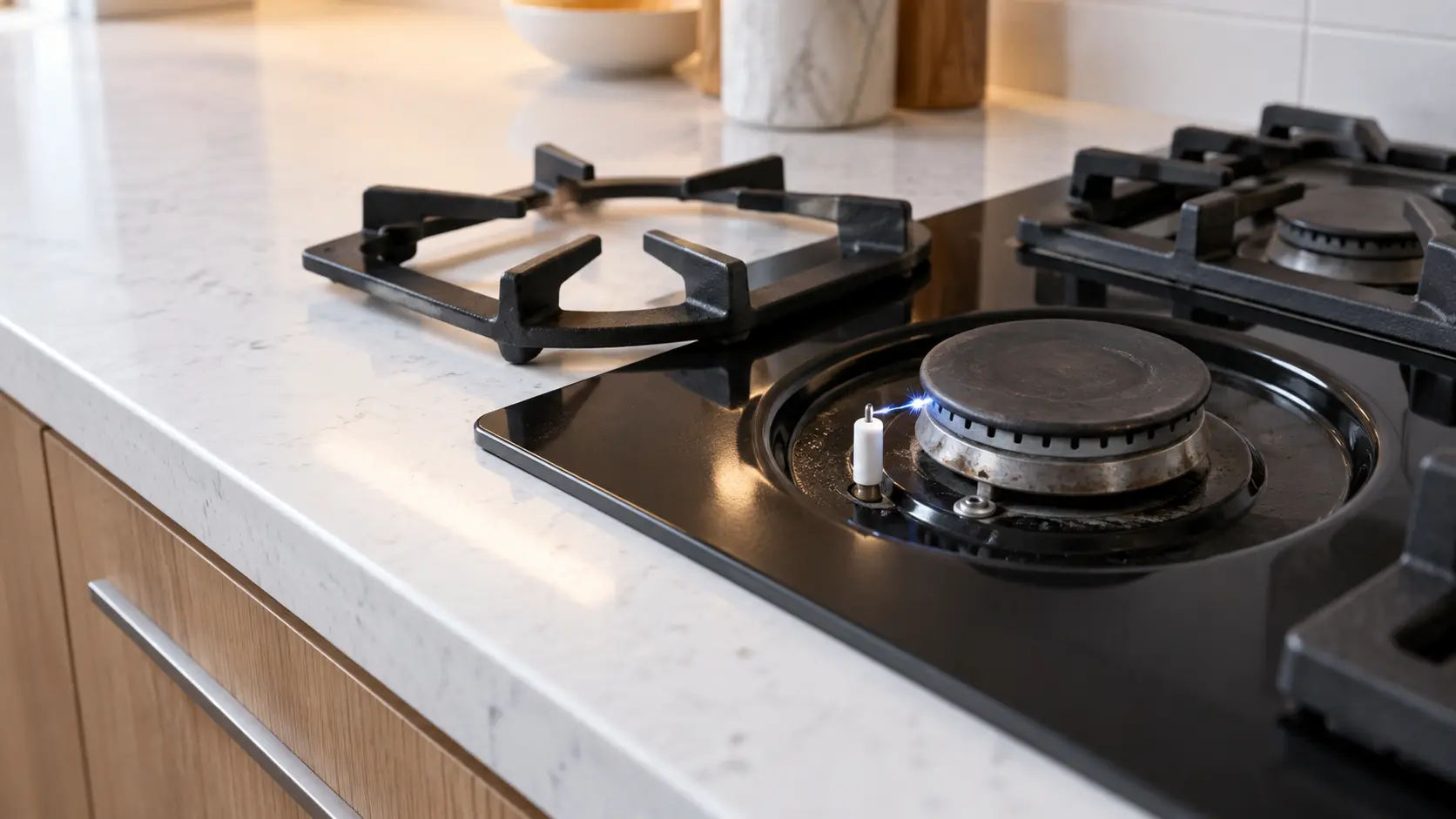
A rangetop is serviced mostly from the top: grates and burner heads lift off, and the valves and igniters are reached by removing the top panels. Thermador requires the gas and electrical connections to be accessible without taking the rangetop out, which matters on the day a technician needs to shut the unit down. Its cast-iron grates are heavy, and the burner bowls collect more spillage than a sealed glass surface.
Cooktops vary more. A gas cooktop is serviced much like a rangetop in miniature; a radiant or induction top is often lifted out of the cutout to reach elements or boards, so a clear cabinet below and slack in the supply cable make every future visit simpler.
Source: Thermador — Installation manual for Professional rangetops (9000942462) — Rangetops hang from the counter by side flanges; sealed burners rated 18,000 BTU/hr (15,000 on propane); 120 V dedicated circuit of 10 A, 15 A with an electric griddle; overhead extractor strongly recommended, downdraft not to be used; hood width, 30-inch height, make-up air; 36-inch cabinet, 5-inch side, 12-inch rear clearances; gas and power reachable without removing the unit