
What is a bridge element on a cooktop?
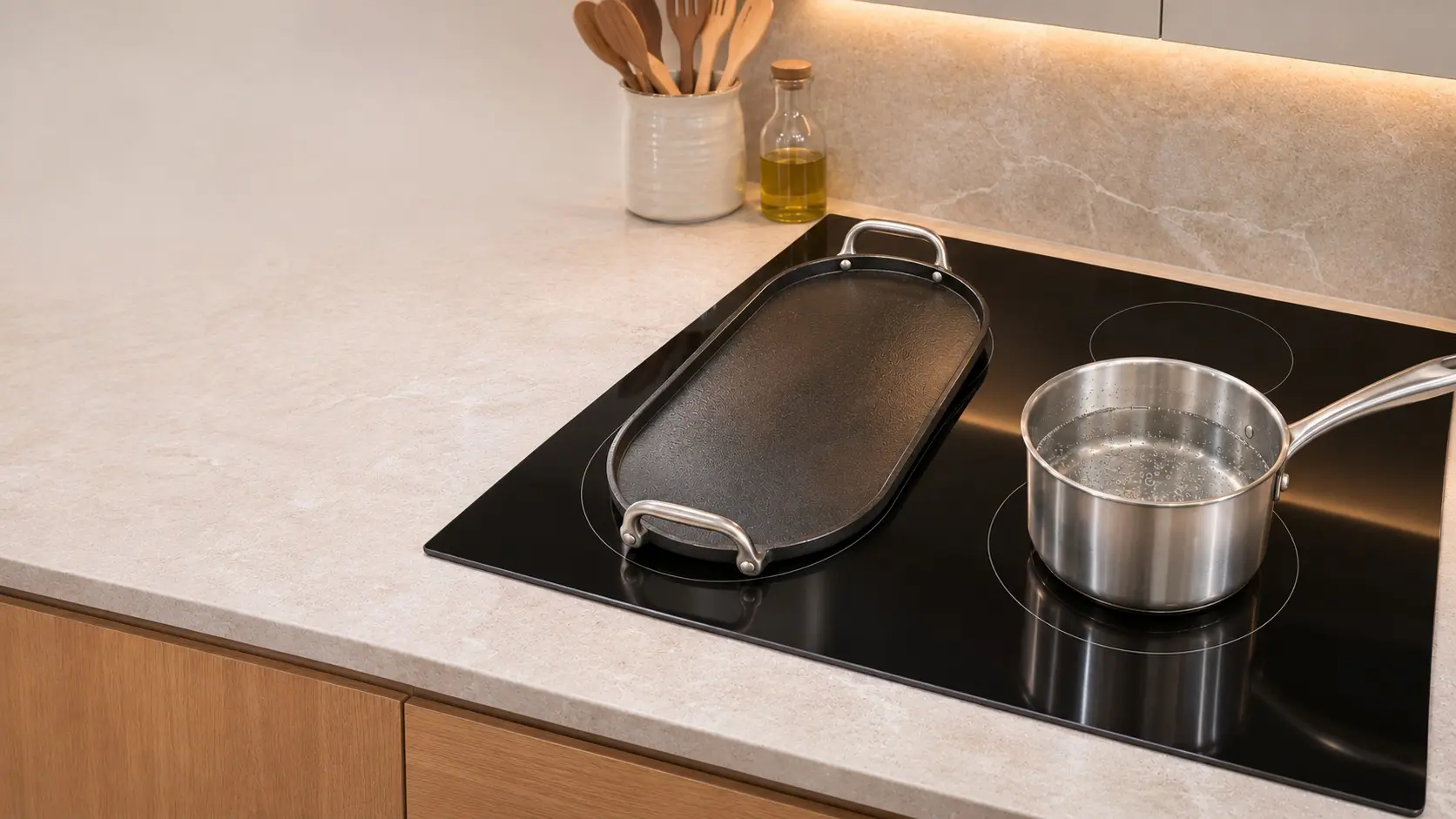
A cooktop bridge element is a connection between two adjacent heating zones that lets them work as one long zone. You select the joined zone with a bridge or link control, which works differently from model to model, and the pair heats together for a griddle, roaster or any long pan that would otherwise overhang two separate zones.
How it differs on radiant and induction
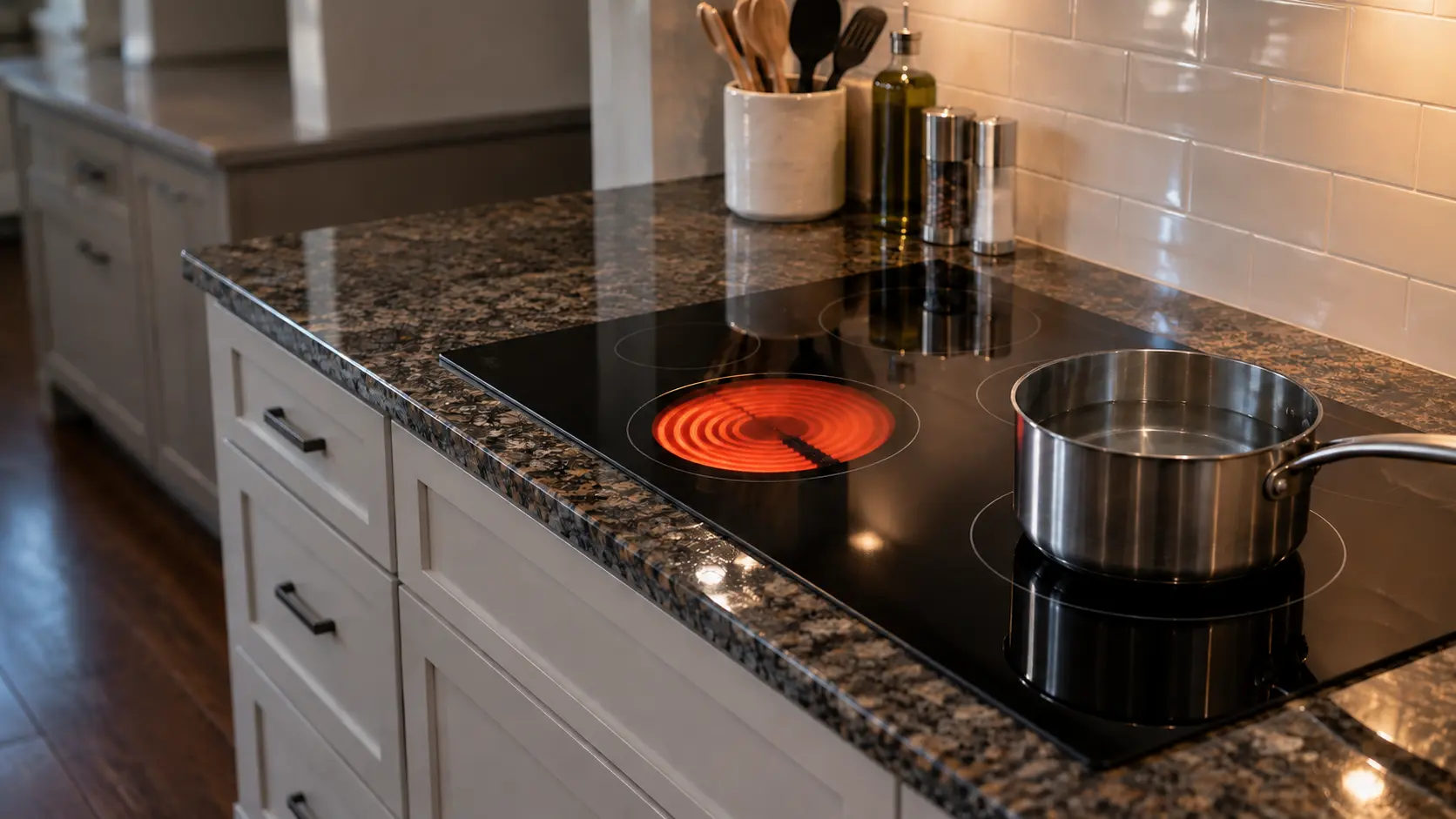
On a radiant glass top, a bridge typically links two elements, often with an extra heated section between them, so the whole printed oval or rectangle heats under one setting. Designs differ, so the manual is the guide to what yours heats. On an induction cooktop the same idea is called a flex, bridge or zone-free cooking area: several coils sit side by side and the control energizes only the ones under the pan. A radiant bridge heats the whole marked area. An induction flex zone heats where the pan is.
And on a gas cooktop
Gas cooktops reach the same goal differently: some have an oval or elongated center burner, or a griddle burner, sized for long pans, and some sell a griddle that sits across two grates. That is a burner and grate choice rather than a joined electric zone, and its pan rules come from the manual. The rest of this guide is about electric and induction tops.
Which pans benefit?
The feature exists for pans that are not round. If your cookware is round and sized to one burner, a bridge has little to offer.
- A flat griddle or plancha pan that spans two zones
- A long roasting or fish pan
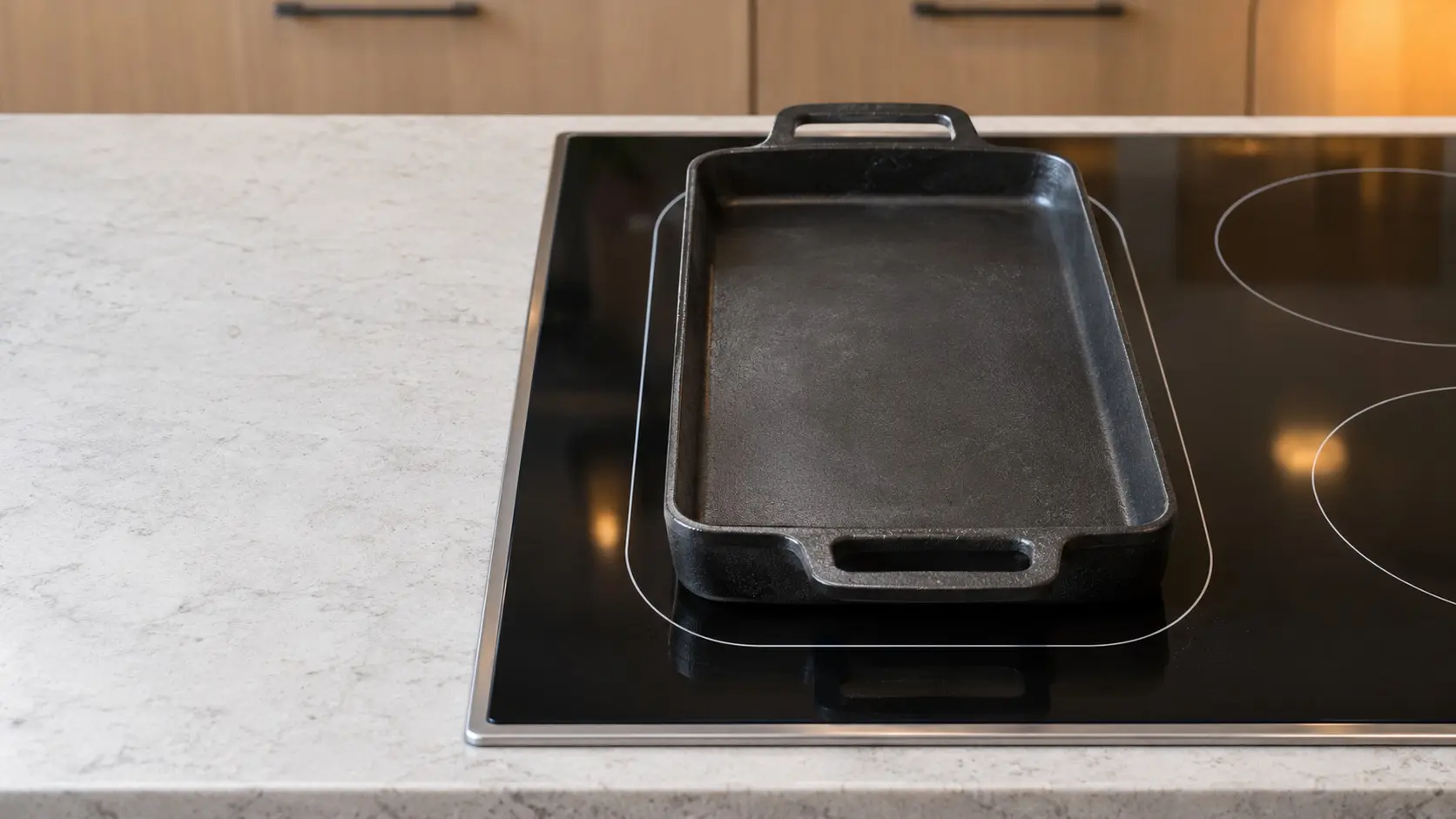
- A rectangular casserole used on the stove top for browning or a sauce
- A large oval braiser
What the pan needs
On induction, the pan must be magnetic at its base and sit flat. A long pan with a warped or bowed bottom heats unevenly across coils, and a pan that does not cover enough of the zone may not be recognized. The guide on why induction will not recognize a pan covers the magnet test. On radiant glass, the base should be flat and smooth; a rough cast bottom can mark the surface, as the cookware that marks or scratches glass guide explains.
What does a bridge or flex zone change in daily use?
You get one large even area where there would have been two small ones, with one control. That is useful for pancakes, a big batch of vegetables or a sear across a roaster.
| Feature | Radiant bridge | Induction flex zone |
|---|---|---|
| Heated area | The full marked oval | Coils under the pan |
| Pan shape | Flat base, any material | Magnetic base, flat |
| Pan placement | Centered on the marking | Anywhere inside the zone, as the manual allows |
| Heat across the pan | Depends on the design and the pan base | Depends on coil layout and the pan base |
Heat distribution across the seam depends on the model. Check the owner's manual for the cooking area your model allows and the pan sizes it lists for the joined zone.
What does the extra hardware mean for repairs?
More zones and more coils mean more parts that can fail, and one half of a joined zone can stop working while the other still heats. That is easy to miss, because ordinary cooking uses the single zones first.
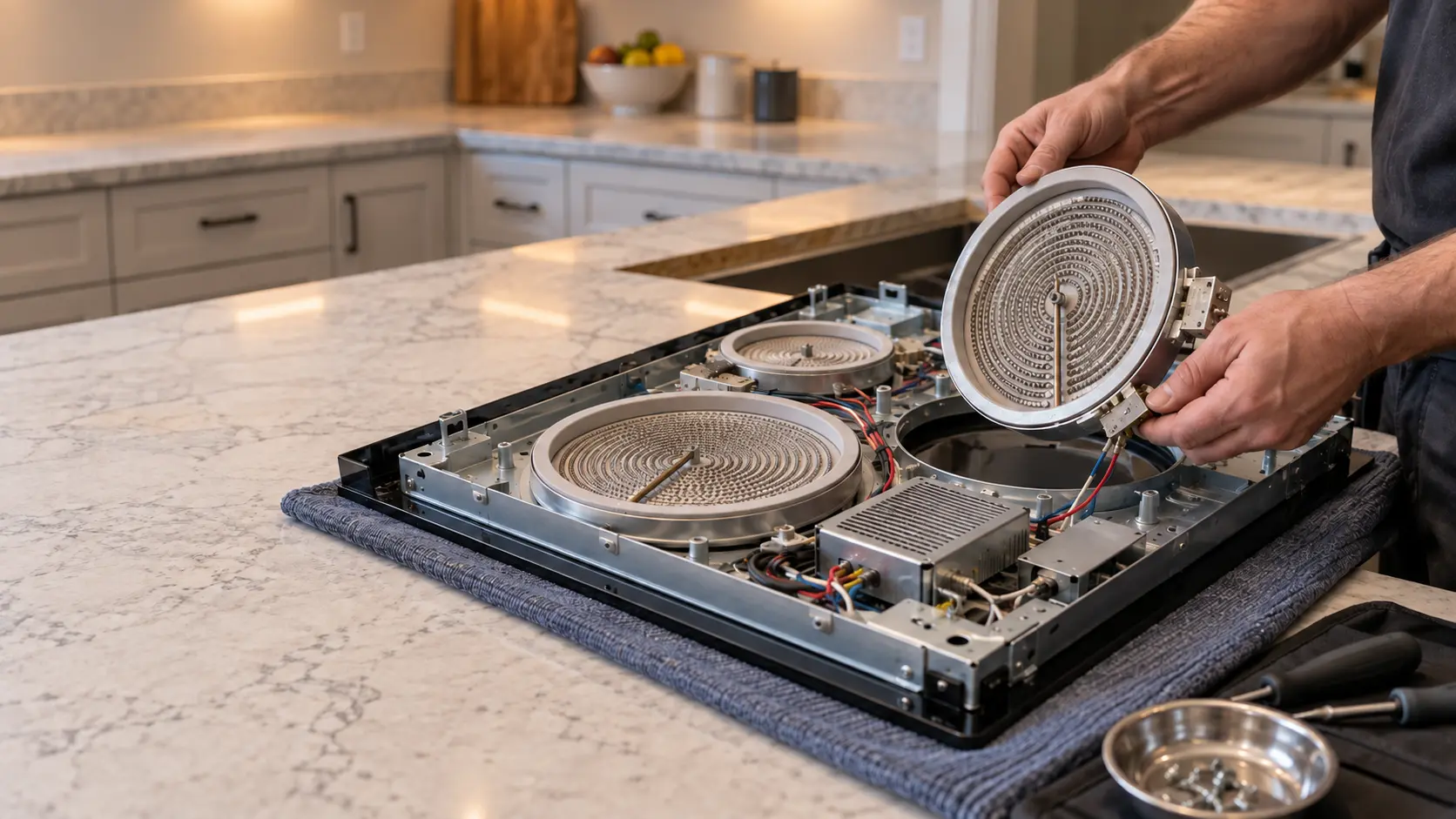
On a radiant top, the extra element or section, the switch or relay that joins the zones and the limiter are each a possible failure. A technician checks continuity of each ribbon and the switch, and a radiant element repair covers a dead zone. The radiant element cycles or stays dark guide shows what to check first.
On induction, flex zones use more coils and a larger power board, and the board that drives them is the costly part. An induction board and coil repair deals with a zone that is not detected, shuts off or buzzes. If the cooktop shuts down repeatedly, see induction cooktop turns itself off.
Is a flex zone harder to repair than fixed zones?
Not by itself, but the parts are specific to the model and the board is usually a larger unit. The practical effect is that repair-or-replace decisions lean on the board's cost sooner. The repair or replace a cooktop guide sets out how to weigh that.
Is it worth paying for?
Count how often you cook with a pan that needs it. If you use a griddle weekly, a bridge replaces a separate appliance. If you cook mostly in round pans, the money and the extra parts would do more good in a stronger main burner.
Questions to settle before buying:
- Which long pan would I use, and does its size fit the joined zone listed in the manual?
- Do I want the joined zone on induction, which brings its own pan rules, or on a radiant top?
- Is the zone's control easy to reach and clear to read?
- What does the model's service access look like, and does the cooktop sit over a wall oven or drawer that limits it?
If the cooktop type itself is still open, the gas, radiant or induction guide compares them. When a bridge or flex zone misbehaves, a diagnostic visit finds which half or coil is not working in one trip. The induction cooktop repair page lists what we service on that side.