What a click without a flame is telling you
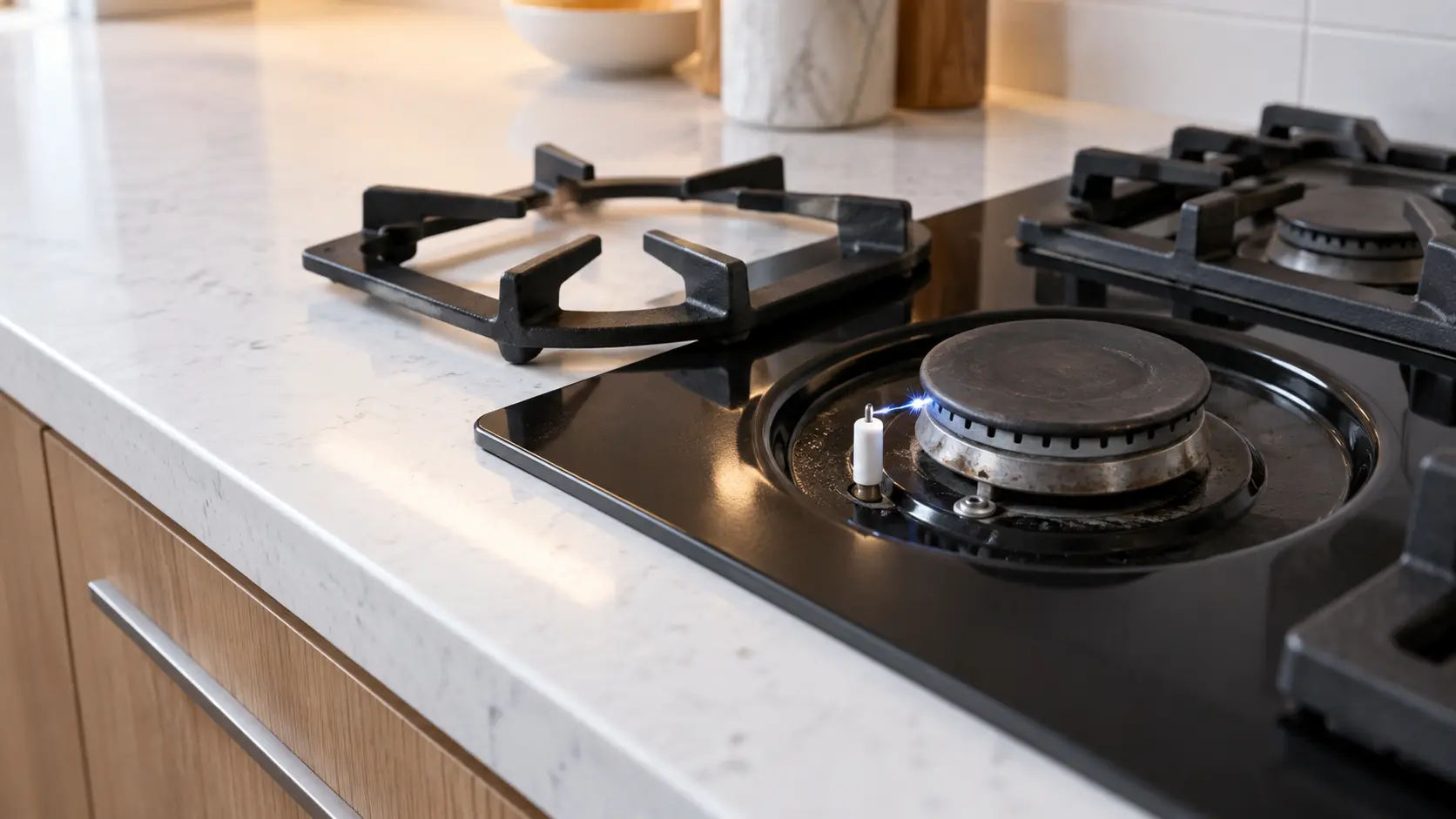
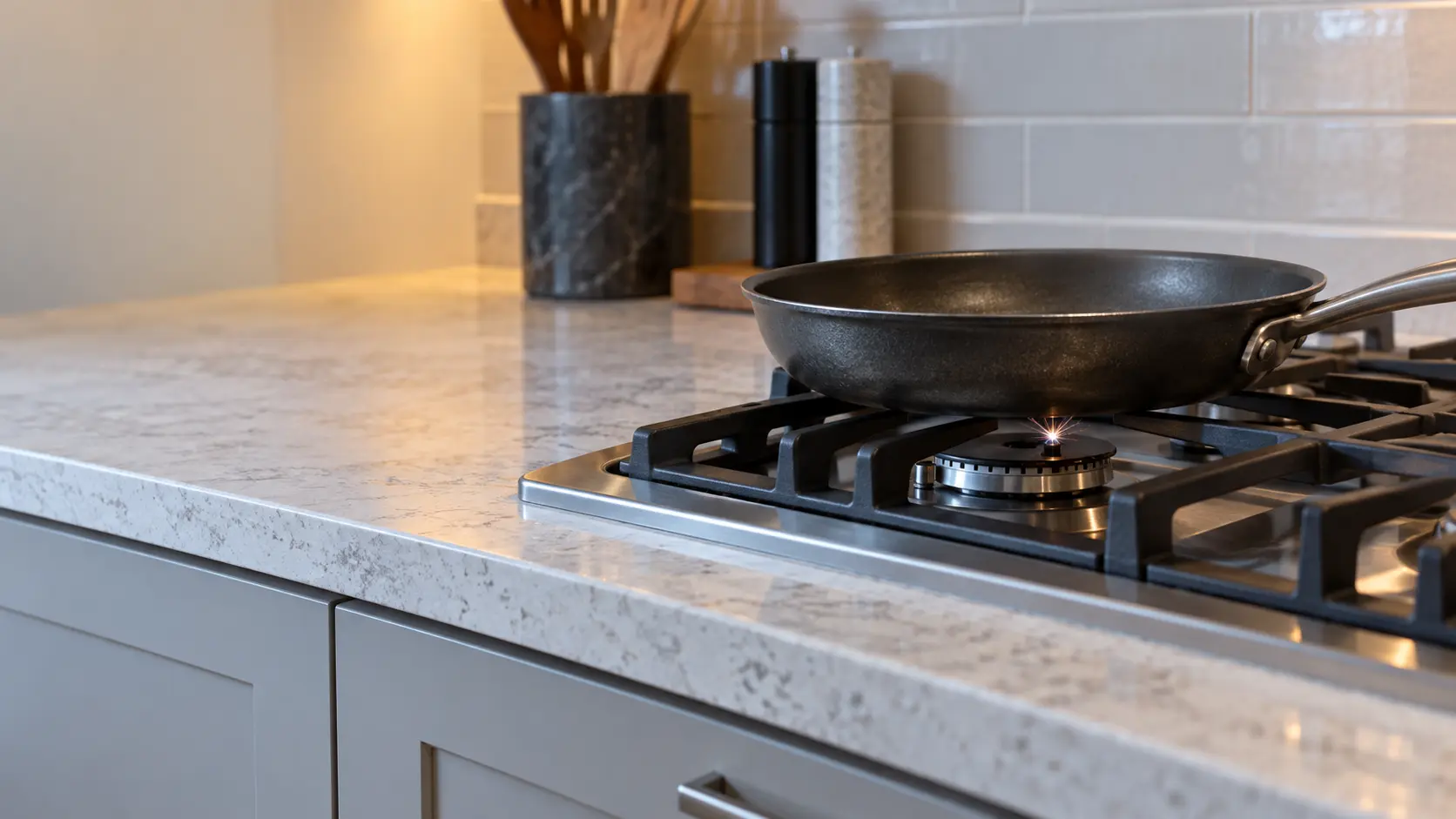
Every modern gas cooktop lights its burners with a spark. Turning a knob to the light position closes a small switch behind that knob, the switch tells a spark module under the burner box to fire, and the module sends pulses to a ceramic electrode beside each burner head. On most cooktops every electrode snaps at once, even though only one burner has gas flowing, so hearing all four or five tick is normal while one burner lights.
If you hear that ticking, the switch, the module and the power supply are doing their share. What is missing is gas at the right spot in the right mix, or a spark that jumps to the wrong place. That narrows the search to the top of the cooktop, the shutoff valve in the cabinet below, and a few settings, which is why this problem is so often solved without a visit.
Clicking when every knob is off
A cooktop that ticks on its own, with all knobs at off, almost always has water in one of the knob switches. Whirlpool traces it to cleaning or a spill that ran down a knob shaft, and suggests pulling the knobs and blowing cool air from a hair dryer onto the shafts to speed the drying. Give it a few hours before deciding a switch has failed; one that keeps clicking once it is plainly dry is a part for a technician.
Clicking again after the burner is lit
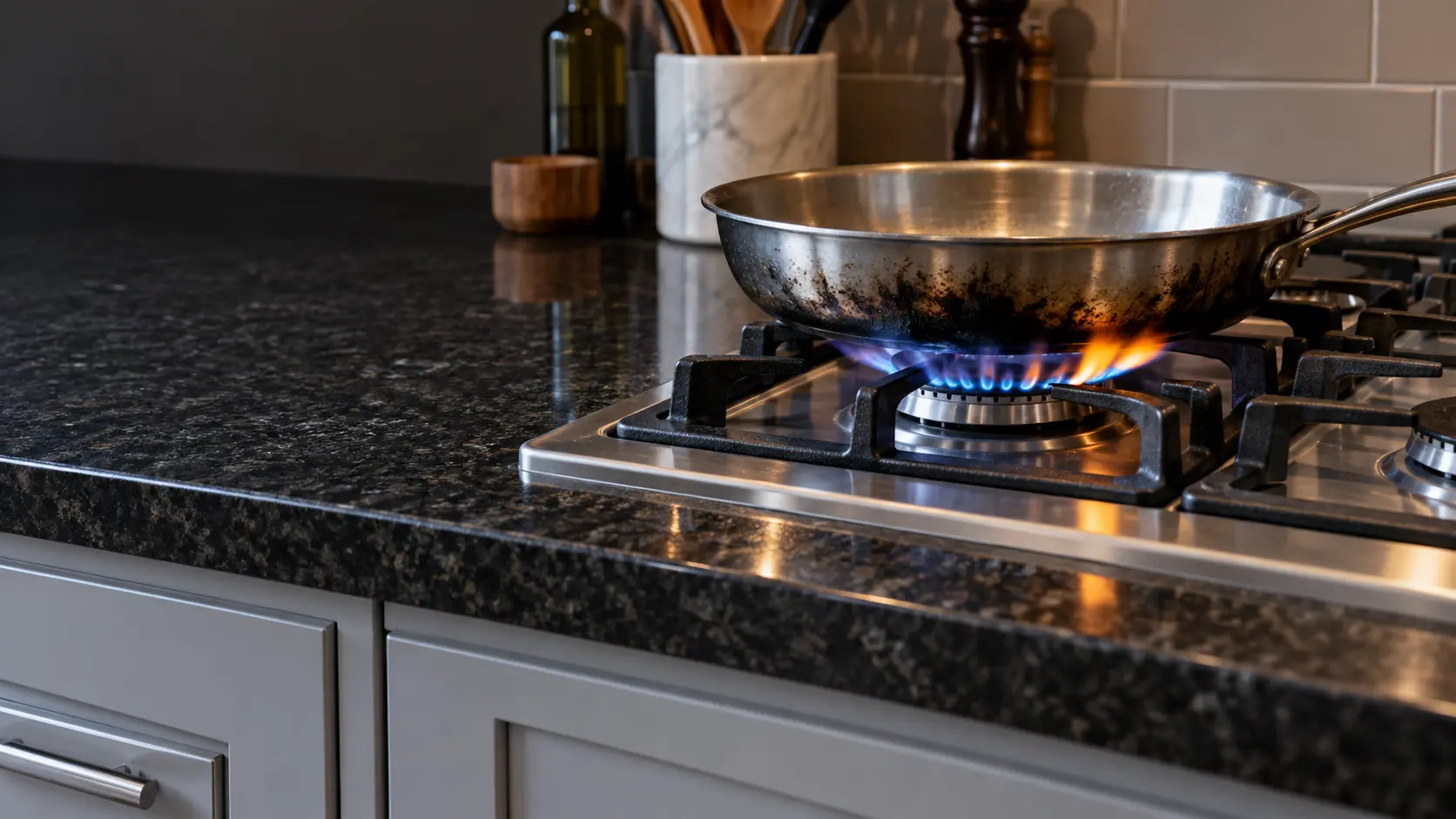
Many cooktops watch the flame and spark again if it goes out. Whirlpool describes this re-ignition as normal when a spill, a draft or a fan puts a flame out, and some sparking on the lowest settings is expected too. Occasional ticks mid-cook are the cooktop doing its job; nonstop ticking beside a steady flame is not, and belongs in the sections below.
Source: Whirlpool — Burner(s) Sparking or Clicking, Gas Cooktop — All surface burners click while only the one set to Lite ignites; re-ignition after a flame is put out is normal; occasional sparking on low settings; Con Edison — Gas Safety — If you smell gas, leave immediately, avoid switches, phones and appliances, and call from a safe place away from the leak
Causes you can see on the cooktop surface
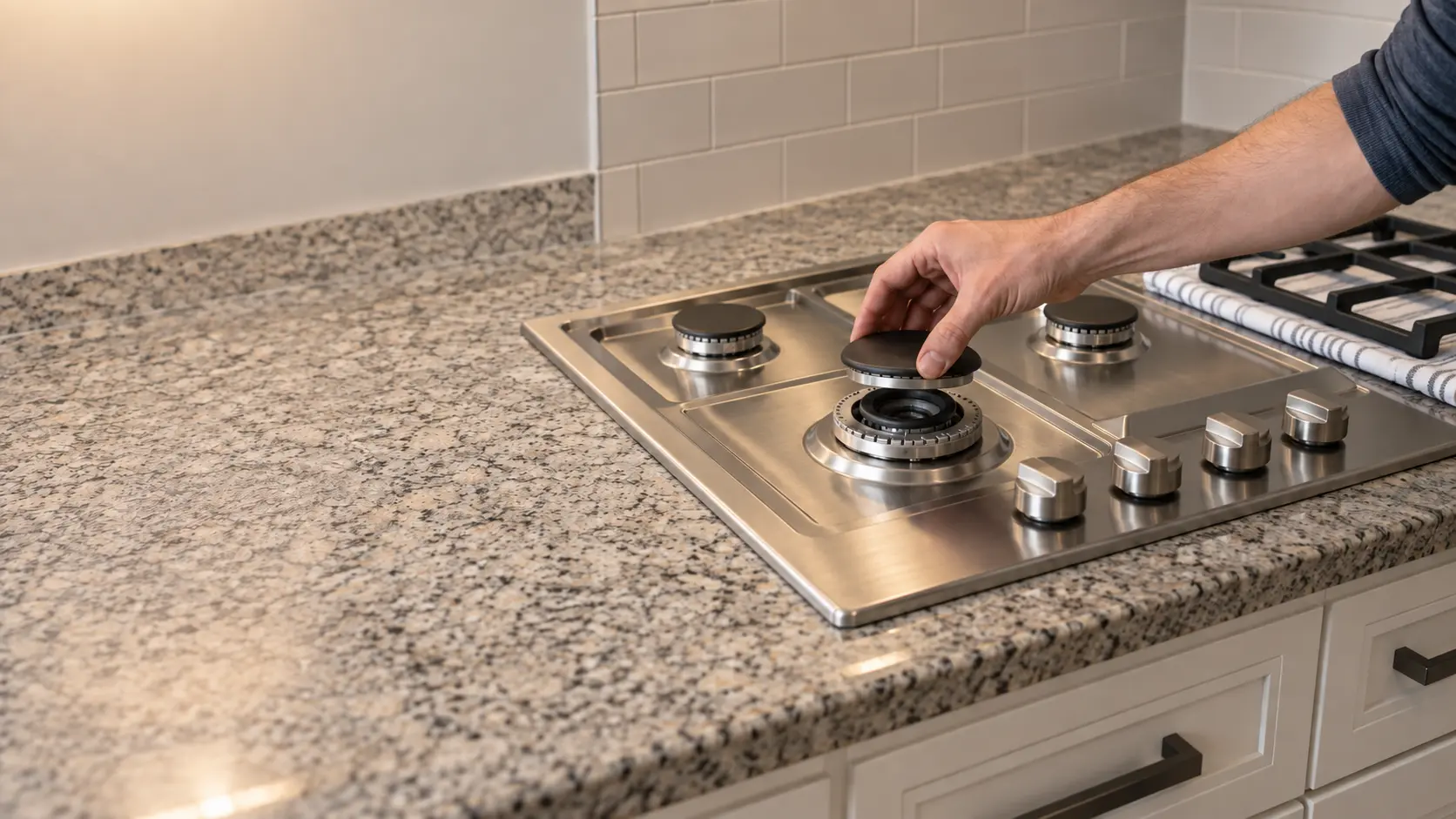
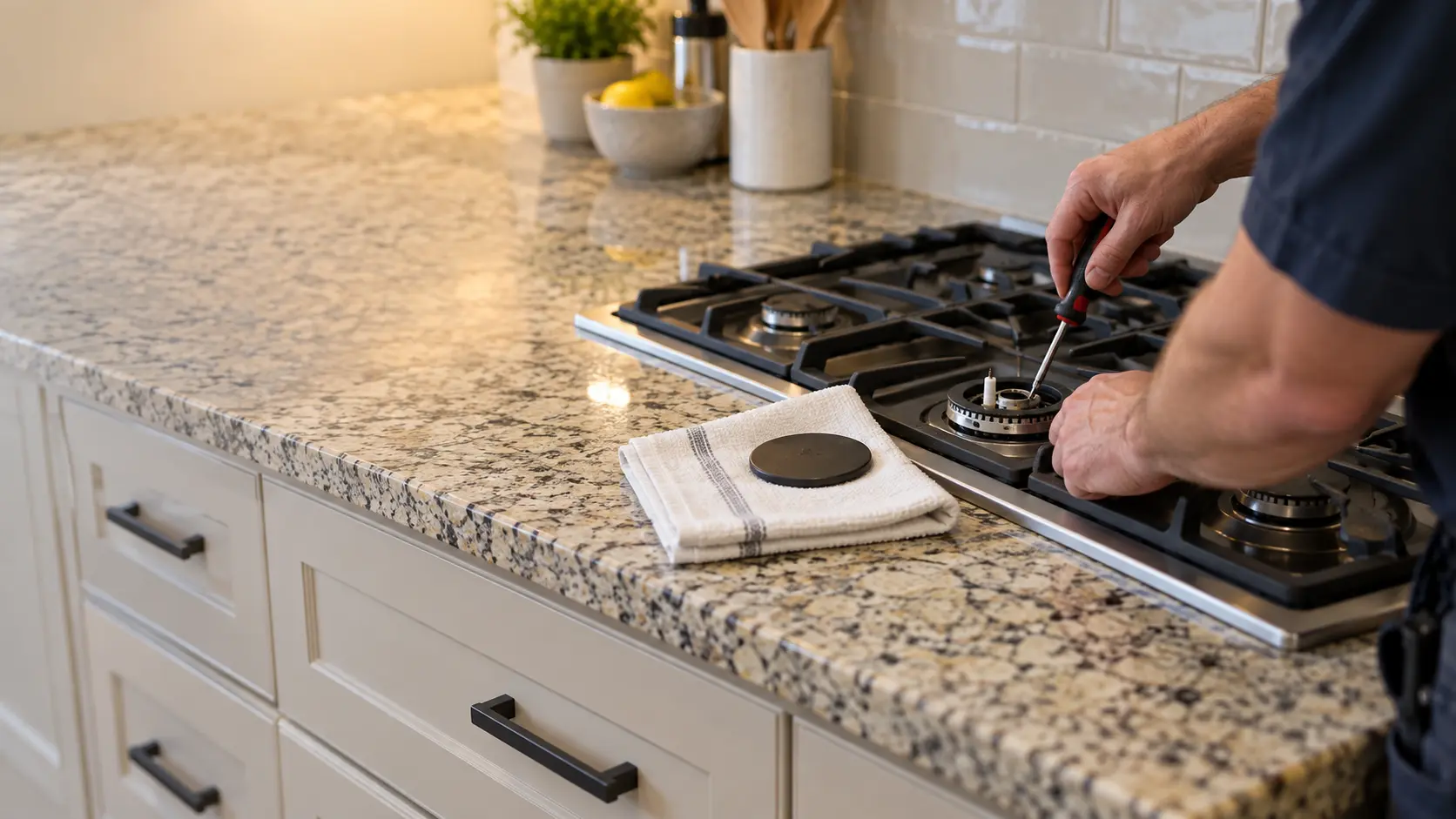
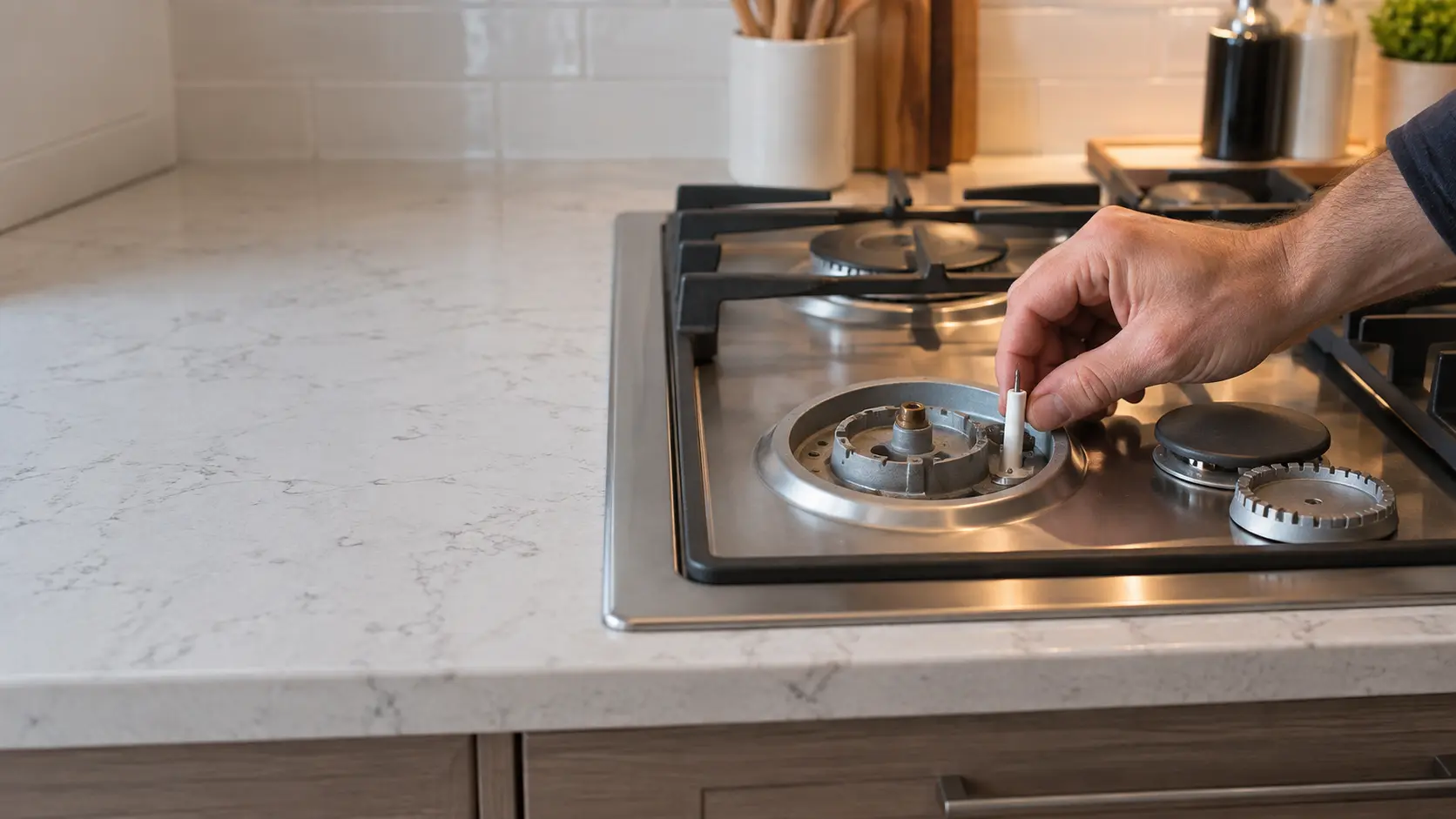
Start at the burner that will not catch, with every knob off and the grates cool. On a sealed burner the cap is a flat disc, usually black enameled steel or brass, that sits on a slotted aluminum head. The gas leaves through the slots, or ports, around the head, and the flame has to reach the electrode tip standing beside it. Anything that blocks, wets or shifts those ports stops the gas from meeting the spark.
- A cap sitting crooked or on the wrong head: caps on a five-burner top come in two or three sizes, and each one only seats flat on its own base.
- Water in the ports after a pot boiled over or the top was wiped with a wet cloth.
- Ports crusted shut with food, most often on the side facing the electrode.
- An electrode tip that is cracked, loose or coated with grease, so the spark jumps somewhere other than the gas stream.
Seating the cap and head
A cap has to sit squarely on its own base, with any alignment pins engaged, before the burner will light and burn evenly. Lift the cap, look for the pins or the notch, set it back and give it a small turn; a seated cap does not rock. On pro-style rangetops the heads are often heavy cast pieces that lift off in two parts, and each part only fits one way.
Clearing a blocked port
Whirlpool suggests a straight pin for clogged ports and warns against wooden toothpicks, which can snap off inside, and against widening or bending the opening. A port that is made larger burns with a taller, noisier flame. Let a washed head dry completely before refitting it, or the burner will click and fail for another few hours.

Causes hidden in the cabinet below
Because a cooktop is dropped into the counter, its supply lines are out of sight. Gas usually reaches it through a hand valve and a flex line inside the base cabinet, and a 120-volt cord runs to an outlet in the same space to power the spark module. Whirlpool's first questions for a cooktop that will not light are whether the unit is connected to gas at all and whether that shutoff is turned on.
Look without touching fittings. A quarter-turn valve is open when its handle points along the pipe and closed when it points across it. If a new cooktop has just gone in, Whirlpool notes that air in the line can keep burners from lighting at first, and running one burner briefly clears it. Anything more than looking, such as loosening a connector, is gas work for a qualified installer.
When every burner is dead
If no burner lights and no electrode clicks, the problem is electrical rather than at one burner. Check that the cord is plugged in behind the drawers and that its breaker has not tripped. Whirlpool also notes that on a cooktop with a lockout feature the burners will not light during a power failure, so a street-wide outage can look like a failed cooktop.
Source: Whirlpool — Gas Burners are Clicking but Not Lighting (cooktops) — Moisture in switches or ports; straight pin, no wooden toothpick, do not enlarge ports; gas supply and shutoff; air in the line on first use; downdraft blower disperses flame from the igniter; lock cleared by touching the lock key for 3 seconds; Whirlpool — Nothing Will Work, Gas Cooktop — 120-volt outlet for gas cooktops; check the breaker and the main gas valve; with a lockout feature the burners will not light during a power failure
Two causes that belong to cooktops alone
A downdraft vent rises from the back of the cooktop, or sits in a slot between the burners, and pulls air sideways across the surface. Whirlpool's guidance for its cooktops is that the pull can bend a flame away from the spark electrode, so a flame-sensing burner keeps sparking or will not settle. Turning the blower down or the flame up is the test: if the burner behaves with the vent off, the burner is fine.
Some gas cooktops also have an electronic cooktop lock. With the lock on, turning a knob still clicks and may still spark, yet the burner will not light. Whirlpool's cooktop pages point to this after a power failure or after the unit has been unplugged, and release it with a three-second touch on the lock key; your owner's manual names the exact key.
Source: Whirlpool — Gas Burners are Clicking but Not Lighting (cooktops) — Moisture in switches or ports; straight pin, no wooden toothpick, do not enlarge ports; gas supply and shutoff; air in the line on first use; downdraft blower disperses flame from the igniter; lock cleared by touching the lock key for 3 seconds
When the fix is a part, and which one
Once the burner is dry, capped correctly and fed with gas, a no-light that stays points to parts. A useful clue is a burner that lights with a match held at the ports while the knob sits at light: gas is arriving, so the spark side is at issue.
On a rangetop, whose burners are larger and often dual-stacked, the simmer ring and the main ring can have separate ports, and one ring may light while the other stays out. Note which ring fails before booking, because that decides which part the technician brings.
- An electrode whose white ceramic body has cracked, letting the spark leak to the burner base.
- A spark wire chafed where it runs beneath the burner box.
- A spark module that fires weakly, or on flame-sensing models no longer sees the flame.