How an induction zone decides a pan is there
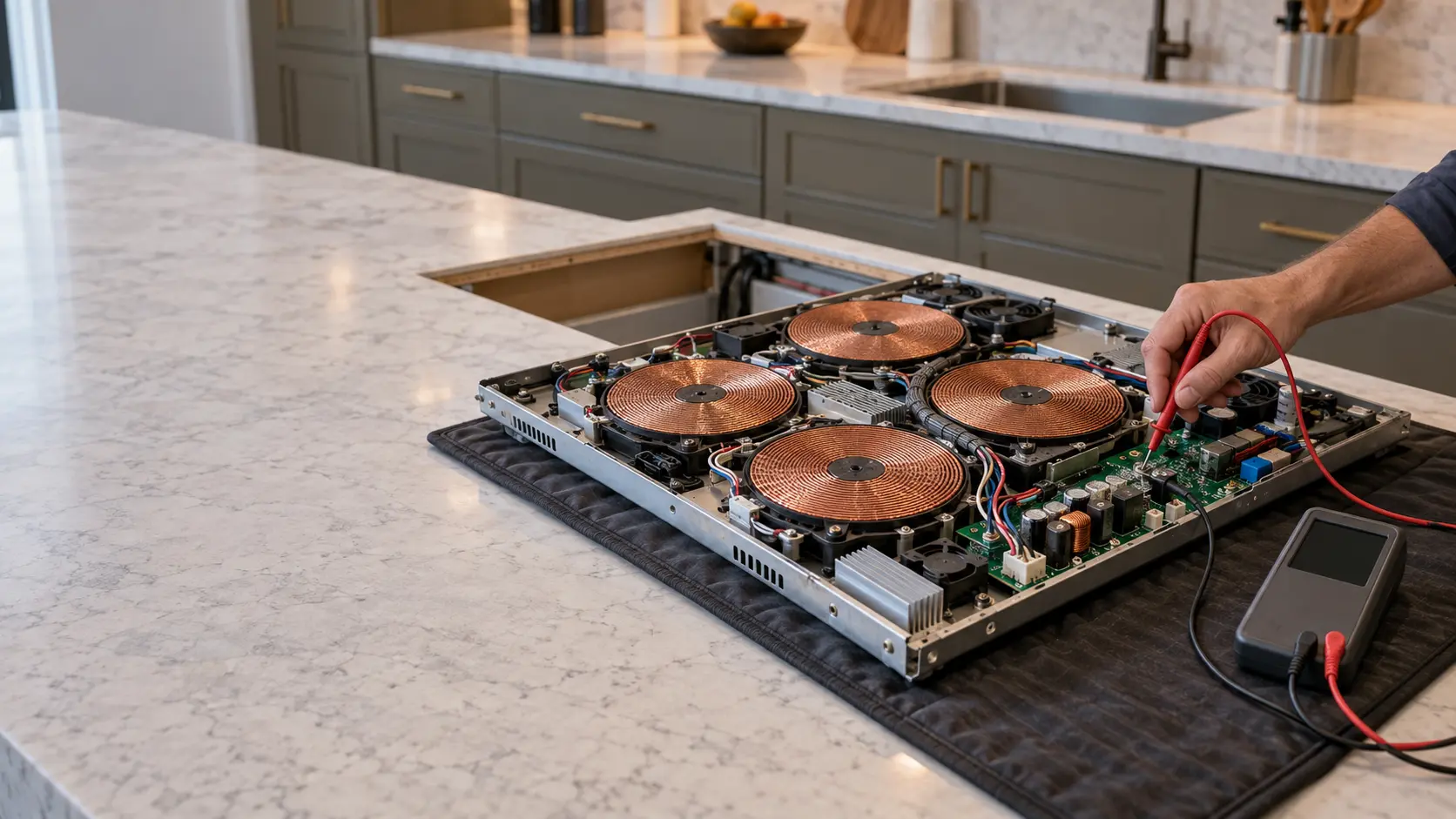
Beneath each ring on the glass lies a flat copper coil. When you select a zone, the electronics send a small test current through that coil and read how the field is loaded. An iron-bearing base close to the glass loads it in a recognizable way, and only then does the board send full power. A glass dish, a copper pot or an empty zone leaves the field unloaded, so nothing heats.
That test is strict on purpose. It is what keeps a spoon or a ring left on the glass from getting hot, and why GE says an element switched on by accident generates no heat until cookware of the minimum size sits on it. The same caution makes the cooktop reject pans that are marginal, so an induction cooktop not detecting pan after pan is, far more often than not, reacting to the cookware rather than failing.
What the flashing display means
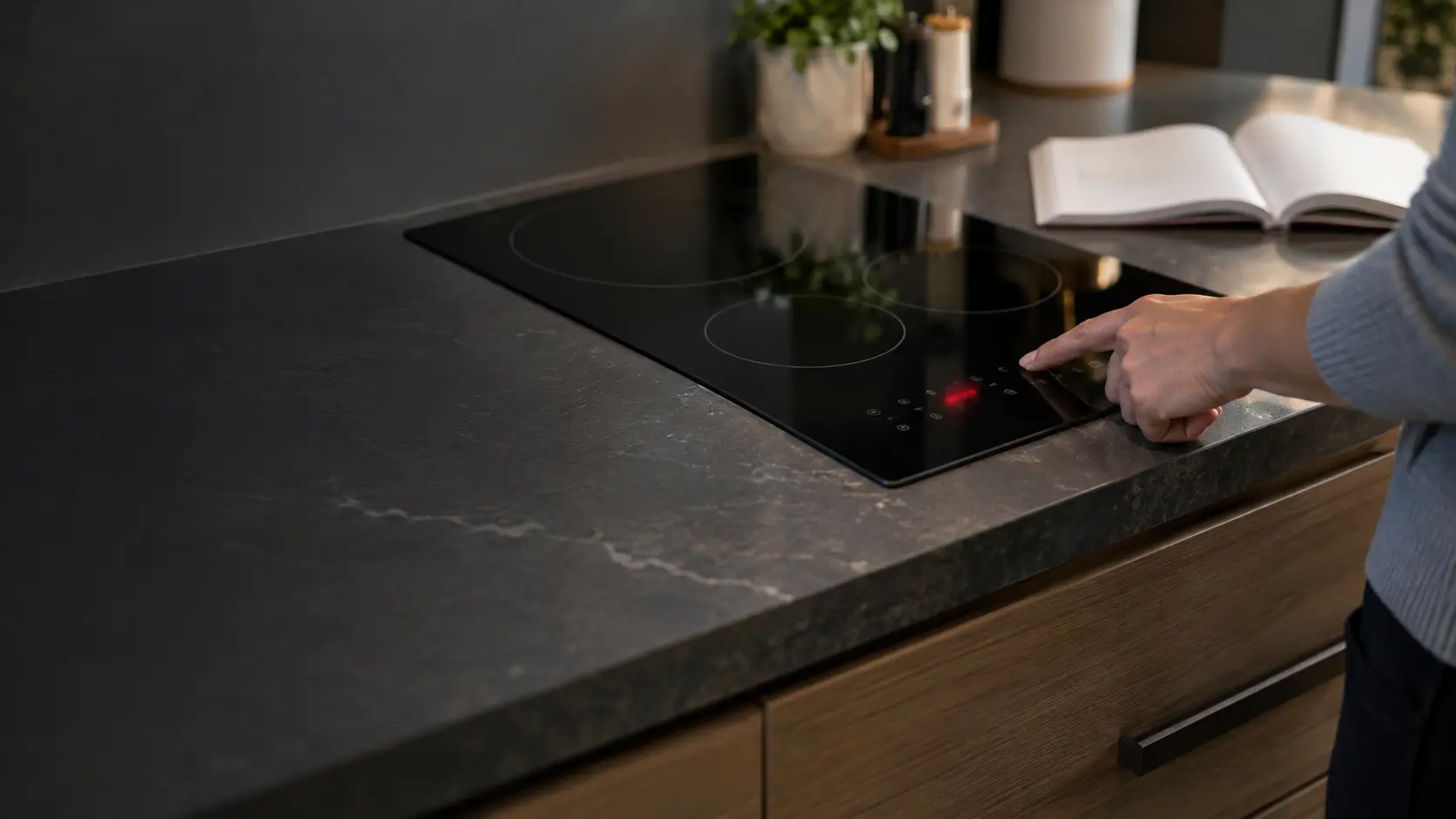
GE's help pages say a zone that finds no suitable pan flashes its power level for about 25 seconds and then turns itself off, and that lifting a pan away for more than 30 seconds also cuts power. Other makers show a pan symbol or a letter in place of the setting. Either way it is a prompt from a working cooktop, not an error from a broken one; the model's manual lists what its own symbols mean.
Source: GE Appliances — Induction Cooktop FAQs — No heat is generated unless cookware 5 inches or greater in diameter is on the element; a magnet that sticks means the pan works
Checking the pan before the cooktop
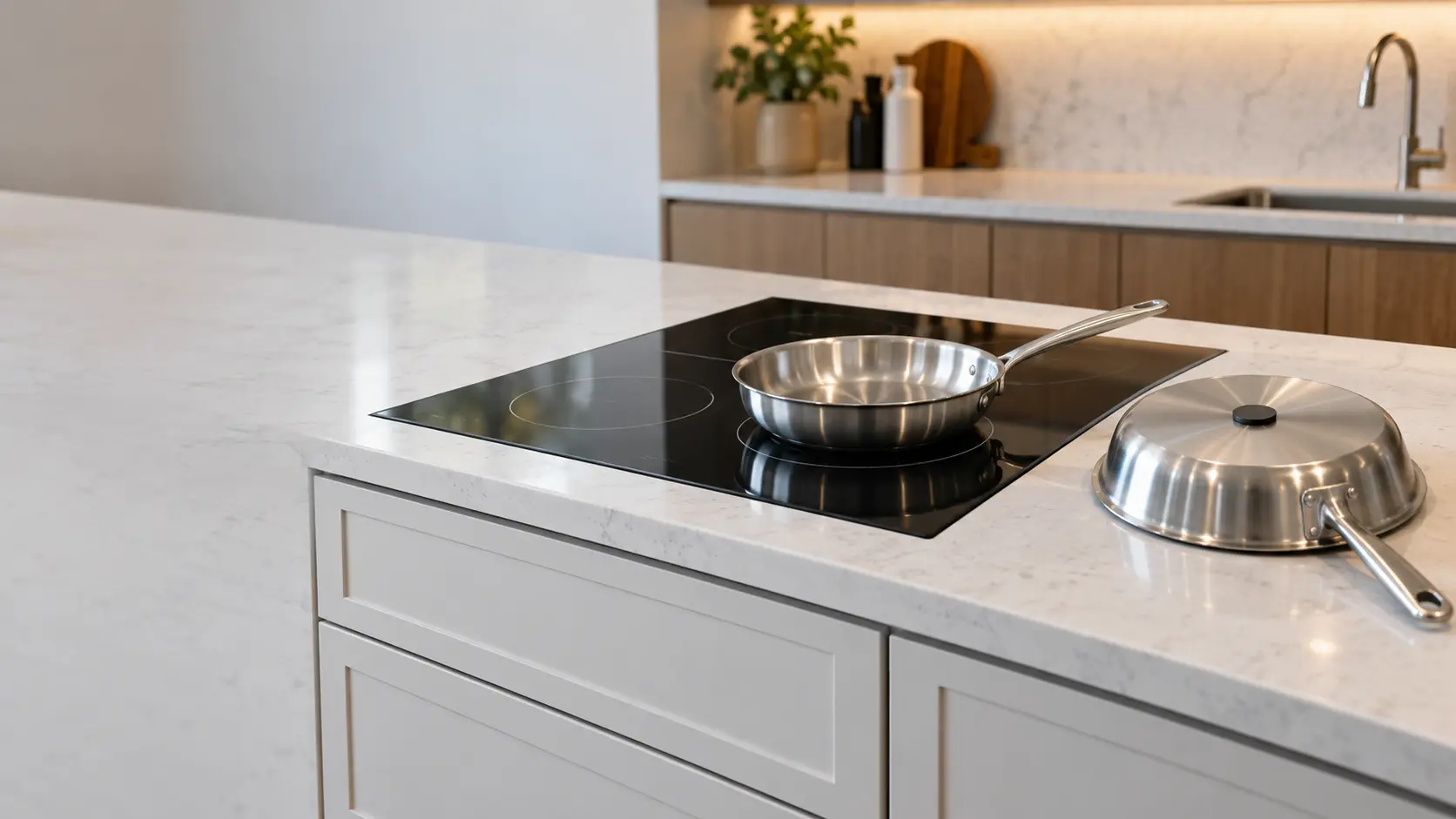
Four properties decide whether a pan registers, and each can be checked at the counter with the pan cold and upside down. Test the pan that fails first, then one you know works, on the same zone.
GE gives a telling example of the second point: an 11-inch skillet may have a magnetic area only 7.25 inches across, a steel disc pressed into an aluminum body. On a large zone that disc can fall below the minimum, even though the pan looks generous.
- Magnetism: a magnet should grip firmly over the whole flat base, not just in the center.
- Size: the magnetic part of the base must reach the zone's minimum, which GE puts at 5 inches for its smallest zones.
- Flatness: the base must lie flat on the glass; a pan that spins or rocks may not load the coil.
- Thickness: GE asks for metal thicker than 0.008 inch (0.2 mm), which rules out thin foil trays and some enamel liners.
Clad, disc-bottom and mixed-metal pans
Whirlpool points out that some pans combine materials in their bases, so they heat unevenly or are not recognized at all. Tri-ply pans with a magnetic stainless outer layer usually work well. Pans sold as induction-ready often have a thin steel plate bonded under copper or aluminum, and the magnet test tells you how far that plate reaches.
Centering on the printed ring
The cooktop measures the pan by how much of the coil it covers, so GE asks for the pan to be centered inside the circle printed on the glass. A pan pushed toward the edge of a zone, or straddling two zones, can register as too small. Round pans match round coils best; bridge or flex zones on some models handle long griddles, and only those zones should be used for them.
Source: GE Appliances — Induction Burners Not Working or Flashing Power Level — Non-magnetic or undersized pans flash the power level for 25 seconds, then turn off; pan removed more than 30 seconds cuts power; center within the circular graphics; flat full contact; on 208 volts use a lid; GE Appliances — Induction Cookware Size and Shape — An 11-inch fry pan may have only 7.25 inches of magnetic area; metal must exceed 0.008 inch (0.2 mm); heat is generated only above the cooking circle; GE Appliances — Induction Cooktop FAQs — No heat is generated unless cookware 5 inches or greater in diameter is on the element; a magnet that sticks means the pan works

When the cabinet below is the cause
An induction cooktop carries its electronics just under the glass and cools them with small fans that pull air through openings in the chassis. An older GE induction manual shows air intakes on the underside and vents at the rear. Whirlpool's induction pages warn that poor ventilation makes the cooktop overheat and shut down, and lengthens boiling times, and they send owners to the installation instructions for the venting required.
In practice that means a drawer stuffed up against the underside of the cooktop, a wall oven installed below without the gap the manual asks for, or a new cabinet panel that closes off an air path. A cooktop that recognizes pans when cold but starts rejecting or dropping them after ten minutes of cooking is the typical sign.
Circuit and voltage
Induction tops need a dedicated 240-volt circuit, and GE notes that on a 208-volt supply, common in apartment buildings, heating is slower and a lid helps. Low voltage slows cooking rather than stopping detection, so a zone that refuses every pan on a normal supply points elsewhere. Check the breaker if the whole cooktop is dark.
Source: Whirlpool — Not Operating Correctly, Induction Cooktop — Mixed-material bases may heat unevenly or not be recognized; poor ventilation causes overheating, automatic shutdowns and longer boiling times; see the installation instructions for venting; GE Appliances — Induction Cooktop Use and Care and Installation Instructions, models JP392R and JP692R (49-8269) — Air intakes on the underside and vents at the rear cool the coils; a ping or buzz from some pans, especially two different pans, is normal; fan noise during cooking is normal
When the cooktop really is at issue
The deciding test is simple: take a heavy, flat pan that a magnet grips firmly and that is wider than the zone's printed ring, center it, and add a little water. If that pan works on every zone except one, the problem lies inside the cooktop, most often in that zone's coil, its connection to the power board, or the power board channel serving it. Several zones failing together on the same side usually share one board.
Buzzing and humming belong to a different question. The early GE manual calls a light ping or buzz from certain pans normal, especially with two different pans on neighboring zones, and fan noise during and after cooking is expected. A loud crackle, a burning smell or a zone that trips the breaker is not, and needs the power off and a technician.
- One zone rejects every proven pan: that zone's coil or its link to the power board.
- A whole side goes dark together: the board that serves that side.
- Zones drop out after several minutes of cooking: cooling air, fan or an overheating board.
- A burning smell, crackle or tripped breaker: cut the circuit and call.
Source: GE Appliances — Induction Cooktop Use and Care and Installation Instructions, models JP392R and JP692R (49-8269) — Air intakes on the underside and vents at the rear cool the coils; a ping or buzz from some pans, especially two different pans, is normal; fan noise during cooking is normal