What sits under a radiant zone
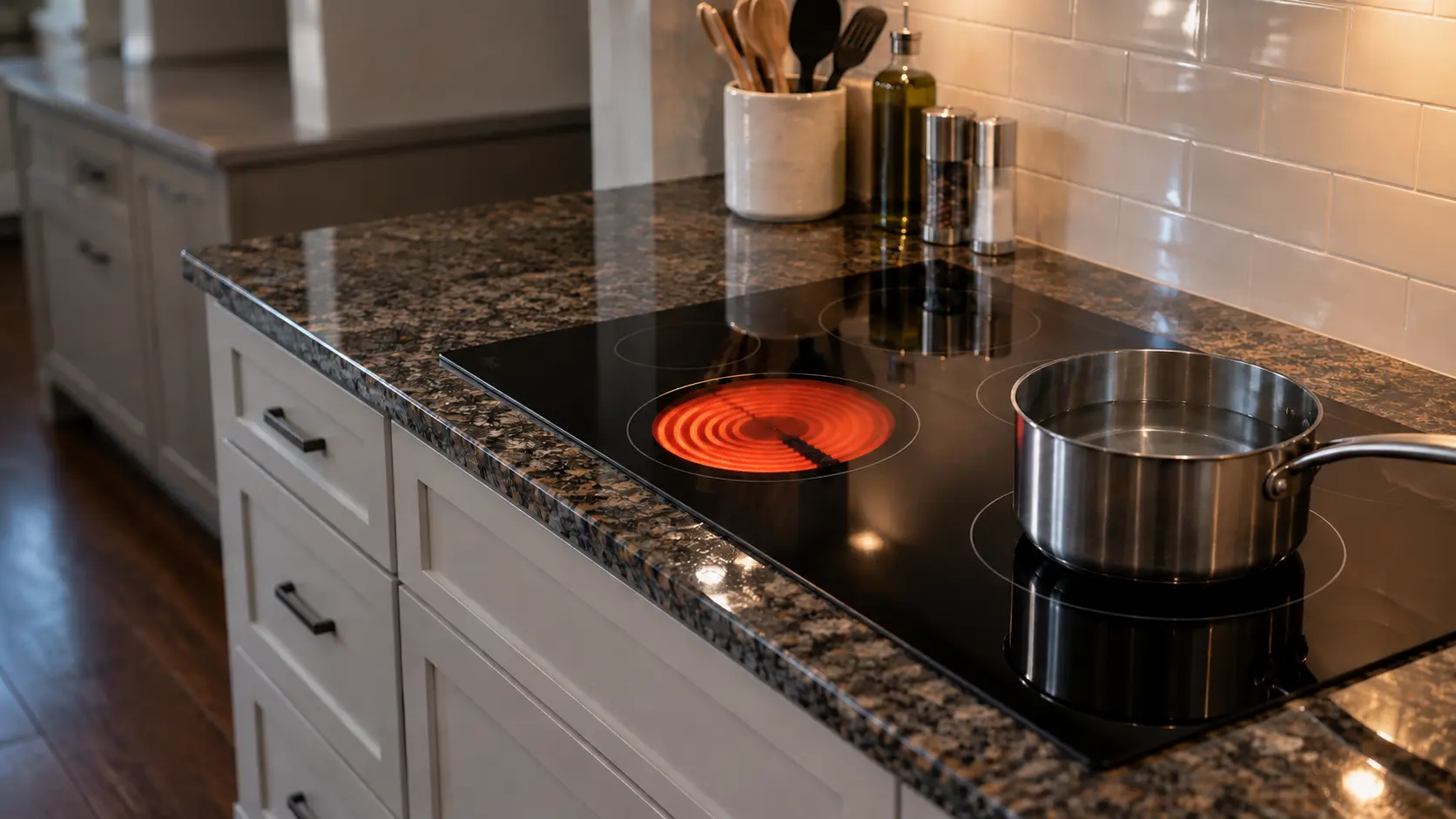
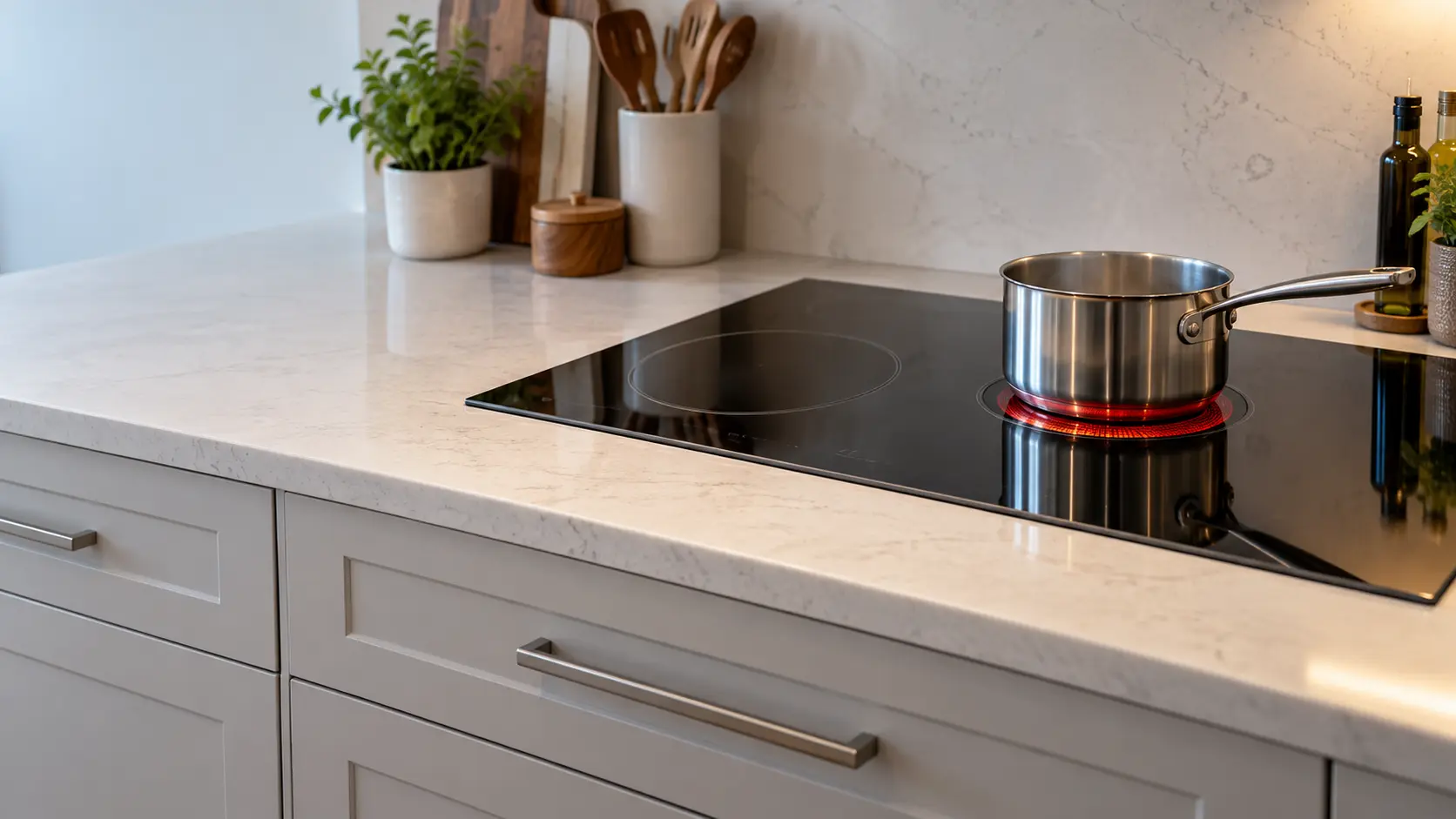
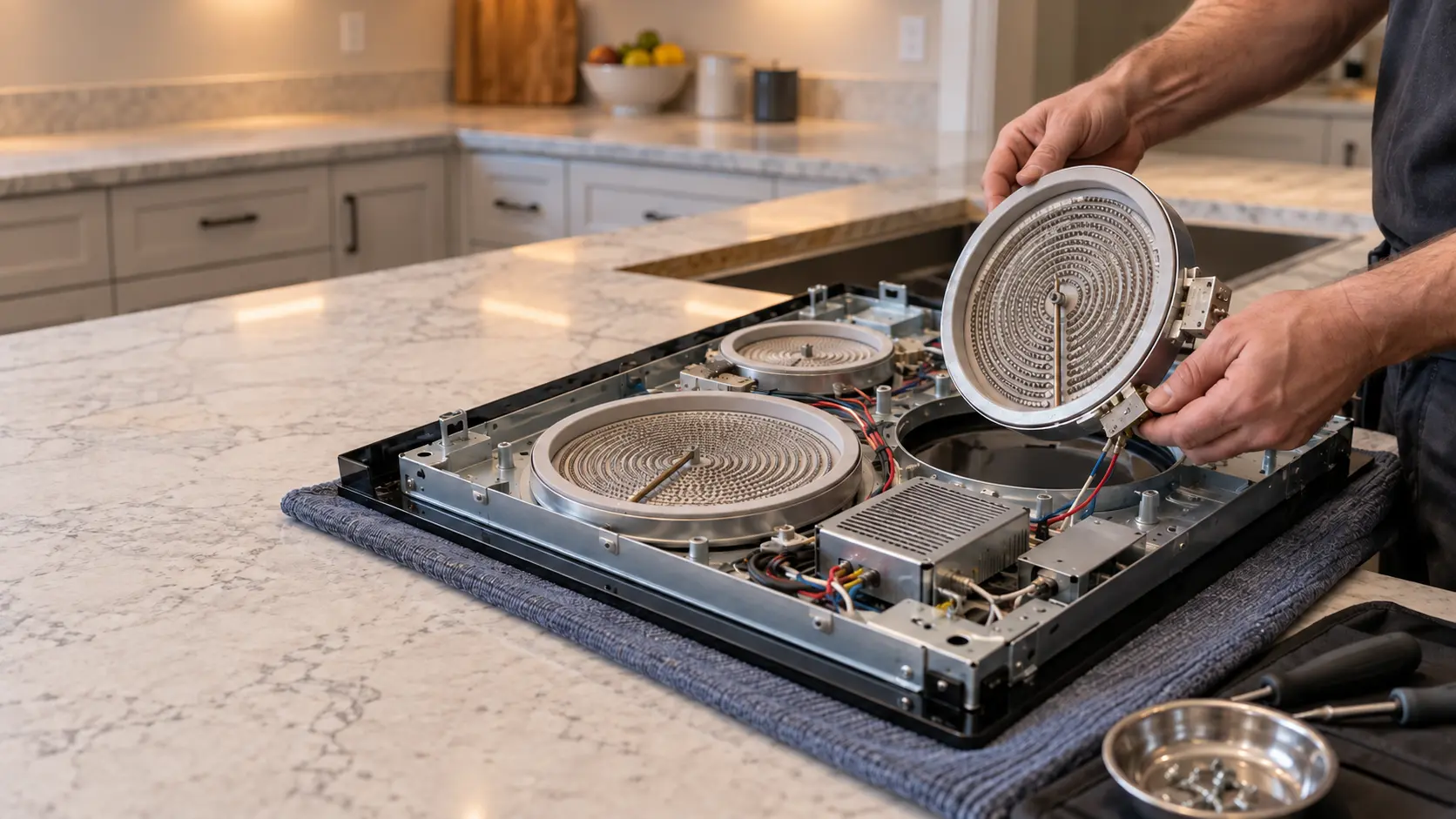
Each circle printed on the glass has its own heater a fraction of an inch below: a thin corrugated metal ribbon laid in a spiral on a white fiber-insulated dish. Across the top of the dish runs a thin rod, the limiter, which senses how hot the space under the glass is getting. When it gets too hot the limiter opens and the ribbon goes dark, and when things cool a little it closes and the ribbon glows again.
Whirlpool puts it plainly for its smooth-top cooktops: the limiter makes the element cycle on and off even on the highest setting, and it does so to keep the ceramic glass from damage. The element keeps enough heat while it is off that cooking stays even, and the glass stays hot throughout. Radiant cooktop element cycling of this kind is therefore no sign of trouble, and a zone that blinks every minute or so on high is behaving as designed.
Two things switching the ribbon
Below high, a second control also cycles the heat. On knob-controlled cooktops that is an infinite switch behind the knob, which clicks the element on for a share of each minute that grows with the setting. On touch-control glass an electronic board does the same with relays. Both are quiet and both are normal, so owners mostly notice the glow coming and going rather than any sound.
Low settings that never glow
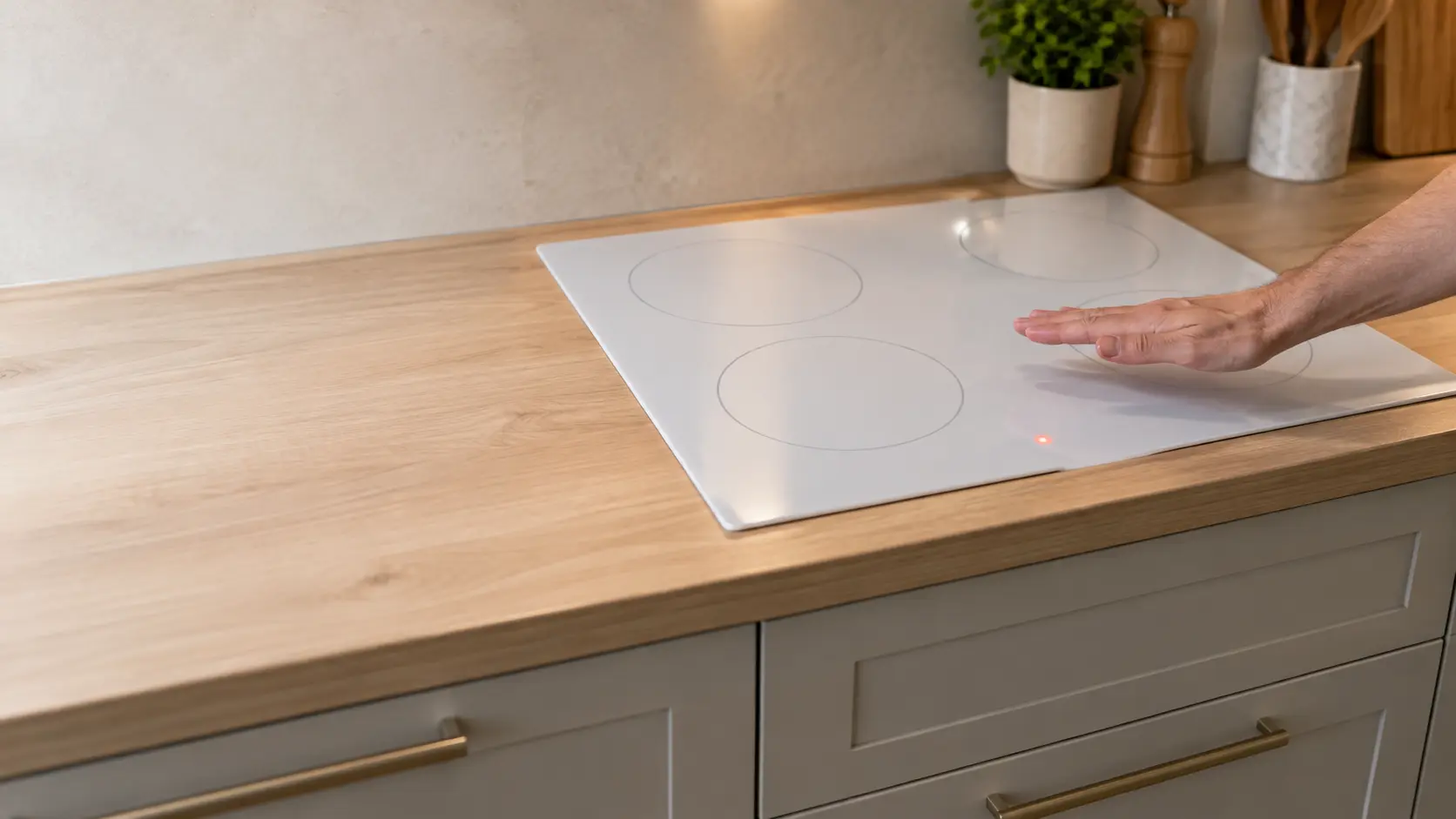
At a warm or simmer setting the ribbon may be on for only a few seconds at a time, too briefly to turn red in a lit kitchen. Whirlpool notes that warming zones and simmer modes hold their temperature without glowing. Hold a hand a few inches above the circle rather than judging by color; if it warms, the zone works.
Source: Whirlpool — Smoothtop Radiant Cooktop Element Cycling On and Off — A limiter cycles radiant elements on and off, even on HI, to prevent overheating and damage to the ceramic surface; the element retains heat while off
Reading what the zone is doing
The pattern is more telling than any single moment. Watch one zone for five minutes on high with a pan of water on it, then on medium, and note what the glow does. These are the patterns and what each most often means:
- Glows, goes dark for a spell, glows again, and the water boils: normal limiter cycling.
- Glows only on the highest setting and stays dark below it: a worn infinite switch or a relay on the control board.
- Never glows and never warms, on any setting, while the other zones work: an open ribbon, a burned terminal or a failed limiter.
- Two or more zones dead at once: the power supply, the lock or the control board, before any element.
Dual and triple rings
A large zone often has two or three concentric ribbons so a small pot does not waste heat. Only the rings you select glow, and Whirlpool's pages note that such elements may heat only in part. An outer ring that never lights when chosen, while the center ring does, is a narrower issue: its own ribbon, its terminal or the selector that brings it in.
The pan changes the rhythm
A pan that rocks, or a base domed by years of high heat, touches the glass only at a rim. Heat that the pan cannot draw away builds up under the glass, so the limiter trips sooner and the zone sits dark for longer. Before blaming the element, lay a straight edge across the base of the pan in use, or repeat the boiling test with a heavy flat-bottomed pan.

Power and lock checks for a zone that stays dark
An electric cooktop draws its power from a 240-volt circuit, usually wired into a metal junction box on the back wall of the base cabinet or fed by a heavy cord. Whirlpool's advice for a smooth-top that will not work begins at the house panel: look for a tripped breaker or blown fuse, and call an electrician if resetting does not hold. A double breaker can trip on one side only, which on some cooktops leaves certain zones dark while others heat.
A control lock can also make the whole surface look dead. On touch-control models the lock indicator is usually lit; press and hold its lock pad for roughly three seconds. If an element stopped in the middle of cooking, Whirlpool's advice is to lift the pan away and give the glass 30 minutes to cool before trying again, because an overheated top can shut a zone down for a while.
- The breaker marked for the cooktop, both halves of the handle level with each other.
- The lock indicator on the glass, or a key shown with a padlock symbol.
- The cord or conduit where it enters the junction box, looked at only, never opened.
Source: Whirlpool — Cooktop Not Working, Electric Cooktop — Low, warm and simmer settings do not glow red; dual and triple elements may heat only in part; check the breaker or fuse and call an electrician if the problem persists; remove cookware and let the cooktop cool 30 minutes; Whirlpool — Lock, Electric and Induction Cooktop — Touch and hold LOCK for 3 seconds to unlock the cooktop
Signs the element itself has failed
A radiant ribbon usually fails by breaking, and a broken ribbon is visible through clear areas of some glass tops as a dark gap in the spiral. A burned terminal block at the edge of the element tray can show up as a scorched smell or a zone that works only when the cooktop is tapped. Neither is a job for the counter side: the glass top, sometimes the whole top frame, must come off to reach the element.
Whether that repair is worth it depends on the glass. If the top is clean and uncracked, replacing one element keeps the cooktop going; if the glass is also crazed, chipped or badly stained, a new top may be quoted with the element, and that is the moment to weigh the whole cooktop.
A zone that will not switch off
The opposite failure is urgent. If a zone keeps glowing with its control at off, a switch contact or board relay has welded shut. Cut the cooktop's circuit at the panel, keep pans and anything flammable away from the glass, and leave the circuit dead until the switch or board is replaced.