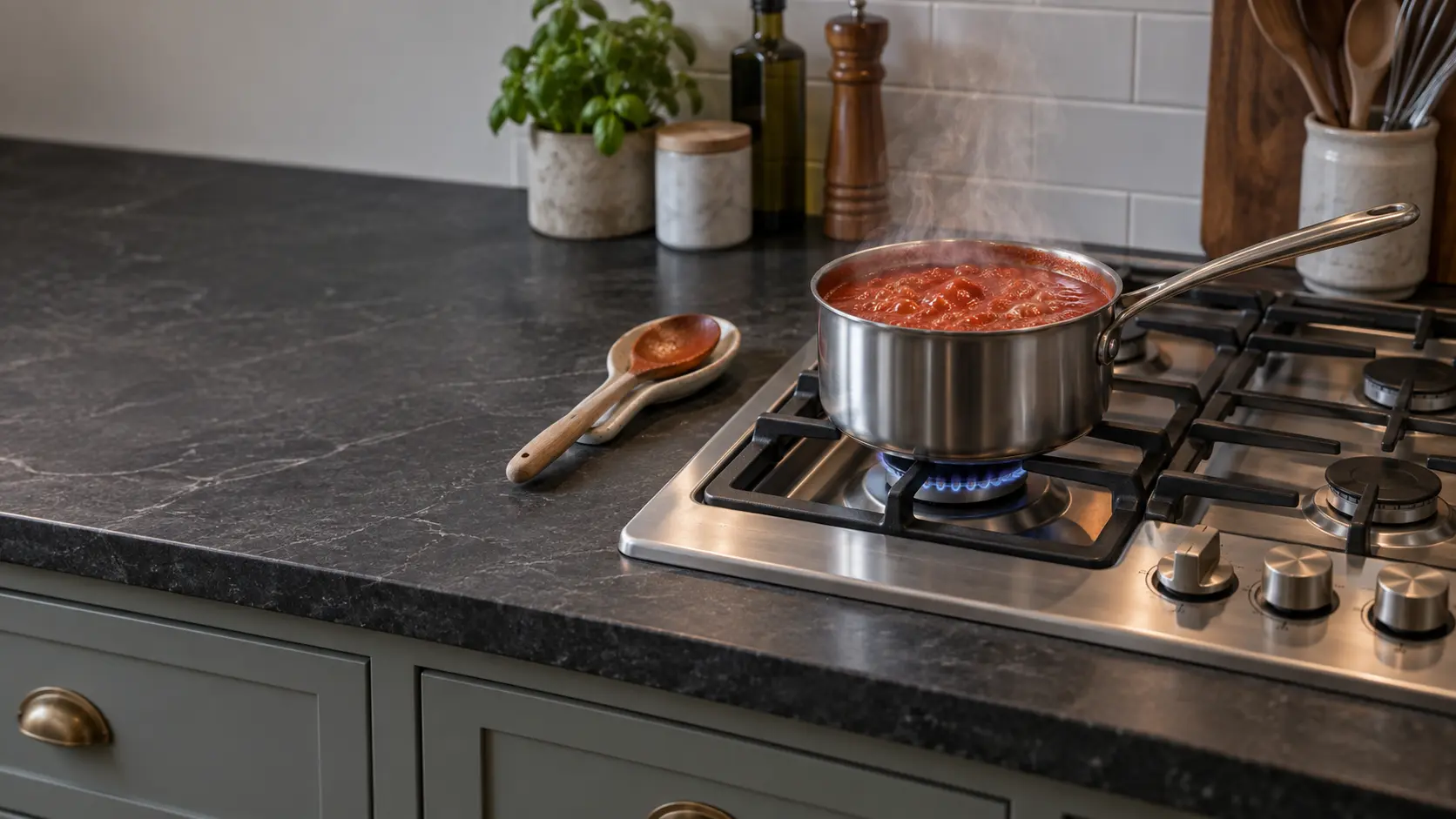


Cooktop
Simmer Too Hot
The lowest setting still boils sauces, scorches rice, or will not hold a gentle simmer on a gas burner or an electric element.
Mon–Sat, 8am–8pm
- 5 checks before you book
- 5 questions that narrow it
- 5 causes, cheapest first
Book a visit
Three short steps, about a minute.
or call (844) 252-4077
Loading appointment form…
The appointment form couldn’t load. Please try again.
What it
usually means.
A gentle simmer is the hardest thing a cooktop is asked to do. On gas, the smallest flame is set by a bypass screw in each valve, adjusted for the gas the cooktop runs on; after a conversion to propane, or if the screw was never set at installation, the low flame stays large. Many pro rangetops and high-end cooktops rely on a dedicated simmer burner or a low mode that cycles the flame, and a problem there leaves only the full-size flame. On electric, a worn infinite switch or a board relay can stay on too long at low. Thin pans, and large pans on small burners, also make low feel far too hot.
 The 5 causes, cheapest first
Answer these first
Is it one burner or element, or every one of them?
On gas, is the lowest flame tall, or does it roar?
Was the cooktop converted to propane, or installed recently?
Does your model have a dedicated simmer burner or a low-heat cycling mode?
Does a heavier pan change the result?
Check these
before you book.
Cooktop simmer too hot: 5 checks, and none of them costs anything.
Try a heavier pan sized to the burner or element before anything else.
Test the lowest setting on another burner or element to see whether they all run hot.
If the cooktop was converted between natural gas and propane, find out who did it and when.
Also worth checking
- Use the dedicated simmer burner or low mode if your model has one, as the manual describes.
- Leave the low-flame screws alone; they are part of the gas valve.
How soon does it need a visit?
A simmer that runs too hot is not dangerous, though it scorches food and sticks pans. Book a visit when it suits you. If the flame also turns yellow, roars, or brings a gas odor, stop cooking and call the gas utility from outside.
The causes,
cheapest first.
5 things cooktop simmer too hot turns out to be, from pan too thin or too large for the burner to simmer burner or low-cycle mode not working.
The cost guide-
01 no repair
Pan too thin or too large for the burner
A thin pan spreads heat poorly and scorches at the center. A heavy-bottomed pan sized to the burner holds a simmer far better.
-
02 low
Low-flame screw never set for the gas
Each gas valve has a screw that sets its lowest flame. After a propane conversion, or when it was skipped at installation, the low flame stays big.
-
03 low to moderate
Infinite switch or relay holding on too long
On electric cooktops a worn switch can keep the element on longer each cycle than the setting asks for.
-
04 moderate
Orifices left over from the other gas
If the orifices were not changed for the gas type, every burner runs hot and oversized, on low as much as on high.
-
05 moderate
Simmer burner or low-cycle mode not working
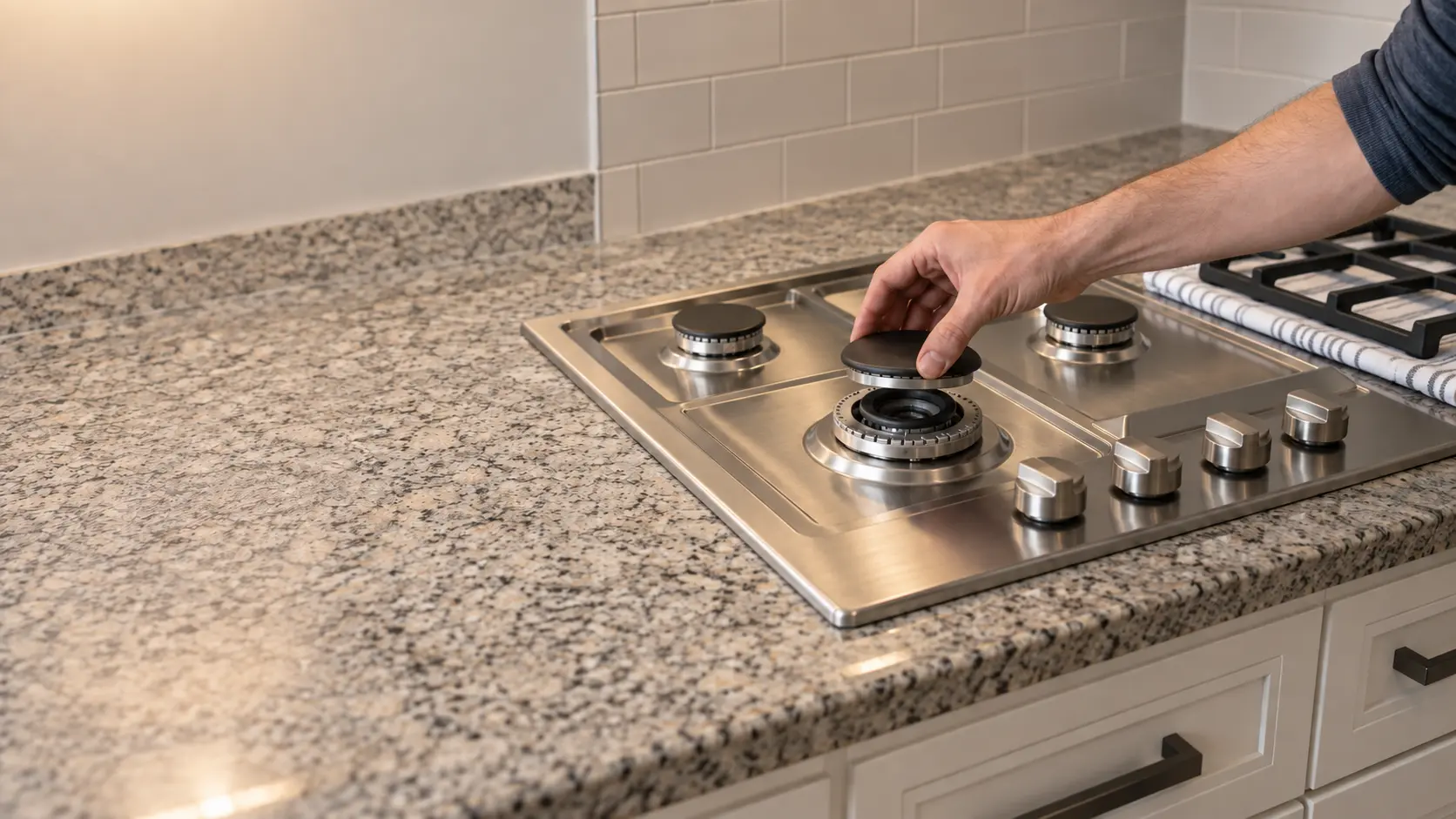
Pro rangetops often have a small simmer burner, or a burner that cycles its flame to keep a very gentle heat. When that system fails, only the full flame is left.
-
What it costs
Every repair on the site's cost scale, side by side
Open the cost guide
What else
it could be.
Most often confused with cooktop flame yellow or uneven, then cooktop element only heats on high.
All problems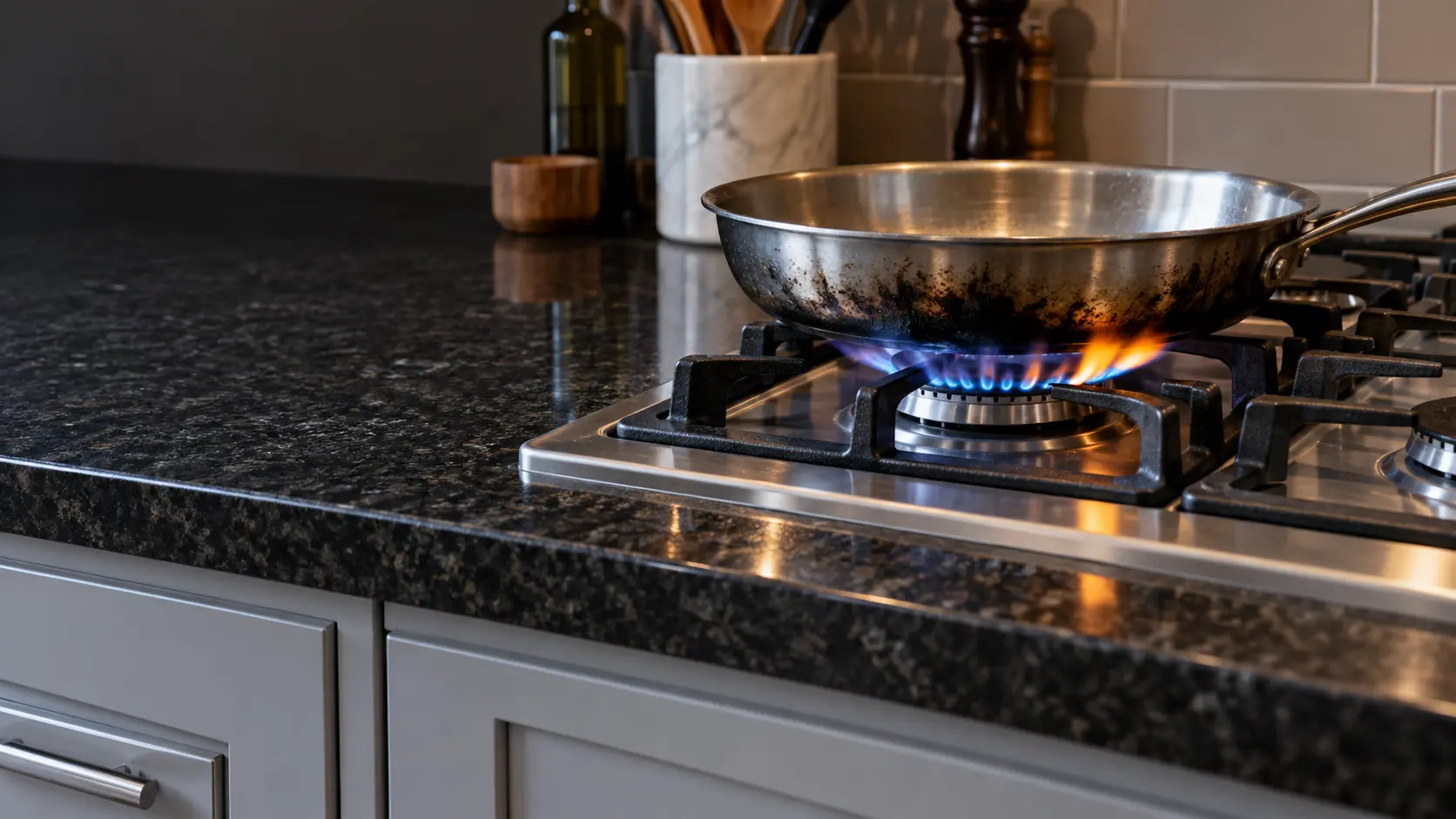

The makes
it happens on.
29 makes on this site; cooktop simmer too hot can show up on any of them. Each mark opens that make's own page.
All 29 brandsCooktop Simmer Too Hot,
where we come out.
9 metros, each with its own page.
All service areasTampa BayFL · 31 areas
Miami / South FloridaFL · 47 areas
New York MetroNY · 75 areas
HoustonTX · 36 areas
ChicagoIL · 50 areas
Los AngelesCA · 95 areas
San DiegoCA · 31 areas

Questions about
cooktop simmer too hot.
How small should a gas simmer flame be?
Why is my new cooktop hotter on low than my old one?
Can low be adjusted on an electric cooktop?
Does a simmer plate help?
Back to your everyday
Still seeing cooktop simmer too hot?
Book with what you checked above — 5 answers save the technician the first part of the visit.