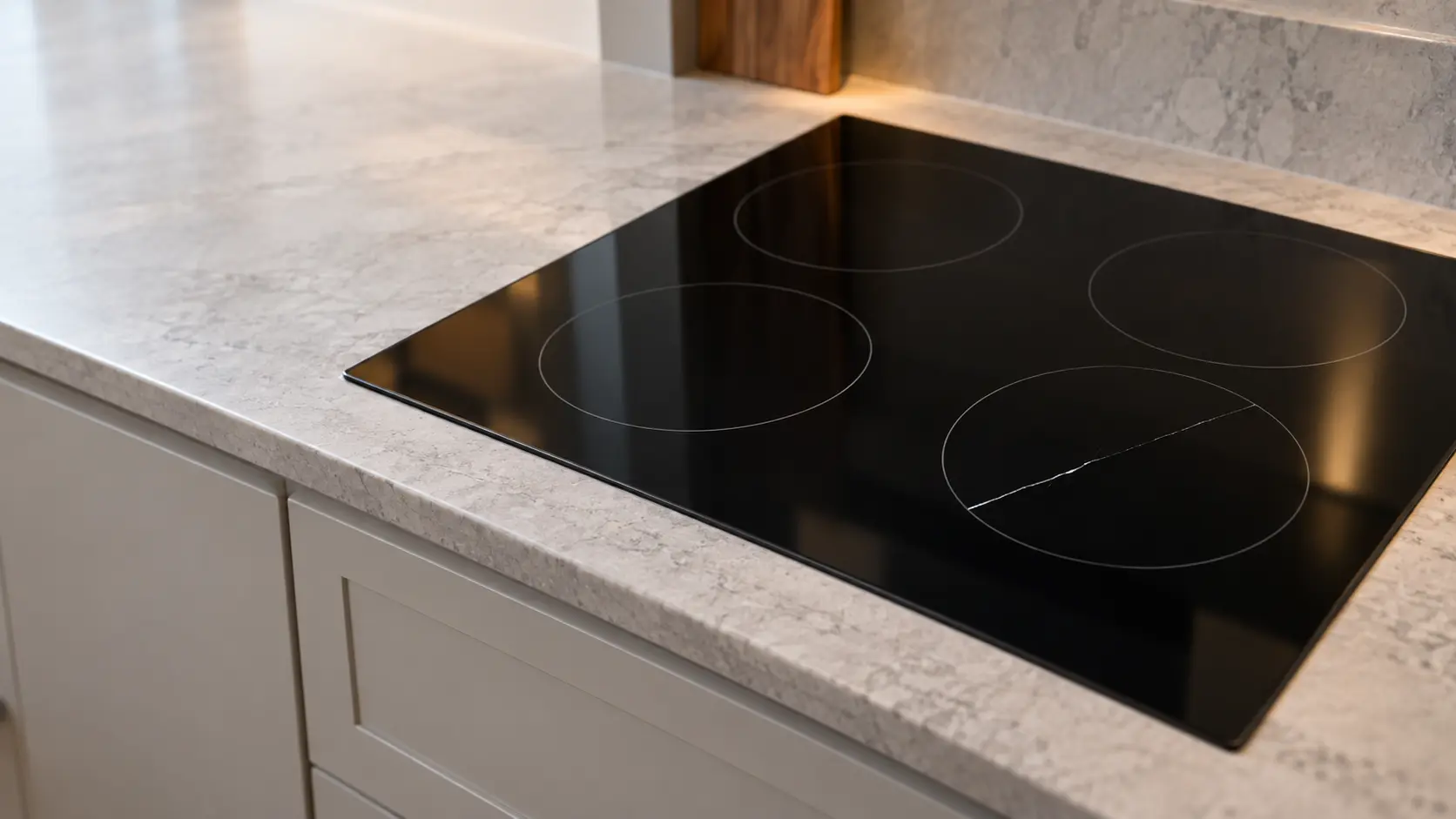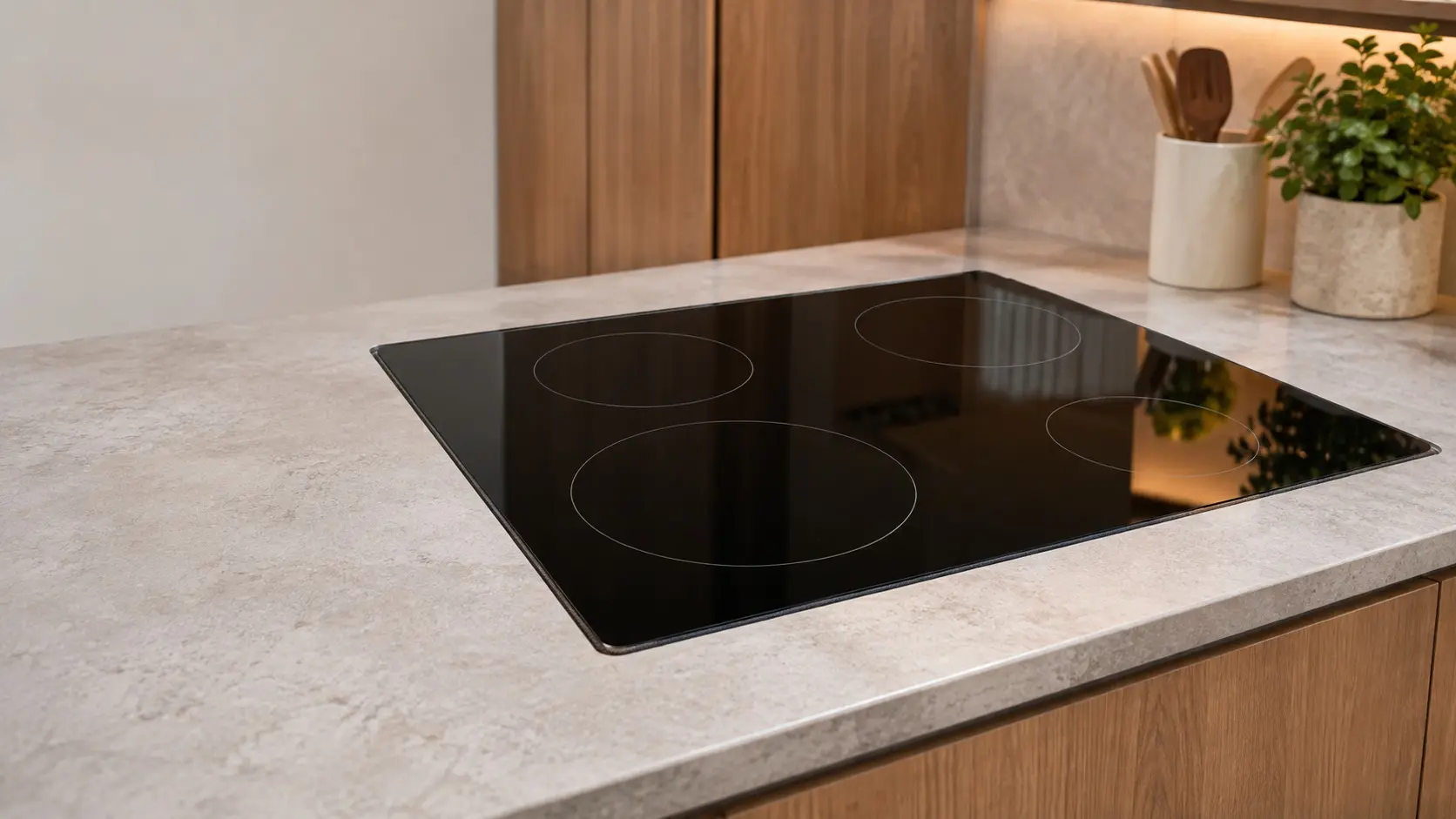
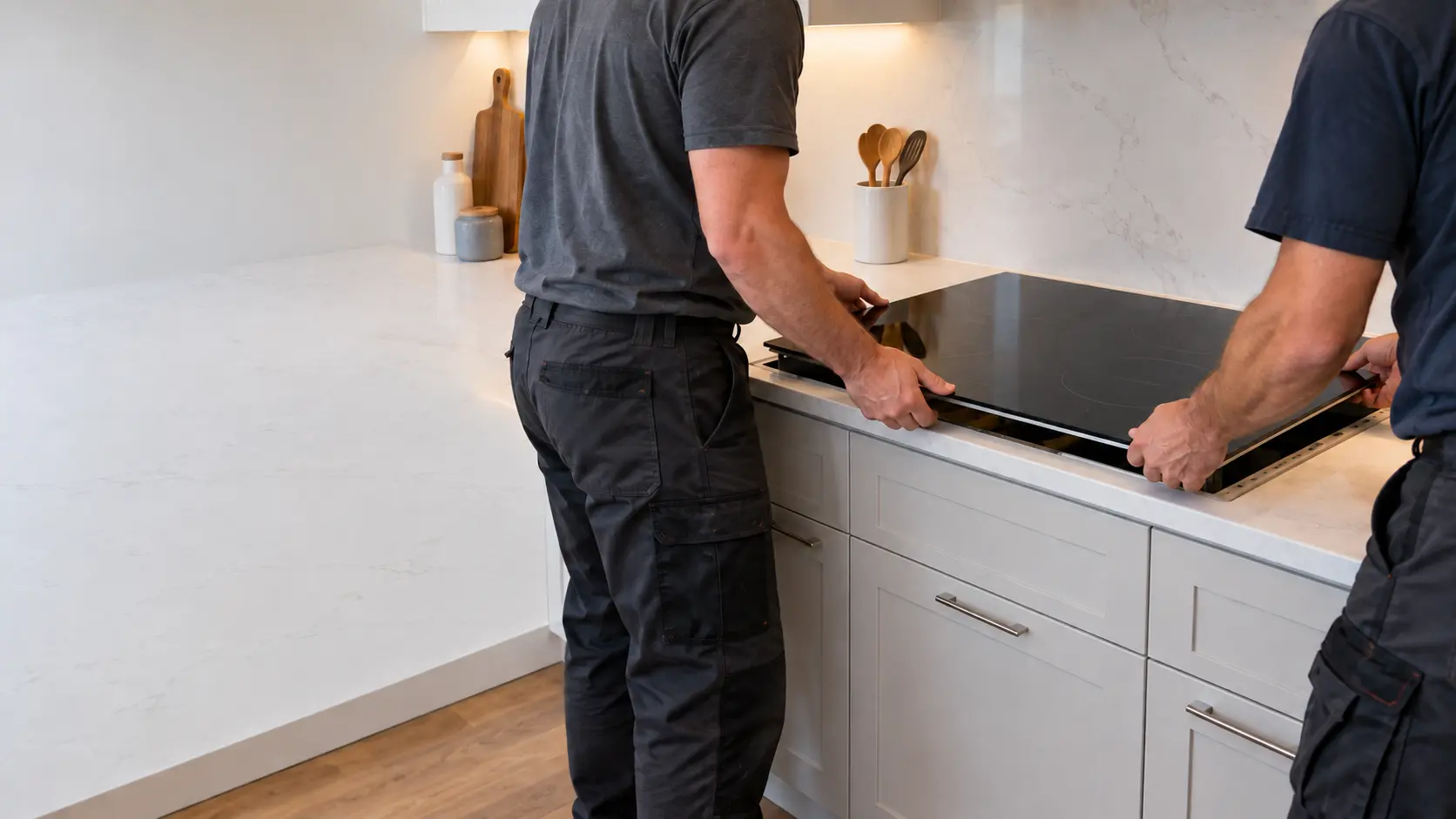
How is a cooktop supposed to sit on the counter?
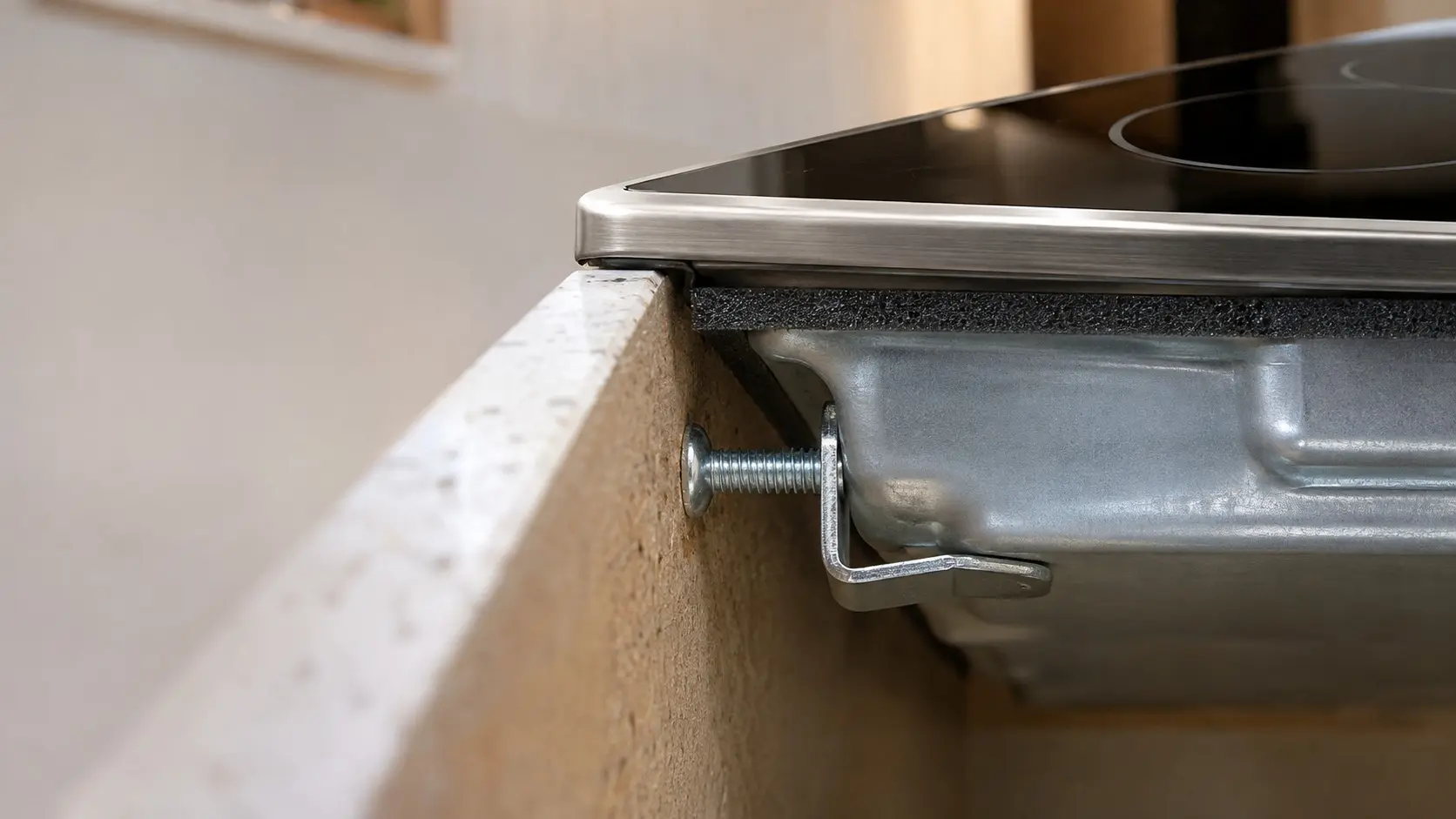
A cooktop is designed to rest on the counter's surface with a continuous soft gasket between the underside of its flange or glass edge and the counter, and to be held down from below, not glued. The gasket spreads the load so the glass does not rest on a hard, uneven edge, and the clips keep the top from shifting.
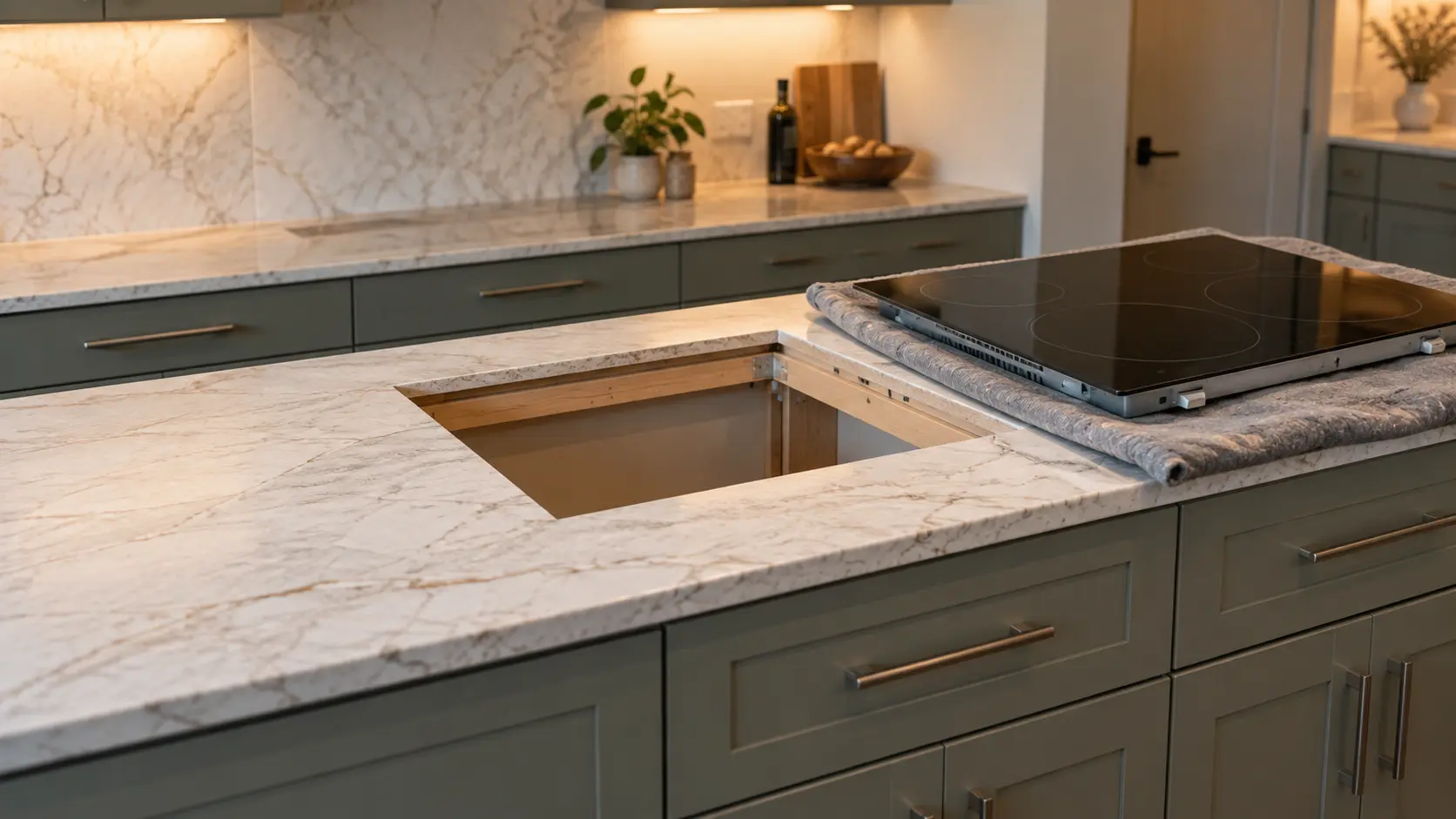
If you are still at the cutout stage, the guide on cooktop cutout and countertop fit covers sizes and corner radius. This guide starts after the hole is cut and the top is about to go in, and it shows how to seal a cooktop to the counter without making it impossible to service.
What comes in the box
Most cooktops ship with some of these: a foam gasket or adhesive foam tape, a set of brackets or clips with screws, and a template. The installation sheet, which you can find by following finding the cooktop model number first, tells you which applies. Use what the maker supplies in the way the sheet shows.
What do the foam tape and gasket do?
The foam seals the seam against spills and holds the top slightly off a rigid surface so it cannot rock or chip. It also lets the top be removed later, because foam compresses and releases where adhesive does not.
Steps for the foam:
- Clean and dry the counter edge around the cutout so the tape adheres.
- Apply the tape or gasket to the underside of the cooktop's edge or to the counter as the sheet states, in one run with no gaps, butting the ends rather than overlapping them.
- Press it flat at the corners, where it tends to lift.
- Lower the top straight down, never sliding it, so the foam does not roll or tear.
When the gasket is missing or flattened
An old gasket that has crushed flat or a top that was installed with none leaves a gap that collects crumbs and liquid. A replacement foam strip of the type the maker lists restores the seam. A gap along the glass edge that was never gasketed is a reason to lift and redo the seat, not to fill it with sealant.
Why not use silicone or caulk?
Because the cooktop is a serviced appliance: its glass, its hardware and sometimes its whole body have to come up through the counter later. Silicone bonds glass to stone or laminate, and prying a bonded top loose is how glass cracks or a counter edge chips.
Many installation manuals say not to caulk a drop-in top to the counter. If your sheet allows any sealant, follow exactly what it names and where it goes. Where the sheet is silent, foam and clips alone are the safer reading.
The flush-mount exception
Some cooktops are made to sit flush, set into a routed ledge in stone so the glass is level with the counter. Their sheets often call for a specific heat-resistant sealant in the joint around the glass, because there is no overlapping edge for a gasket. If yours is a flush-mount model, the sheet's sealant and method are the rule, and the fabricator cutting the ledge should work from that sheet too.
What a bonded top costs you
A cooktop that is stuck down cannot be lifted for a repair under it, such as a spark module or a control board, without risk. A cracked top that cannot be freed makes replacing it a bigger job, and the glass top replacement service starts from the assumption that the top can be lifted out cleanly. Read what to do about cracked glass if the surface is already damaged.
How do hold-down clips and brackets work?
Clips or brackets hook into the cutout's edge or the cabinet below and pull the cooktop down against the gasket, so the top sits firm without rocking. They are tightened evenly, a little at a time, working around the cooktop.
| Hardware | Where it bites | Common mistake |
|---|---|---|
| Clips or clamps | Under the counter edge, from the cooktop body | Over-tightened until the glass bows |
| Screw brackets | Into the counter's underside or the cabinet, as the sheet shows | Left loose, the top shifts |
| Support strips or rails, on some models | Under an edge the sheet names | Left out, an edge sags |
Tighten until the top is firm and the gasket is compressed evenly, not until the metal flexes. A glass top that is pulled down unevenly carries stress, and a corner under extra load is where a crack starts.
Under the counter first
Before the cooktop is lowered, with the power off at the breaker and any gas connection left to the installer, check what hangs below: the gas shutoff, the wiring junction and any drawer or oven that needs clearance. The guide on wiring and gas shutoff under the counter shows what should be reachable, and a cooktop over a wall oven covers the clearances for that arrangement. The connection itself is for a qualified gas installer or an electrician.
What if there is a gap or the top rocks?
A visible gap means the foam is missing, torn or too thin, or the cutout is uneven. A top that rocks means it is resting on a high spot, a missing gasket section, or hardware that was not tightened. Neither is a cosmetic matter.
- Check the gasket run for a missing or compressed section
- Check the counter for a high spot or debris under the edge
- Check each clip is seated and tightened evenly
- If the top still rocks, have it lifted and reseated with the power off, by the installer on a gas model; do not wedge shims under glass
A cooktop that has been rocking may carry stress in the glass. If a crack has appeared, see cracked glass cooktop problems, and if the cooktop will not heat after a move, a diagnostic visit checks the connection and the controls. Earlier this week we covered bridge elements and flex zones, which matters if your model has a larger top to support.