
Miele induction cooktop flashing E2
E2 flashing in the zone displays means the Miele overheating protection acted.
Mon–Sat, 8am–8pm
- Temperature and overheat sensors
- Induction board and coil repair
- Source: Miele
Book a visit
Three short steps, about a minute.
or call (844) 252-4077
Loading appointment form…
The appointment form couldn’t load. Please try again.
What E2
actually means.
E2 flashing in the zone displays means the Miele overheating protection acted. It may cut the Booster, lower the power level, or switch zones off before a coil or heat sink gets too hot.
Miele cooktop display
What to do when E2 shows on the cooktopKind of codeTemperature and overheat sensors
A sensor under the glass or on a board reported a reading the control rejected, or heat climbing past the safe limit — often after an empty pan was left on a zone. The zone is allowed to cool and a loose sensor plug is ruled out before the sensor, the coil assembly or the board is blamed. A top that keeps getting hotter is switched off at the breaker first.
Usually leads toInduction board and coil repair
Induction zones that stop sensing pans, cut out, buzz or show codes, traced to the power boards, the coils, their sensors and the links to the controls.
Shows up asCooktop Element Not Heating
A coil stays black, a radiant ring under the glass never glows, or a zone warms so weakly that a pot of water will not boil.
MakeMiele
A family-owned German maker known for built-in appliances, including cooktops.
SourceMiele USA cooktop support: E2 on the display
From Miele's US cooktop support for induction models.
Before you book,
in this order.
Each step comes from Miele's own guidance for E2 on its cooktops. Follow it to the end: the last card says whether this is a visit.
Find the cause: an empty pan, oil on a high setting, poor airflow under the cooktop, or a hot zone turned on again after a power cut.
Do not switch a hot zone back on right after a power cut, since Miele lists that as a cause.
If E2 returns after the cause is removed, book a visit.
Still there?
It usually turns into induction board and coil repair. Book with the code and the model number.
What not to do
E2 is not a pan-detection message and not a supply voltage problem. Nothing is broken when it first appears; the cooktop is protecting a coil or heat sink.
What you may
notice with it.
The cooktop problems E2 tends to arrive with. Answer these at the cooktop before anyone is booked.
All problems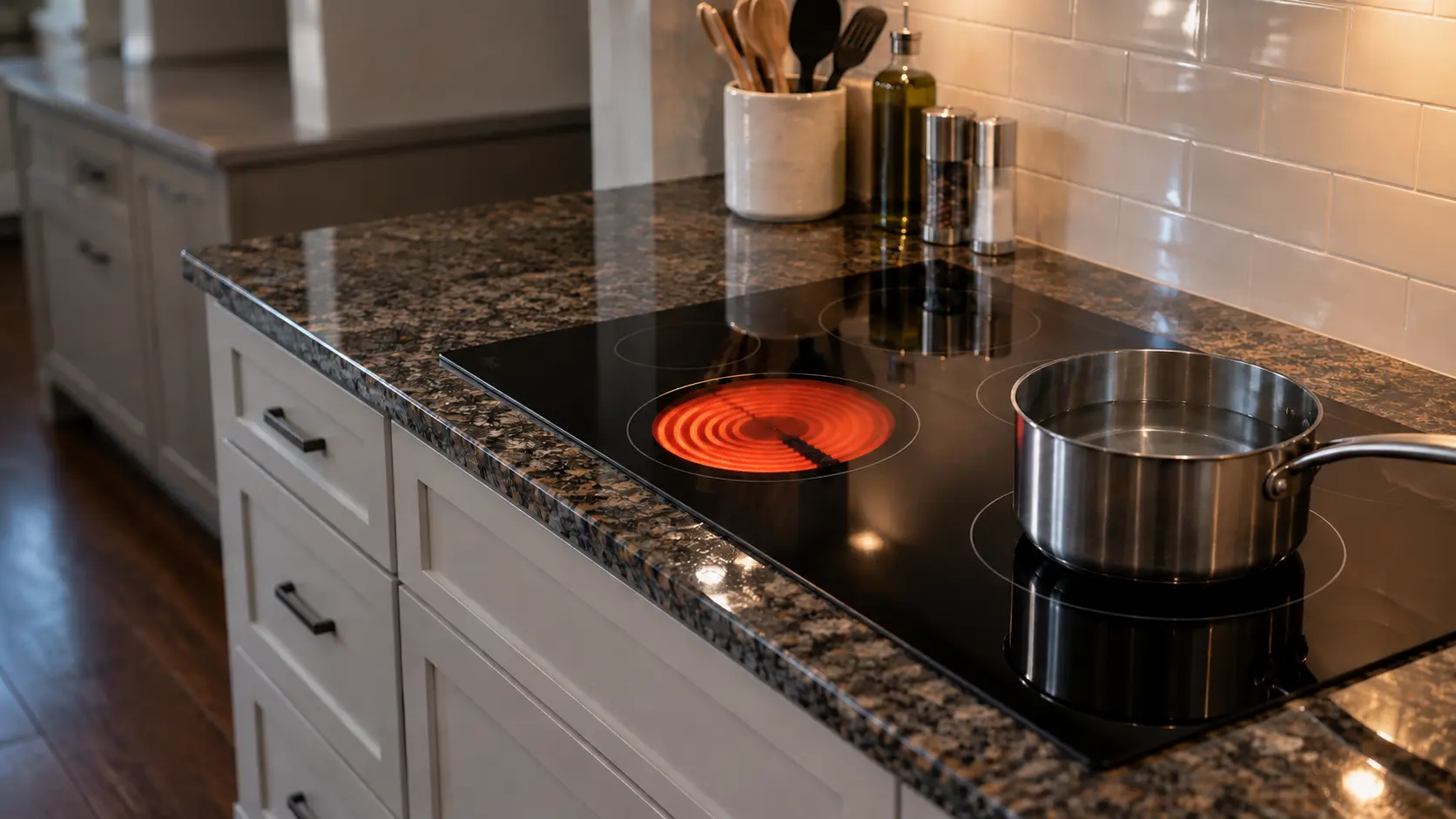
Where E2 usually leads
Induction board and coil repair.
Miele
cooktops.
A family-owned German maker known for built-in appliances, including cooktops.
Miele cooktop repairMore Miele codes
All 15 Miele codesTemperature and overheat sensors on other makes
All 52 codes of this kind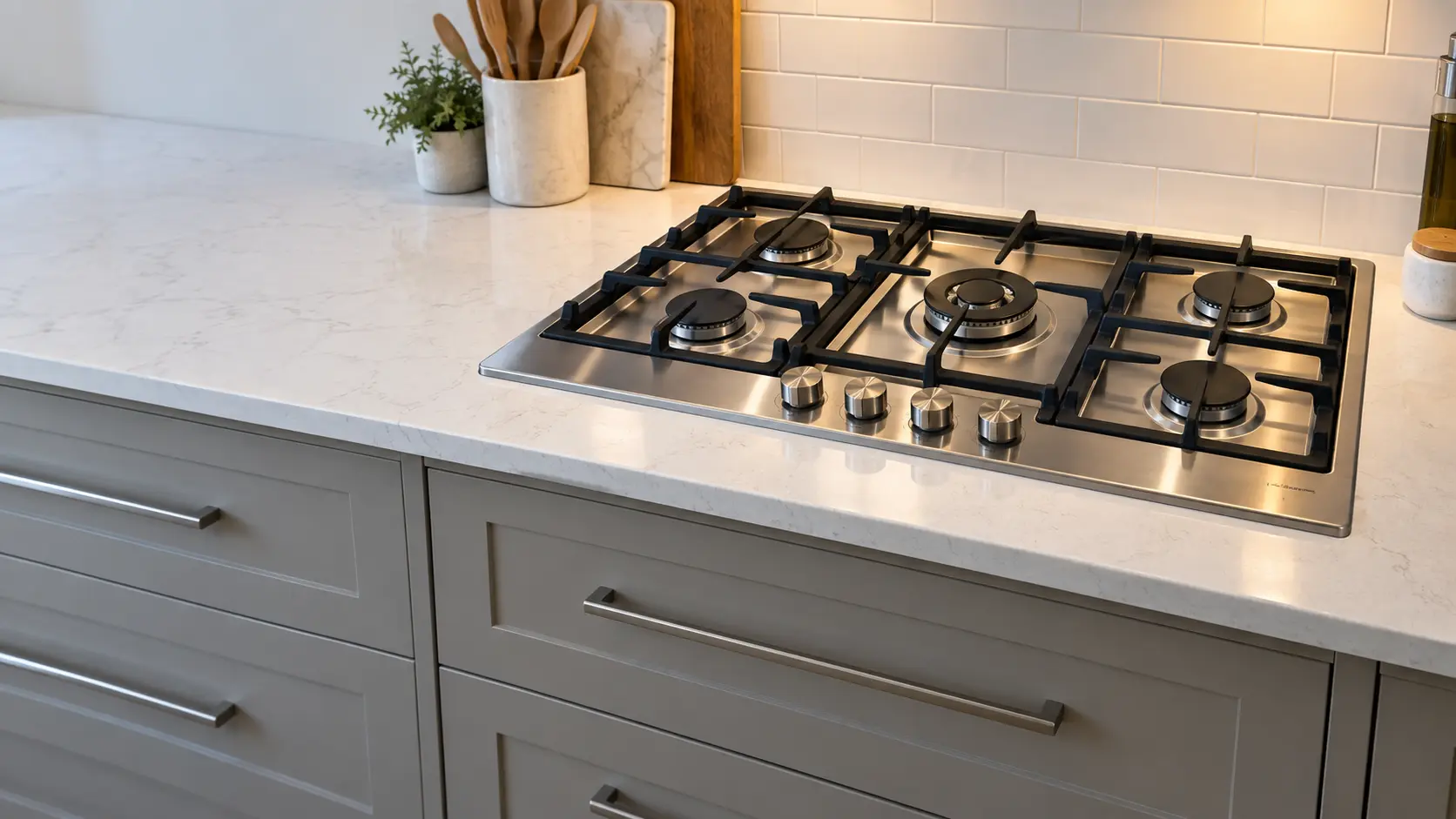
Gas cooktop
A gas cooking surface dropped into a countertop cutout, with its gas line and power cord running down into the cabinet underneath.
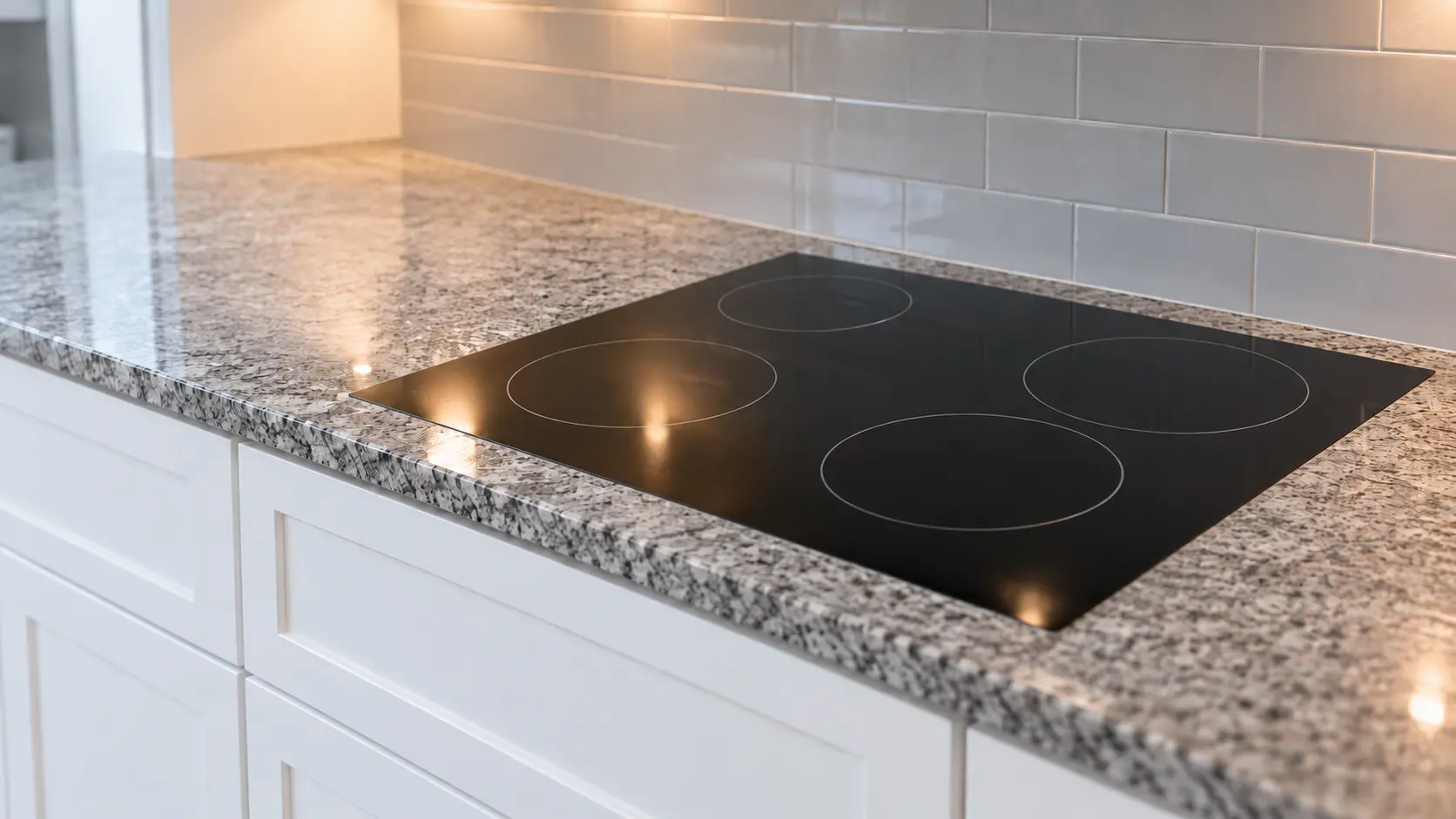
Electric cooktop
A coil or smooth-glass radiant cooking surface built into the countertop and wired to its own circuit in the cabinet or wall behind it.
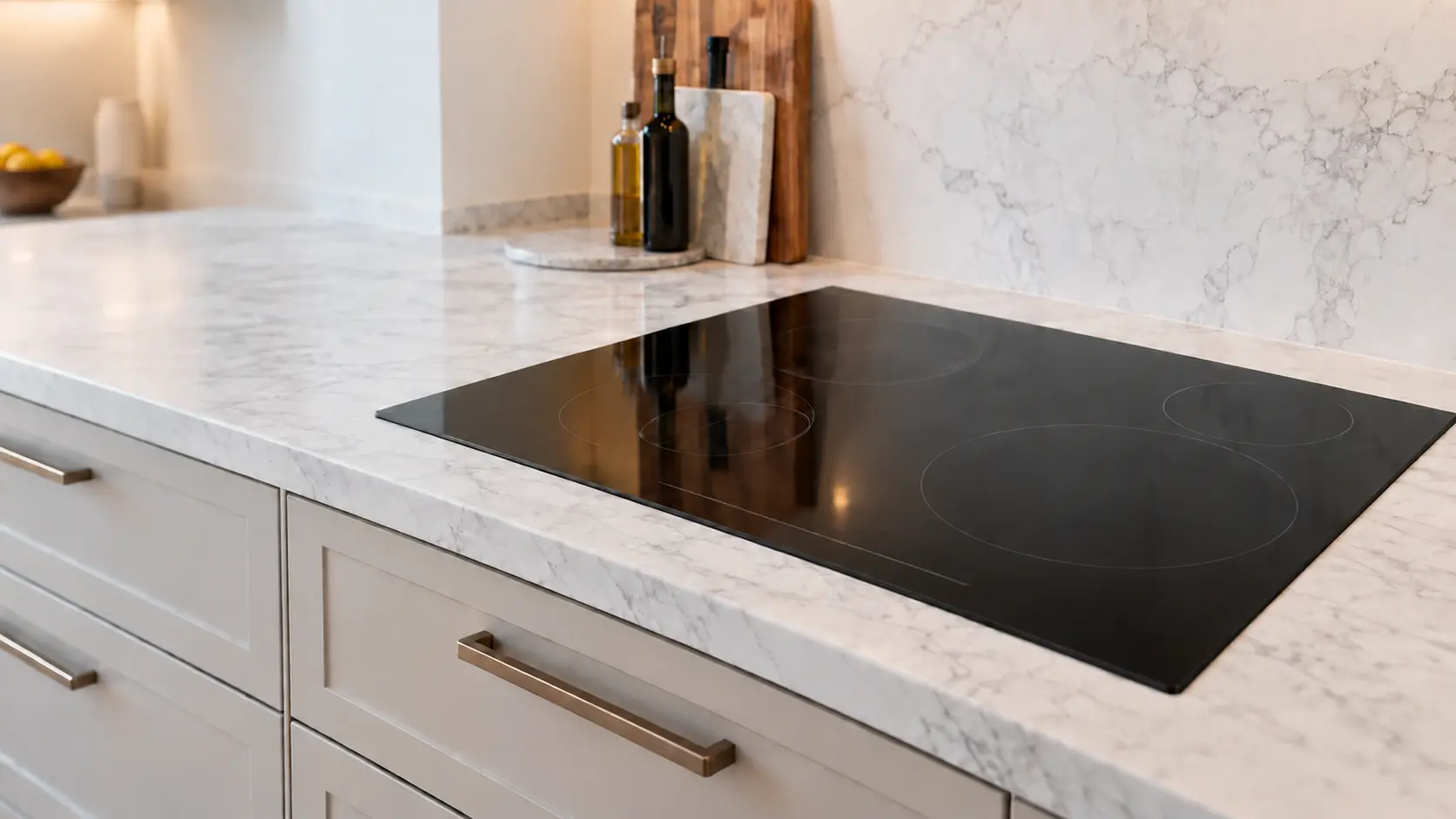
Induction cooktop
A glass cooktop in the counter that heats the pan itself through magnetic coils, run by power boards and cooled by a fan underneath.
In Miele's own words
Overheating protection has been triggered.
Every code on this site is taken from the manufacturer's documentation, never from a forum or a parts listing. From Miele's US cooktop support for induction models.
Miele E2 cooktop repair,
where we come out.
The same visit in every metro below: the code, the model number, and a diagnosis before any part is ordered.
All service areasTampa BayFL · 31 areas
Miami / South FloridaFL · 47 areas
New York MetroNY · 75 areas
HoustonTX · 36 areas
ChicagoIL · 50 areas
Los AngelesCA · 95 areas
San DiegoCA · 31 areas

Questions
about E2.
Can I clear E2 myself?
Why does my Miele drop from Booster and flash E2?
Can a drawer below the cooktop cause E2?
What does Miele's overheating protection change when E2 flashes?
Back to your everyday
Still showing E2?
Book with the code copied exactly, the full model number, and whether there is any smell of gas or burning — with a code in hand, that is where the diagnosis starts.